
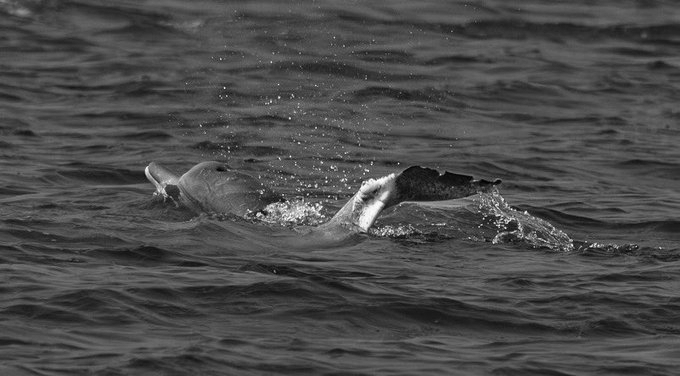
Odisha records 765 dolphins, highest in five years, Chilika’s Irrawaddy population steadies
Odisha has achieved a remarkable milestone in marine biodiversity, with the latest state-wide dolphin census revealing 765 dolphins across six species , the highest count in five years, officials said on Thursday. The census was conducted by the wildlife wing of the Forest, Environment and Climate Change Department along Odisha’s coastline and in Chilika Lake , Asia’s largest brackish water lagoon and a Ramsar wetland of international importance.
In Chilika Lake , the number of Irrawaddy dolphins remained steady at 159 , the same as in 2025, yet the lagoon continues to host the largest single-area concentration of this species in the world . The lake also recorded 16 humpback dolphins , up from 15 last year. Across Odisha’s coastal waters and protected areas, the census identified 208 Irrawaddy dolphins, 495 humpback dolphins, 55 bottlenose dolphins, three spinner dolphins, and two finless porpoises .
The Bhitarkanika Marine Sanctuary reported nine Irrawaddy dolphins, the Puri wildlife division recorded 12, the Berhampur division 13, and the Balasore wildlife division 15, reflecting a wider distribution of this endangered species beyond Chilika. Gahirmatha Marine Sanctuary in Kendrapara emerged as a stronghold for humpback dolphins, highlighting Odisha’s diverse and healthy coastal ecosystems.
State principal chief conservator of forests (wildlife), Prem Kumar Jha , said the growth in dolphin numbers is the result of strong conservation efforts, habitat protection, and active participation by local communities , calling the results a “major milestone in marine biodiversity conservation.” The 2025 census had reported 710 dolphins , including 188 Irrawaddy dolphins, 498 humpback dolphins, 16 bottlenose dolphins, and eight spinner dolphins.
The annual census, conducted every January, uses boat-based and shore-based transect surveys , with teams of forest officials and marine experts carefully recording dolphin numbers, distribution, and trends. Dolphins in India are protected under Schedule I of the Wildlife (Protection) Act, 1972 , and classified as endangered on the IUCN Red List , emphasizing the importance of ongoing monitoring and habitat conservation.
Dolphins are not just sightings; they are signals of environmental health . Just as Gangetic dolphins are increasingly observed in the Hooghly River , indicating the river’s gradual recovery, the presence of dolphins in Odisha reflects improving habitat quality. These gentle, nearly blind mammals survive only in clean, oxygen-rich waters with abundant fish , and their return is a testament to effective conservation. In the Hooghly, for example, Biochemical Oxygen Demand (BoD) levels have dropped from 12 mg/L in 2018 to below 3 mg/L , supported by 32 operational sewage treatment plants and 554 million litres of wastewater treated daily before entering the river . From Farakka to Diamond Harbour, cleaner stretches are gradually rebuilding ecosystems and supporting wildlife.
Dolphins are highly intelligent marine mammals, known for their social behavior, agility, and echolocation-based navigation and hunting skills . India is home to multiple species: Irrawaddy dolphin, humpback dolphin, bottlenose dolphin, spinner dolphin, and finless porpoise in marine and estuarine waters, while freshwater rivers like the Ganga-Brahmaputra system host river dolphins, including the Gangetic species. Odisha’s record dolphin numbers highlight not just a positive trend in wildlife populations but also the success of long-term conservation programs, habitat protection, and community involvement , providing valuable insights into species distribution and ecosystem health.