
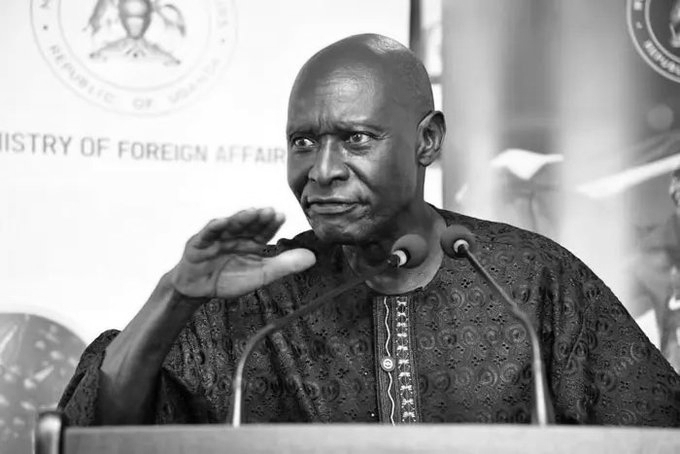
Olara Otunnu For UN Chief: Can Uganda’s ‘Dark Horse’ Win With His Own Voting System?
Ugandan statesman Olara Otunnu has entered the race to become the next UN secretary general, with Uganda backing his late bid to replace António Guterres. At 75, Otunnu is the oldest of the seven candidates.
Uganda nominated Otunnu on July 24, after the other candidates had already taken part in UN talks and public events. He was not part of the July 23 General Assembly town hall. This has raised questions about whether all candidates have received the same chance to present their plans.
Otunnu is now in New York meeting UN delegations and members of the General Assembly and Security Council. He also needed visa help because Ugandans face US entry restrictions linked to Ebola concerns.
His biggest claim to UN history is unusual. Otunnu helped create the straw poll method now used to test secretary general candidates. In 1981, while serving as Uganda’s UN representative and Security Council president, he helped break a long deadlock by introducing the informal voting method. It helped lead to the selection of Peru’s Javier Pérez de Cuéllar.
So, could his own voting system help him now? Not by giving him any special advantage. The ballots are secret and non binding. Members mark candidates as “encourage”, “discourage” or “no opinion”. The system only shows which candidates can build support.
The first poll gave Costa Rica’s Rebeca Grynspan 10 “encourage” votes, followed by Guyana’s Carolyn Rodrigues Birkett with nine and Argentina’s Rafael Grossi with seven. The full results are not officially released.
Otunnu has other strengths. He served as Uganda’s UN representative from 1980 to 1985 and later became UN under secretary general for children and armed conflict. His work helped put child protection on the Security Council agenda and contributed to the monitoring system adopted under Resolution 1612 in 2005. He also won the Sydney Peace Prize that year.
His vision includes UN reform, efforts to end major conflicts, action on climate change and a new body to oversee the UN’s work on artificial intelligence.
President Yoweri Museveni is now backing his campaign, despite their difficult political history. Otunnu had earlier been considered for the UN’s top job in 1997, but Ghana’s Kofi Annan eventually won.
Otunnu faces a tough political race. Latin America is widely seen as next in line under the UN’s informal regional tradition. There is also strong support for electing the first woman as secretary general. Still, there is no formal regional rule.
The next Security Council straw poll is planned for August 21. More rounds may follow.
Otunnu is being described as a dark horse. His late entry may hurt him, but if the leading candidates fail to gain enough support or face opposition from a permanent member, his long UN experience could make him a possible compromise choice.
The final decision will come from the 15 member Security Council. A candidate needs at least nine votes and must avoid a veto from the US, Russia, China, UK or France. The 193 member General Assembly must then approve the choice. The new secretary general is expected to take office on January 1, 2027.