
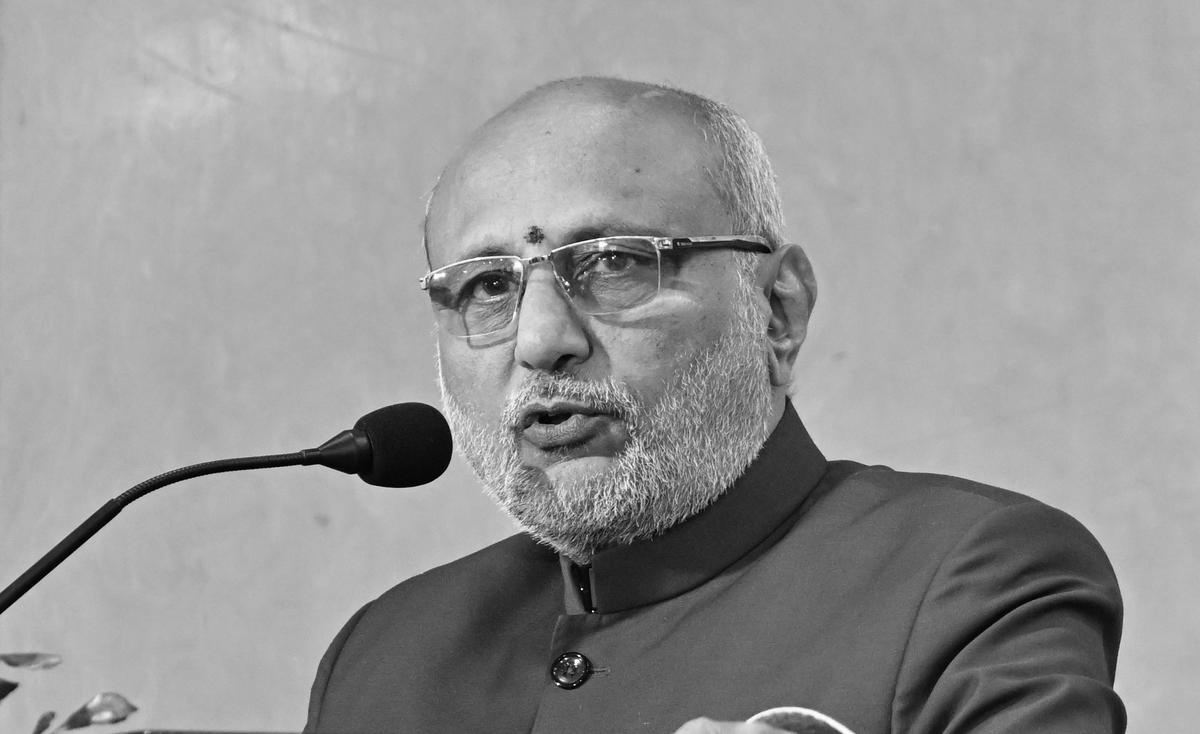
‘One Nation, One Election’ Can Strengthen Governance: VP Radhakrishnan
Vice President C. P. Radhakrishnan has endorsed the idea of “One Nation, One Election,” arguing that synchronised polls could strengthen governance, reduce policy disruptions and enable long-term planning. Speaking at the National CSR Summit 2026 hosted by the Times of India Group at Bharat Mandapam , he stressed that robust electoral systems are essential to public participation and democratic accountability.
The proposal for simultaneous elections conducting Lok Sabha and State Assembly polls together has gained renewed attention in recent years. Supporters argue that frequent elections strain administrative machinery, raise public expenditure and stall decision-making, while synchronised voting could enhance policy continuity and governance efficiency. Critics, however, caution that such a shift could complicate India’s federal structure and overshadow regional concerns.
Beyond electoral reform, the Vice President placed strong emphasis on Corporate Social Responsibility (CSR) as a central pillar of India’s development journey. He described CSR as the meeting point of enterprise and empathy, asserting that it must evolve from compliance with statutory requirements into a genuine commitment to nation-building. India remains one of the few countries where CSR spending is mandated under law, positioning corporate participation as a key driver of social progress.
Highlighting India’s economic trajectory, Radhakrishnan noted that the country has risen from the tenth to the fourth largest economy globally and is poised to become the third largest. He attributed this progress to structural reforms, digital connectivity, financial inclusion and infrastructure expansion, which together have lifted millions out of extreme poverty and raised aspirations across regions.
He said the next phase of growth will depend on deeper collaboration among government, industry and civil society. CSR initiatives, he observed, can play a transformative role by strengthening public education, improving primary healthcare in underserved regions, promoting industry-aligned skills, supporting women-led enterprises and accelerating the transition to renewable energy and climate resilience.
Radhakrishnan encouraged corporate leaders to think boldly, invest strategically and measure impact rigorously, viewing CSR not as expenditure but as nation-building capital. He also called upon media organisations to highlight development stories that strengthen public trust in democratic institutions.