

One Nation, One Student ID: How India's Digital Education Ecosystem Is Reshaping Learning
India is quietly building what could become one of the world's largest digital education ecosystems. Through the Academic Bank of Credits (ABC) and the Automated Permanent Academic Account Registry (APAAR) , the government aims to create a lifelong academic identity for every learner, enabling seamless movement across schools, universities, skill institutions and future learning opportunities.
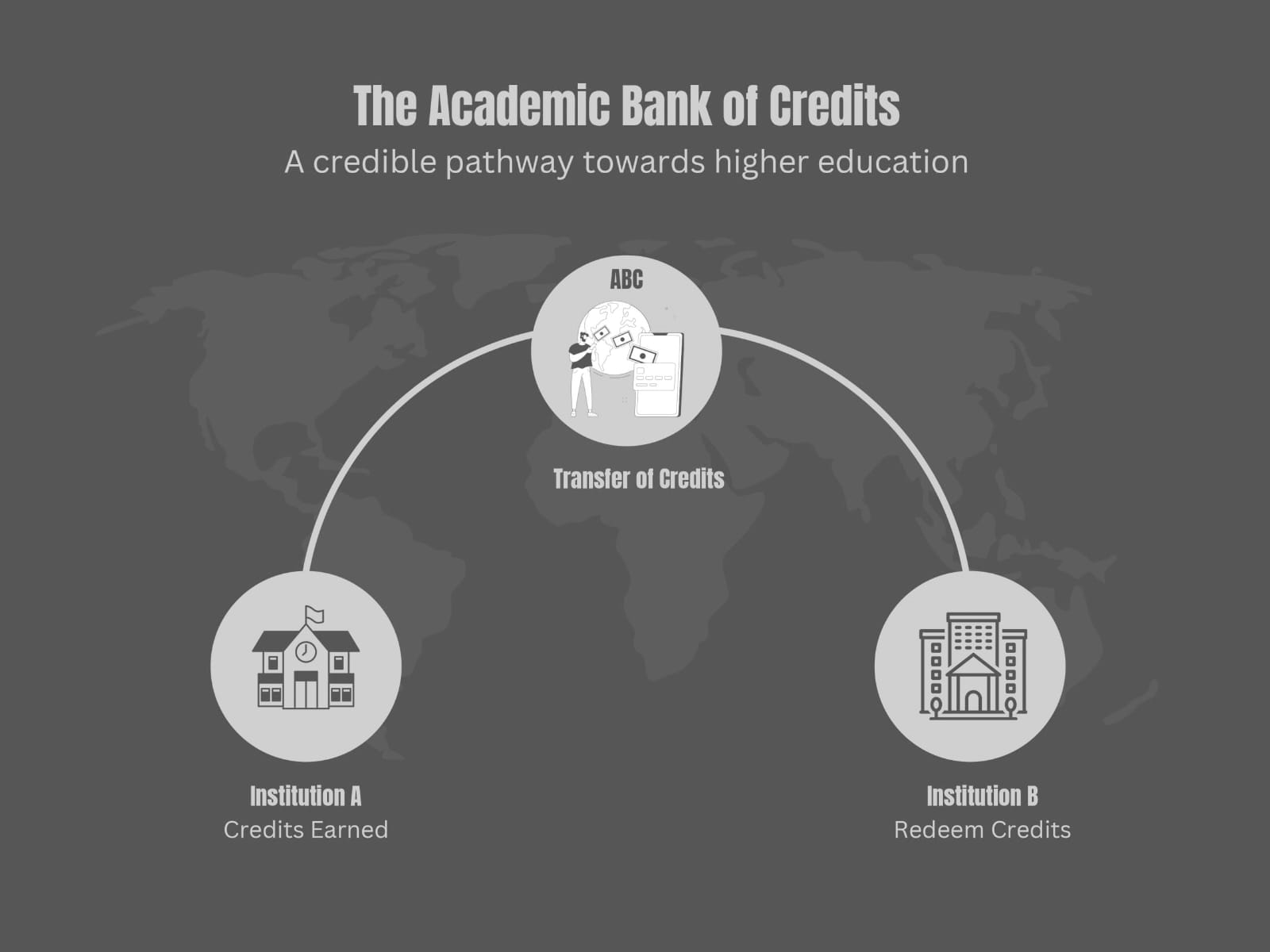
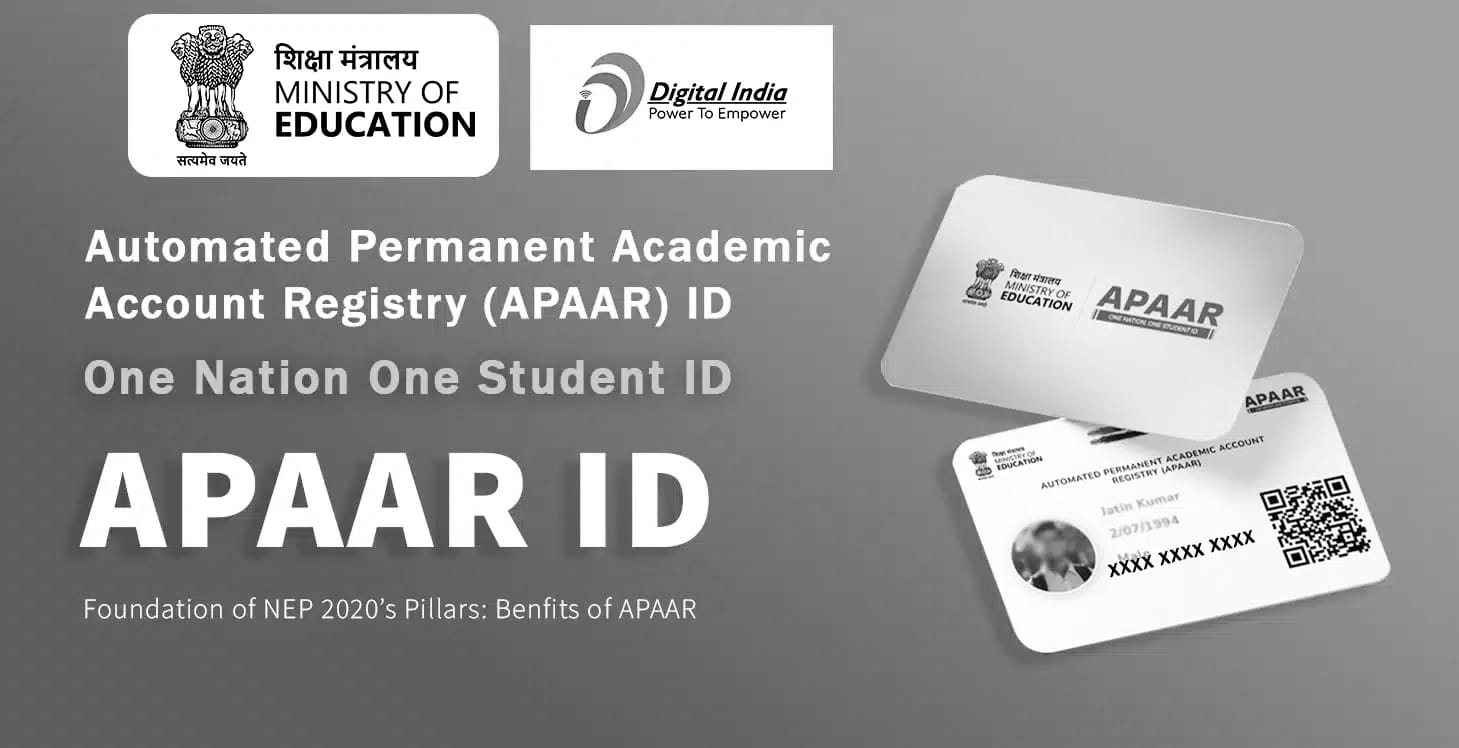
Developed by the Ministry of Education and regulated by the University Grants Commission (UGC), the Academic Bank of Credits is a digital repository that allows students to store, accumulate, transfer and redeem academic credits earned from recognised institutions. Complementing it is APAAR, a unique 12-digit student identification number introduced under the "One Nation, One Student ID" initiative, designed to create a single academic identity throughout a learner's educational journey.
As of June 2026, India has generated 26.30 crore verified APAAR IDs , while educational institutions have uploaded 110.65 crore academic records onto the ecosystem. A total of 2,963 institutions have registered under the ABC framework, making it one of the largest education digitisation efforts undertaken anywhere in the world.
The initiative forms a key pillar of the National Education Policy (NEP) 2020 , which seeks to make education more flexible, multidisciplinary and learner-centric. Unlike the traditional system where academic progress often remained tied to a single institution, ABC allows students to retain credits even if they discontinue their studies temporarily. Those credits can later be redeemed when the student returns to education.
Under the system, students register through the ABC portal and receive an ABC or APAAR ID linked to Aadhaar and DigiLocker. Participating institutions upload academic credit data directly to the platform. Credits can then be accumulated, transferred and redeemed across institutions without losing academic progress. The credits remain valid for up to seven years, or for the duration specified by the relevant academic discipline. The National Academic Depository (NAD) serves as the backbone of the system, securely storing academic records and awards.
The UGC has significantly accelerated implementation. It directed all Higher Education Institutions (HEIs) to upload academic records for Examination Year 2025 to the ABC-NAD platform by June 30, 2026 , describing it as the final deadline for fresh uploads. The move is intended to improve accessibility, transparency and accountability in academic record management while enabling credit portability across institutions.
Massive Scale Across Education Levels
The initiative has already achieved considerable penetration across educational sectors.
Among higher education institutions, the platform includes 488 State Universities , 520 Private Universities , 57 Central Universities , 140 Deemed Universities , 1,262 Autonomous Colleges , and numerous Institutes of National Importance, including IITs, IIMs, NITs, AIIMS, IISERs and others.
School education constitutes the largest share of the ecosystem, accounting for 16.62 crore APAAR IDs and 71.46 crore educational records . State universities account for 3.36 crore APAAR IDs and 26.74 crore educational records , while the skill ecosystem has generated 1.51 crore APAAR IDs linked to 6.55 crore records .
The figures indicate that APAAR is no longer confined to higher education but is gradually extending to school education, creating a continuous academic record beginning from the early years of schooling and potentially continuing throughout a learner's lifetime.
From CBCS to a National Credit Ecosystem
The ABC initiative is often misunderstood as a replacement for the Choice Based Credit System (CBCS). In reality, ABC functions as a national credit repository rather than a substitute for academic credits themselves.
While CBCS enabled students to earn credits within universities, ABC allows those credits to be digitally stored, transferred and potentially recognised across institutions. The broader objective is to support the National Credit Framework (NCrF) , which seeks to integrate academic, vocational and experiential learning into a unified credit architecture.
This marks a major shift in Indian education. Credits are no longer viewed merely as university-specific records but as portable learning assets that can accompany students throughout their educational journeys.
The framework also supports Multiple Entry and Exit (MEE) provisions under NEP 2020. Students may receive a certificate after one year, a diploma after two years, and a degree after three or four years of study. Currently, 153 universities offer multiple-entry pathways, benefiting 31,156 undergraduate and 5,583 postgraduate students .
Integration with SWAYAM and Skill Education
The system extends beyond conventional classrooms. Students can earn up to 40 per cent of their credits through SWAYAM , the government's online learning platform. About 388 universities have adopted these regulations.
Similarly, the National Credit Framework has been adopted by 170 universities , expanding recognition of academic, vocational and experiential learning. This integration is expected to reduce barriers between traditional higher education and skill-based learning pathways.
ABC is also intended to bridge the long-standing divide between formal education, vocational training and workplace learning, creating greater flexibility for learners seeking to upgrade qualifications throughout their careers.
Benefits for Students
Supporters argue that the greatest strength of APAAR and ABC lies in preserving educational continuity.
A student who leaves college because of financial hardship, migration, employment responsibilities or personal circumstances can return years later without losing previously earned credits. This flexibility is expected to reduce the long-term impact of educational interruptions and encourage lifelong learning.
The platform also provides secure digital access to certificates, mark sheets and academic credentials through DigiLocker. Students aged between 13 and 30 years with authenticated APAAR IDs can additionally access travel benefits, including discounts on base airfares and additional baggage allowances.
Private Schools, Government Schools and the Implementation Challenge
The government intends the framework to cover government schools, private schools, universities, skill institutions and other educational providers. However, implementation is unlikely to be uniform.
Many corporate and private schools already operate sophisticated Enterprise Resource Planning (ERP) systems, student information systems and digital learning platforms. Rather than replacing these systems, APAAR is expected to function as a common national layer that integrates records from diverse educational databases.
For government schools and rural institutions, however, implementation may prove more challenging. Issues such as internet connectivity, digital infrastructure, teacher training, device availability and administrative capacity continue to affect many parts of the country.
Critics argue that digital identity systems alone cannot address deeper educational challenges including teacher shortages, poor infrastructure, socio-economic barriers and learning deficits.
Data Security and Future Expansion
To address concerns around privacy and security, the ecosystem relies on Aadhaar-linked authentication, DigiLocker integration and encryption protocols. Access to records remains tied to authenticated credentials and institutional authorisation.
Looking ahead, the government is exploring integration with Bharat Praman Chain , India's sovereign blockchain platform developed by the Digital India Corporation. The blockchain-based infrastructure is designed to provide tamper-resistant, verifiable digital credentials while ensuring compliance with India's data protection framework.
Measuring Success Beyond Numbers
While the creation of 26.30 crore APAAR IDs and 110.65 crore educational records represents a significant administrative achievement, education experts caution that the true measure of success will not be the volume of records generated.
Instead, the initiative's long-term impact will depend on whether it can reduce dropout rates, improve student mobility, support lifelong learning, integrate vocational and academic pathways, and extend meaningful benefits to learners in rural and underserved communities.
If those outcomes are achieved, ABC and APAAR could become one of the most transformative education reforms since the expansion of universal schooling. If not, they risk becoming an impressive digital repository that falls short of changing educational outcomes on the ground.