
One Vaccine – One Test – A Healthy Future
The name cervical cancer often evokes fear and uncertainty among women. However, medical science clearly states that this cancer is largely preventable. With timely HPV vaccination, regular screening, and early treatment, millions of women’s lives can be saved. The World Health Organization (WHO) and countries across the world are working toward eliminating this disease as a public health problem.
Cervical cancer develops when normal cells in the cervix undergo mutations and grow uncontrollably, forming a tumor. The cervix produces mucus essential for reproductive health. Persistent infection of the cervix with the Human Papillomavirus (HPV) can lead to abnormal cell growth and eventually cancer. Tumors are classified as benign and malignant. Malignant tumors grow rapidly and can spread to other organs through metastasis if untreated, whereas benign tumors do not spread.
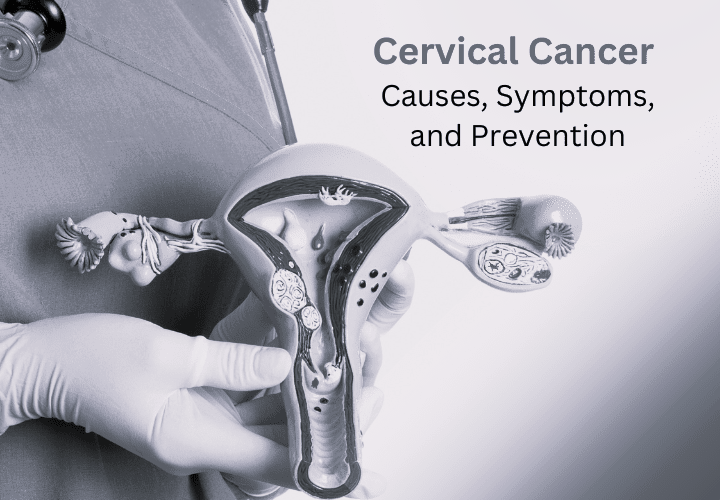
The cervix consists of two main parts the endocervix and the ectocervix. The endocervix contains columnar glandular epithelium, while the ectocervix contains squamous epithelium. Based on this structure, cervical cancer mainly occurs in two forms. The most common type is squamous cell carcinoma, which develops in the squamous cells covering the ectocervix. The second type is adenocarcinoma, accounting for about 20 percent of cases and originating in the glandular cells of the endocervix. Rare forms such as lymphomas, sarcomas, and neuroendocrine tumors are also occasionally detected.
According to 2022 data, cervical cancer is the fourth most common cancer among women worldwide. In that year, approximately 6.6 lakh new cases and 3.5 lakh deaths were reported globally. Alarmingly, about 94 percent of these deaths occurred in low- and middle-income countries . Regions such as sub-Saharan Africa, Central America, and Southeast Asia show a high disease burden. Limited access to vaccination, screening, and treatment services, poverty, gender inequality, and lack of awareness contribute to the high mortality.
The leading cause of cervical cancer is the Human Papillomavirus (HPV), a sexually transmitted virus. Most sexually active individuals are exposed to HPV at some point in their lives. In most cases, the immune system clears the virus naturally. However, persistent infection with high-risk HPV types particularly types 16 and 18 can cause abnormal cell changes in the cervix and lead to cancer. Approximately 95 percent of cervical cancer cases are attributed to HPV infection .
Women living with HIV are at six times higher risk of developing cervical cancer because reduced immunity allows HPV to persist longer and accelerate cellular changes. Globally, about 5 percent of cervical cancer cases are estimated to be associated with HIV. Therefore, early and frequent screening for these women is essential.
Cervical cancer primarily affects young women. The death of a mother creates an irreplaceable loss for families and children. According to WHO data, 20 percent of children who lose their mothers due to cancer lose them because of cervical cancer . This is not only a health issue but also a social and economic concern.
The most promising aspect of cervical cancer is that it is preventable. Vaccinating girls aged 9–14 years is the most effective preventive measure. The vaccine protects against HPV types 16 and 18, which cause about 76 percent of cervical cancers . Some countries also vaccinate boys to reduce viral transmission.
Women aged 30 years and above should undergo cervical screening once every 5 to 10 years . Women living with HIV should begin screening at age 25 and repeat it every 3 to 5 years. Screening helps detect pre-cancerous changes so treatment can be provided early. Self-sampling for HPV testing is now available, and research shows it is as reliable as samples collected by healthcare workers. This method is especially useful in rural areas and communities where women may hesitate to undergo clinical examinations.
Healthy practices such as quitting smoking, using condoms, and raising awareness about sexual health reduce risk. Treatment of pre-cancerous lesions is simple and effective. Methods include thermal ablation, cryotherapy, LEEP/LETZ (removal of tissue using an electrically heated loop), and cone biopsy. If detected early, cervical cancer can be treated successfully with surgery, radiotherapy, and chemotherapy.
Women should consult a doctor immediately if they experience bleeding between menstrual periods or after menopause, foul-smelling vaginal discharge, persistent pain in the back, legs, or pelvis, or symptoms such as unexplained weight loss, fatigue, or swelling of legs.
The World Health Organization has set a global target known as the 90–70–90 goal for eliminating cervical cancer. The targets include vaccinating 90 percent of girls before age 15, screening 70 percent of women between ages 35 and 45, and ensuring 90 percent of women with pre-cancer or cancer receive appropriate treatment. If achieved, an estimated 7.4 crore new cases and 6.2 crore deaths could be prevented by 2120.
India has taken a crucial step by launching a national HPV vaccination program. Recently from Ajmer, Rajasthan, Prime Minister Narendra Modi launched a nationwide Human Papillomavirus vaccination program for 14-year-old girls , marking a historic milestone in preventing cervical cancer. Through this initiative, millions of girls across India will receive protection from future cancer risk.
Prime Minister Narendra Modi described the program as a key step in strengthening India’s “Nari Shakti.” He said, “If a mother in a family is healthy, the family can face any challenge. If the mother falls ill, the entire system of the house is affected. With this thinking, the government is giving highest priority to women’s health.”
Cervical cancer is the second most common cancer among women in India. According to the WHO GLOBOCAN 2022 report, India reports approximately 1.2 lakh new cases and nearly 80,000 deaths annually . High-risk HPV types such as 16 and 18 are the primary causes.
Under the government program, the Gardasil-4 vaccine (protecting against HPV types 6, 11, 16, and 18) is administered as a single dose. The campaign will run for 90 days , the vaccine is free of cost, and it is provided with parental consent. Vaccination is offered at government health centers, Ayushman Arogya Mandirs, district hospitals, and government medical colleges. Beneficiaries can register through the U-WIN digital platform or directly visit vaccination centers. Each session ensures safety protocols, cold-chain maintenance, and emergency medical support.
Experts believe that vaccinating 14-year-old girls will significantly reduce the future burden of cervical cancer in India. The Ministry of Health has urged parents and guardians to take advantage of this opportunity.
World Cervical Cancer Elimination Day is observed every year on November 17 . The day highlights women’s and girls’ health rights and promotes awareness of the three pillars — vaccination, screening, and treatment. Cervical cancer was once considered fatal, but today it is preventable and controllable. With strong government commitment, robust health systems, and public awareness, cervical cancer can be eliminated as a public health problem.
One vaccine, one test, and one awareness message protect not only one woman’s life but also the future of an entire family.