
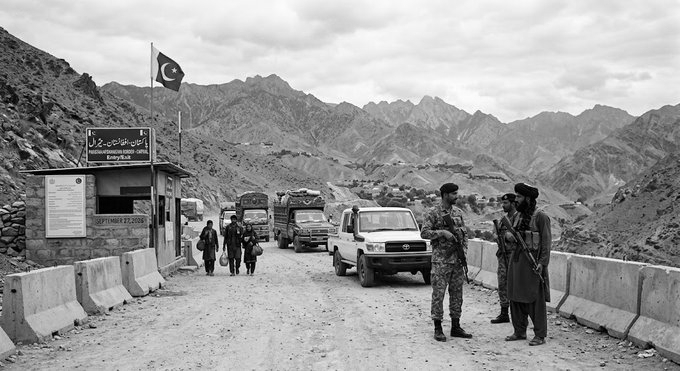
Pakistan Rejects Afghan Claims Of Backing Armed Groups In Nuristan Clashes
Pakistan has rejected allegations by Afghanistan’s Taliban government that its security and intelligence agencies supported, trained and sent armed groups into Nuristan province, after deadly clashes in the Kamdesh district near the Pakistan border. Islamabad called the accusations “frivolous, baseless and devoid of any truth”, while Kabul claimed its forces killed 28 fighters and captured 32 others.
The Nuristan clashes took place on Saturday after Afghan authorities said several armed groups, including alleged Islamic State, or Daesh, members, crossed the Durand Line from Pakistan into Kamdesh with the intention of carrying out attacks and creating insecurity. Afghanistan’s Defence Ministry said the remaining fighters fled back towards positions of Pakistani militias after the fighting.
Kabul further alleged that most of those involved were former members of Afghanistan’s security forces who served under the previous government, which was ousted when the Taliban returned to power in August 2021. It claimed Pakistani intelligence agencies had brought them to Pakistan with promises of asylum and well-paid jobs abroad, but instead transferred them to military and intelligence camps, provided short-term training and sent them back into Afghanistan.
The Taliban government said 28 fighters were killed and 32 captured. Reuters reported the Afghan Defence Ministry as saying 32 were wounded, highlighting uncertainty over the precise casualty figures. The claims have not been independently verified.
A separate account from the Afghanistan Freedom Front (AFF) disputed the Taliban version of events. The anti-Taliban armed group claimed Taliban forces had attacked its positions using ground troops and drones and said its fighters captured several checkpoints. Taliban officials, however, said the fighting had ended and that Kamdesh remained under their control. The AFF's claims could not be independently verified.
Pakistan’s Information Ministry denied any involvement by its military or intelligence agencies in the Nuristan fighting. It also rejected allegations that Islamabad had recruited or trained former Afghan security personnel or facilitated Daesh and other militant groups. Pakistan said Kabul had produced no identities, documents, communications, forensic evidence or independent verification to support its claims.
Islamabad also dismissed a video circulated as evidence, saying it showed only a few unarmed people and appeared to be a staged recording. The video could not be independently verified.
The Nuristan clashes come amid a sharp deterioration in Pakistan-Afghanistan relations. Pakistan has repeatedly accused Kabul of allowing Tehreek-e-Taliban Pakistan (TTP) militants to operate from Afghan territory, while the Taliban government denies providing the group a safe haven. Recent Pakistani airstrikes inside Afghanistan and subsequent cross-border fighting have further intensified tensions.