
Pakistan, Saudi Arabia and Turkiye Strengthen Defence Pact Amid Regional Tensions
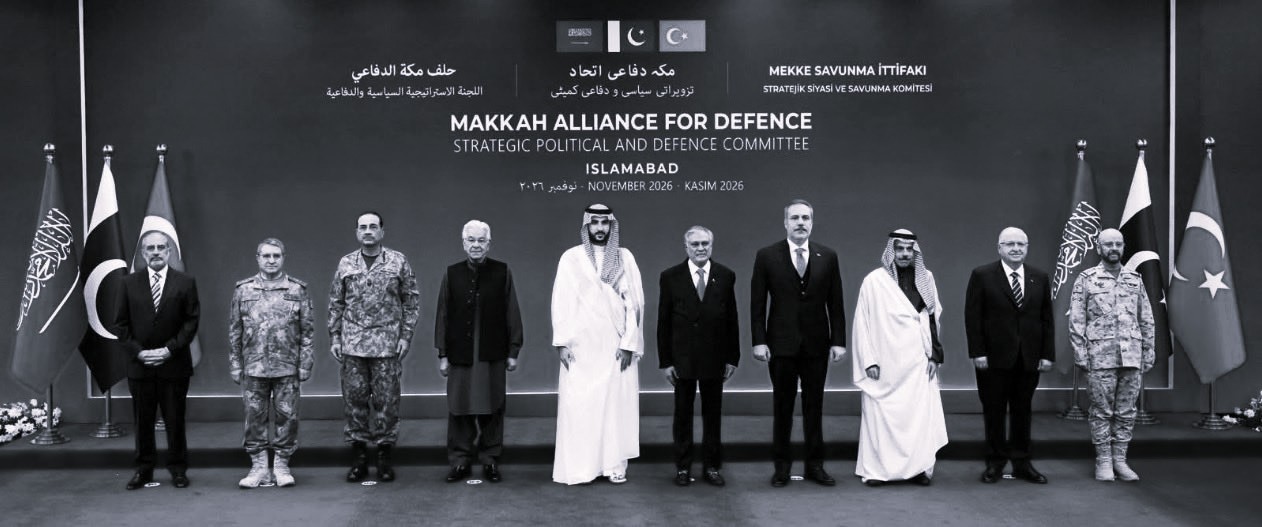
Pakistan, Saudi Arabia and Turkiye on Friday reaffirmed their collective defence commitments and pledged to accelerate military cooperation to counter security threats facing the Saudi kingdom, particularly attacks by Yemen's Iran-backed Houthi rebels, as senior officials from the three countries held high-level talks in Islamabad. The meeting, convened under the Makkah Joint Defence Agreement, also focused on strengthening defence industry cooperation, joint technological development, military training and intelligence coordination, while supporting diplomatic initiatives to ease escalating tensions across the Middle East.
The Strategic Political and Defence Committee (SPDC) meeting was attended by Pakistan's Defence Minister Khawaja Muhammad Asif, Foreign Minister Ishaq Dar and Army Chief Field Marshal Asim Munir, alongside senior Saudi and Turkish officials. The three countries condemned Houthi attacks on Saudi civilians and infrastructure and reiterated their commitment to protecting the kingdom's sovereignty and territorial integrity.
Signed on August 7, 2026, in Makkah by Saudi Crown Prince Mohammed bin Salman, Turkish President Recep Tayyip Erdogan and Pakistan Prime Minister Shehbaz Sharif, the agreement treats an external armed attack against any member as an attack against all three. Its 16 articles cover collective defence, counterterrorism, intelligence sharing, joint military exercises, personnel exchanges, logistical assistance and defence industry cooperation, including joint research and technology development.
The agreement also envisages the rapid deployment of agreed military forces and capabilities to Saudi Arabia. However, the nature and extent of assistance would be determined after assessing the circumstances of an attack, subject to national legal procedures. The pact does not establish an automatic military response or a unified command structure.
The discussions come amid growing concerns over Houthi attacks targeting Saudi territory, including strategic infrastructure. Threats to the East-West oil pipeline, which provides an alternative crude export route towards the Red Sea, and maritime navigation through the Bab el-Mandeb Strait have added to regional security concerns.
Turkiye's Parliament approved the agreement on November 5 by 279 votes to 119, with President Erdogan completing its ratification on Friday. The alliance builds on decades of Pakistan-Saudi military cooperation and their bilateral defence agreement signed in September 2025. Pakistan's retired Lieutenant General Nauman Mahmood has been appointed the alliance's first secretary-general, with its secretariat based in Saudi Arabia.
The agreement remains in force indefinitely, although members can withdraw after 10 years by providing three months' written notice. Pakistan has also maintained that the arrangement is defensive and not directed against Iran. Islamabad continues diplomatic efforts, with Qatar's support, to revive negotiations between Washington and Tehran following the collapse of a June understanding.
Although Pakistan's nuclear capability adds strategic weight to the grouping, the agreement does not explicitly provide nuclear protection to the other members. The Islamabad meeting marks another step towards strengthening regional defence coordination amid continuing Middle East tensions.