
Pakistan Vows To Defend Saudi Arabia By ‘Whatever Means’ Amid Houthi Attacks
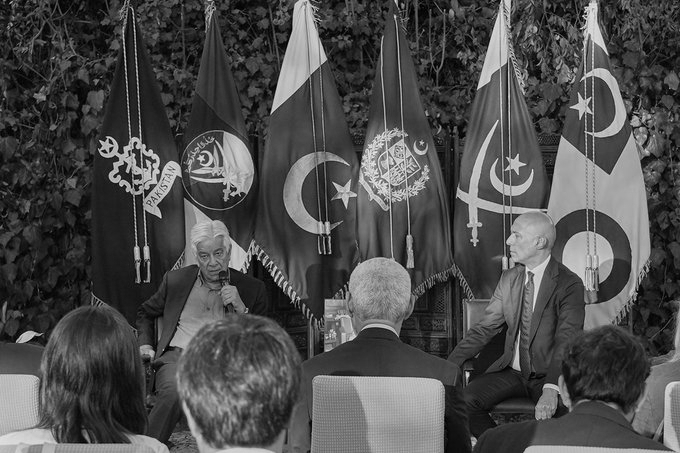
As Saudi Crown Prince Mohammed bin Salman turns to foreign partners for help amid escalating Houthi attacks, Pakistan has vowed to defend Saudi Arabia using “whatever means are available”, while stopping short of confirming any direct military involvement in the conflict. Defence Minister Khawaja Muhammad Asif said Pakistan’s military capabilities would be available to Riyadh under its new defence pact with Saudi Arabia and Türkiye.
“I’m not going into detail, but obviously when I say that we are bound by this arrangement to defend Saudi Arabia, that means whatever means are available at our disposal, they’ll be available to Saudi Arabia also. I think that’s a categoric statement,” Asif told reporters in Rome on Tuesday.
However, Asif did not confirm whether Pakistani forces had participated in airstrikes against Iranian operators or Houthi targets in Yemen. He also did not say whether Saudi Arabia had formally requested Pakistani military assistance.
The comments come as Riyadh seeks broader international support. Saudi Foreign Minister Prince Faisal bin Farhan travelled to Washington this week for talks with US Secretary of State Marco Rubio, while Crown Prince Mohammed bin Salman has sought greater international backing as Houthi attacks intensify. The US has reportedly agreed to provide intelligence and targeting support, although Washington declined Riyadh’s request for direct military strikes.
Saudi Arabia has also begun rebuilding ties with the United Arab Emirates. UAE Vice President Sheikh Mansour bin Zayed Al Nahyan visited Riyadh on Tuesday and met Mohammed bin Salman and Saudi Defence Minister Prince Khalid bin Salman, in the first high-level UAE visit since a major dispute between the two countries over Yemen.
The pressure on Riyadh has also tested the Makkah Joint Defence Agreement, signed by Saudi Arabia, Pakistan and Türkiye on August 7. The pact says an attack on one member will be treated as an attack on all three, but its full text has not been publicly released and its command and operational structures are still being developed. The three countries are establishing a secretariat to put the framework into operation.
Pakistan has so far been cautious about suggesting that the agreement means immediate military action against the Houthis. Asif said Islamabad remained concerned about the consequences of a wider conflict, warning: “Once you start a conflict, you cannot control the outcome of that conflict. You cannot control the trajectory of that conflict.”
His comments also suggested an attempt to maintain room for dialogue with Iran. Although Iran has long supplied the Houthis with weapons and other assistance, Tehran denies directing their military operations. Asif said some Iran-aligned groups could act independently, remarking that “some of these proxies, they become rogue.”
At the same time, Pakistan has publicly condemned the Houthi attacks on Saudi Arabia. Prime Minister Shehbaz Sharif told Mohammed bin Salman earlier this month that Islamabad strongly condemned attacks on Saudi civilian and economic infrastructure and would continue efforts to reduce regional tensions.
The UN envoy for Yemen, Hans Grundberg, has meanwhile met Houthi negotiators in Muscat and Saudi officials as part of efforts to prevent the escalation from developing into an even wider regional conflict.
Against this backdrop, Pakistan’s latest pledge is significant but does not establish that Pakistani forces are preparing to enter the war. Asif’s statement confirms Islamabad’s commitment under the new defence arrangement, while his refusal to disclose whether Pakistan has already participated in strikes leaves the extent of any military involvement unclear.