
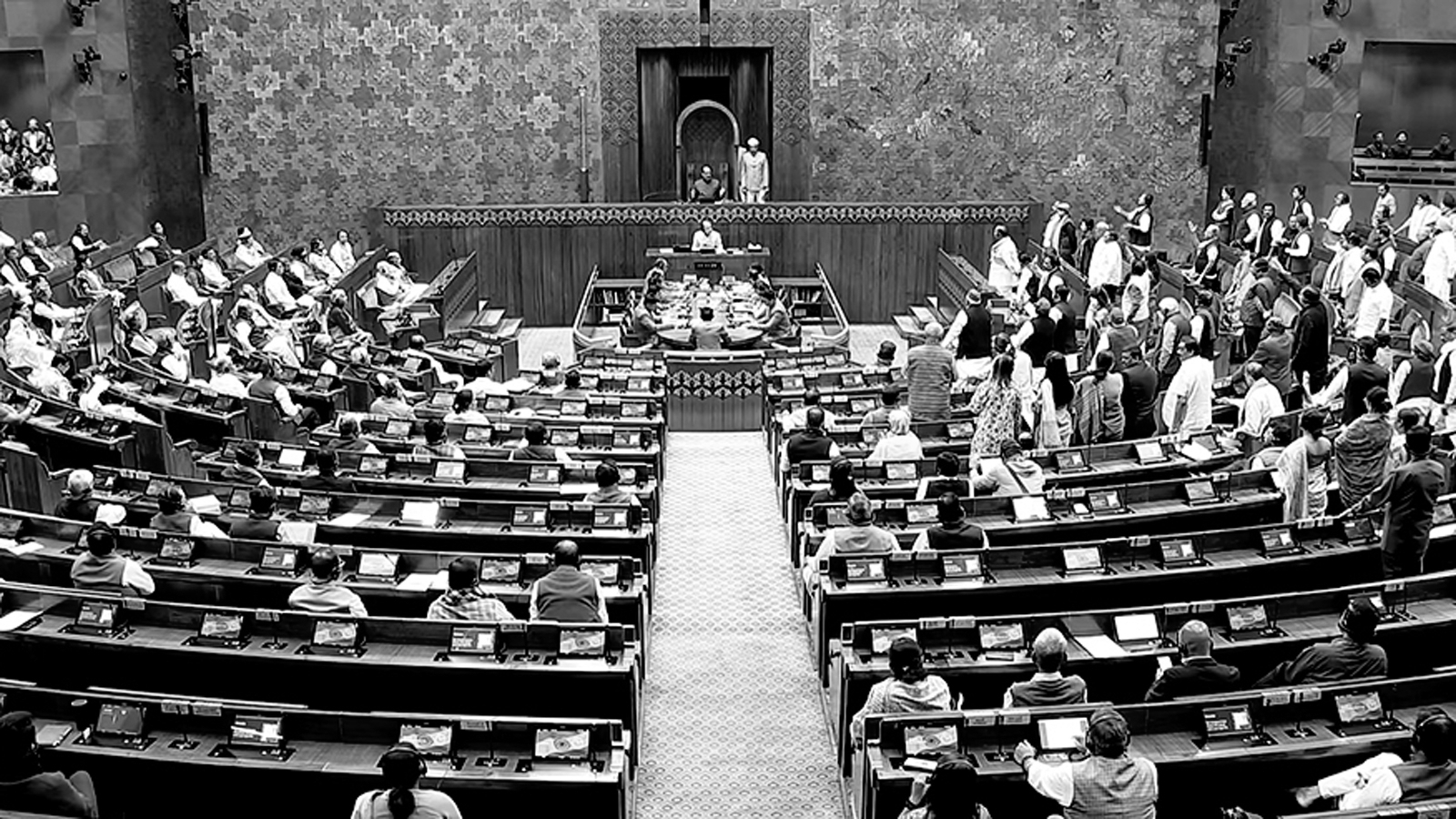
Parliament Monsoon Session Likely July 20, Packed Agenda and Political Heat Ahead
The Monsoon Session of Parliament is likely to commence on July 20 and run for around three weeks , officials indicated on Tuesday, though the Cabinet Committee on Parliamentary Affairs (CCPA) is yet to formally clear the schedule. Monsoon and Winter sessions typically stretch to 20 sittings over four weeks , though shorter sessions have precedent, and government sources suggest this one could wrap up around mid-August .
Beyond the calendar, the session promises to be politically charged. It follows the BJP’s recent victories in West Bengal, Assam and Puducherry , giving the ruling alliance fresh momentum heading into the House. Compounding matters, the ongoing rebellion within the Trinamool Congress (TMC) , where a faction led by dissident MPs has shown warmth toward the Centre’s proposals, and the parallel split in Shiv Sena (UBT) , where several MPs have gravitated toward Eknath Shinde’s camp , are both expected to spill onto the floor. Lok Sabha Speaker Om Birla is yet to rule on demands from 20 TMC and six Shiv Sena (UBT) MPs seeking recognition as breakaway groups, a decision with implications for anti-defection proceedings and House arithmetic.
In the Rajya Sabha , the induction of newly elected and re-elected members has further tilted numbers in favour of the NDA , potentially easing the passage of contentious legislation.
On the legislative front, the government is preparing a crowded agenda. Chief among the pending items is the delimitation-linked legislation , after the Constitution (131st Amendment) Bill and the accompanying Delimitation Bill-2026 failed to secure the required two-thirds majority in the Budget Session. The Centre is now said to be redrafting the proposal to raise Lok Sabha seats uniformly by 50 per cent across states , an attempt to address southern states’ concerns over population-linked reallocation, while continuing outreach to DMK and TMC MPs whose support could prove decisive. The Finance Bill , an amendment to disaster management law , and a new civil aviation statute are also expected to figure prominently, alongside debate on data protection rules and labour codes .
The Opposition, meanwhile, has signalled it will press the government on price rise, federal issues and unemployment . With a tight sitting-day window and a packed bills list, the coming weeks will test whether floor coordination between coalition partners holds up against Opposition demands for sustained debate.