
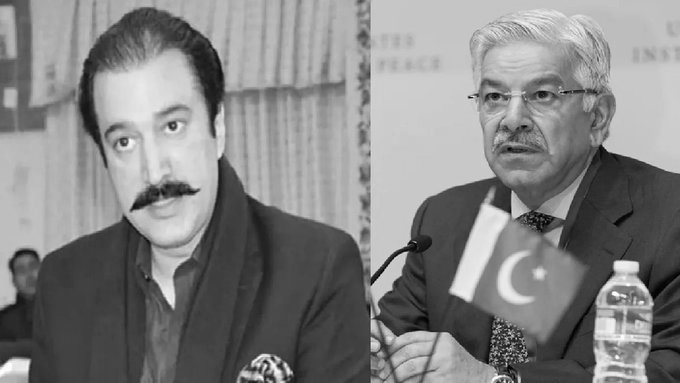
People of J&K Need No Validation From Islamabad: PoK PM Faisal Rathore Slams Khawaja Asif
Pakistan’s political establishment is once again facing internal turbulence, with tensions spilling from the Line of Control into Islamabad’s own corridors of power. The latest flashpoint has emerged between Pakistan’s Defence Minister Khawaja Asif and the so-called Prime Minister of Pakistan occupied Kashmir Faisal Mumtaz Rathore , exposing deep divisions over identity, governance, and the Kashmir narrative that Islamabad has long projected internationally.
The controversy erupted after Khawaja Asif, in a televised interview, stated that Rawalakot is “not Kashmir” and that he does not consider its residents to be Kashmiris. The remarks came amid ongoing protests led by the Joint Awami Action Committee (JAAC) in the region, which had been staging demonstrations outside the Combined Military Hospital in Rawalakot. The situation had already turned violent, with AJK police alleging that armed protesters opened fire, killing four personnel and injuring around 20 others, while the JAAC disputed the claims and accused security forces of excessive force.
Reacting sharply, Faisal Mumtaz Rathore publicly rebuked Asif on X, saying that the people of Jammu and Kashmir do not need validation of their identity from any Pakistani minister and accusing him of deepening divisions instead of unity. The rare public confrontation highlighted unusual friction between Islamabad and its administered territory, where political structures largely function under Pakistan’s influence.
Khawaja Asif, however, stood firm. Defending his comments, he insisted there were different categories of Kashmiris based on historical struggle and sacrifice, arguing that identity cannot be reduced to geography or birth alone. His remarks triggered widespread political backlash, including within Pakistan’s ruling coalition.
In the National Assembly , opposition leaders and coalition figures alike criticised the defence minister. Bilawal Bhutto Zardari questioned his continuation in office, while Maulana Fazlur Rehman accused him of worsening tensions. Former Speaker Raja Pervez Ashraf even issued a public apology on his behalf, calling the remarks deeply hurtful and politically damaging.
The controversy has also resonated internationally, upsetting sections of the Mirpuri diaspora in the United Kingdom, while India responded by calling the episode a reflection of Pakistan’s internal contradictions and governance failures in the region.