
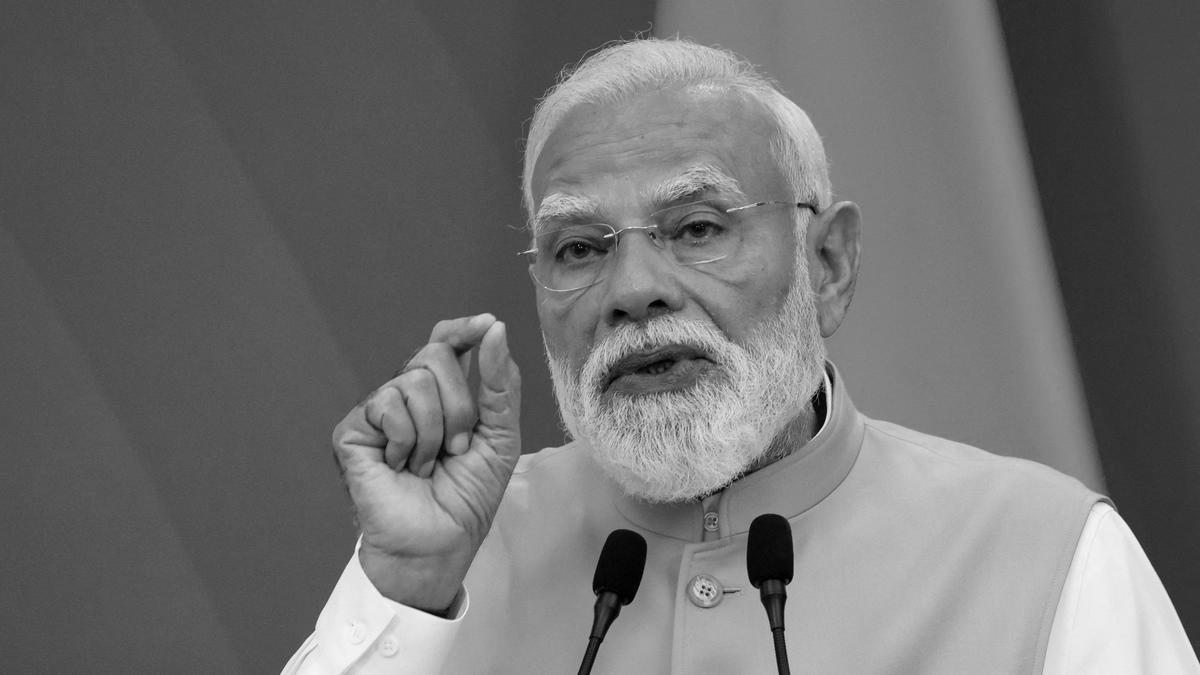
PM Modi Disburses ₹2,400 Crore Under PM-VBRY, Says Youth Will Drive India’s Journey To Viksit Bharat
Prime Minister Narendra Modi on Friday disbursed incentives worth around ₹2,400 crore under the Pradhan Mantri Viksit Bharat Rozgar Yojana (PM-VBRY) , describing the flagship employment-linked incentive programme as a key pillar of the government's strategy to boost formal employment, strengthen social security coverage and empower India's youth.
Addressing beneficiaries, industry representatives and stakeholders associated with the scheme, the Prime Minister said PM-VBRY is not merely an employment programme but a comprehensive initiative designed to support first-time employees while encouraging industries and institutions to create new jobs.
The incentive disbursal marks a significant milestone in the implementation of the scheme, which came into effect on August 1, 2025 , with an outlay of ₹99,446 crore and an objective of generating more than 3.5 crore jobs by July 2027, including opportunities for nearly 1.92 crore first-time entrants into the workforce.
Speaking shortly after returning from visits to France and Slovakia, where he participated in the G7 Summit and held meetings with global leaders, Modi said India's young population is increasingly being recognised across the world for its talent, innovation and entrepreneurial capabilities.
"The world today acknowledges the capabilities of India's youth, and our government is committed to ensuring that every young Indian receives the opportunity to transform talent and aspiration into success," he said.
The Prime Minister emphasised that PM-VBRY is unique because it supports both employees and employers simultaneously. While many employment schemes focus on either workers or businesses, PM-VBRY seeks to create a strong bridge between young job-seekers and industries.
Under the scheme, first-time employees receive financial incentives and are brought into the formal workforce with access to social security benefits. At the same time, employers are encouraged to recruit new workers through incentives linked to employment generation, reducing hiring costs and promoting workforce expansion.
According to Modi, this dual-support structure has helped transform employment generation into a shared mission involving the government, industries and the country's youth.
Highlighting the achievements recorded under the programme so far, the Prime Minister said nearly 70 lakh new jobs have been created and an equal number of first-time employees have been brought under the ambit of social security coverage .
He noted that around 20 lakh young people have completed six months in their first jobs, while nearly 10 lakh beneficiaries have already received incentive payments after reaching this milestone.
More than ₹2,000 crore has already been transferred directly into beneficiaries' bank accounts, while the latest tranche of incentives worth approximately ₹2,400 crore further strengthens the programme's outreach.
Modi said the financial assistance represents much more than monetary support. It is a recognition of the hard work of India's youth and a demonstration of the nation's confidence in their future.
The Prime Minister also expressed satisfaction over the active participation of institutions and enterprises that have generated employment opportunities under the scheme.
"Employment generation gains momentum when the government, industry and youth work together. PM-VBRY reflects a new India where opportunities are created for young people, industries receive encouragement and job creation becomes a national mission," he said.
The Prime Minister highlighted that the scheme has already supported the creation of approximately 15 lakh employment opportunities across the country and continues to strengthen the formal employment ecosystem.
Emphasising India's demographic advantage, Modi said the country's journey towards becoming a developed nation is closely linked to the aspirations, skills and capabilities of its youth.
He noted that over the past twelve years, the government has focused on creating multiple pathways to employment through investments in infrastructure, manufacturing, innovation, entrepreneurship and emerging technologies.
According to him, initiatives such as Make in India , Vocal for Local , efforts to take local products to global markets and Mission Manufacturing have significantly expanded opportunities for both employment and self-employment.
The Prime Minister highlighted that government investment exceeding ₹12 lakh crore in infrastructure is creating a strong foundation for employment generation across sectors.
Large-scale spending on roads, railways, airports, logistics infrastructure and urban development projects has not only strengthened connectivity but also generated substantial employment opportunities across the economy.
He further pointed out that assistance of more than ₹33 lakh crore provided under the Pradhan Mantri Mudra Yojana has enabled millions of young Indians to establish their own enterprises and become job creators rather than job seekers.
Modi also highlighted the growing contribution of women to India's economic progress.
He said more than 10 crore women are now associated with Self-Help Groups, while over 3 crore women have emerged as Lakhpati Didis, reflecting increasing financial independence and entrepreneurial participation among women.
Schemes such as PM SVANidhi and PM Vishwakarma have also strengthened the livelihoods of street vendors, traditional artisans and small entrepreneurs by providing financial support, skill development opportunities and access to markets.
The Prime Minister identified the rapidly growing drone sector as an example of how emerging technologies are opening up new employment avenues.
Drones are now being used in agriculture, medicine delivery, defence operations and land mapping under the SVAMITVA Scheme, creating demand for specialised skills and generating new jobs for young professionals.
He also underscored the transformative impact of the digital economy , which has enabled the emergence of platform-based services, gig work, content creation and technology-driven enterprises.
According to Modi, opportunities that were once unimaginable have become viable livelihoods for millions of young Indians due to the rapid expansion of digital technologies and internet-based businesses.
The Prime Minister highlighted the remarkable growth of India's startup ecosystem over the past decade.
While India had only around 500 startups a decade ago, the country today has more than 2 lakh registered startups operating across nearly every district, contributing significantly to innovation, investment and employment generation.
He said the international community has become increasingly optimistic about India's future and has immense confidence in the capabilities of its young population.
Referring to his recent visit to France, Modi cited the successful organisation of the India Innovates event, which brought together Indian startups and global investors working in sectors such as Artificial Intelligence, space technology, green energy and biotechnology .
Such engagements, he said, demonstrate the growing international interest in India's innovation ecosystem and its expanding role in shaping future technologies.
The Prime Minister also emphasised the importance of India's expanding network of trade agreements.
According to him, trade agreements with countries around the world are opening new markets for Indian industries, increasing export opportunities and creating fresh prospects for Indian professionals and entrepreneurs.
"While the world is preparing for the economy of the future, India is preparing to lead it," Modi said, stressing that the country is investing heavily in equipping its youth with the skills required for a rapidly evolving global economy.
Drawing attention to another major transformation in the employment landscape, Modi said the government has focused not only on job creation but also on linking employment with security, dignity and social protection .
He highlighted efforts to modernise the Employees' Provident Fund Organisation (EPFO) through technology, simplify pension systems and expand access to healthcare and insurance benefits for workers.
The same philosophy, he said, guides the government's labour reforms aimed at improving ease of employment while strengthening worker welfare.
Modi also underlined the importance of increasing women's participation in the workforce.
Measures relating to night-shift employment, work-from-home opportunities and stronger workplace safety mechanisms are intended to create a more inclusive and supportive environment for women employees.
Addressing industry leaders, the Prime Minister stressed that success in the twenty-first century will depend on a nation's ability to nurture skilled talent, encourage innovation and maintain the highest standards of quality.
He said India possesses unprecedented potential in all three areas and is increasingly benefiting from greater global confidence in Indian products, services and capabilities.
Highlighting the importance of skills development, Modi said training, mentorship and internships are no longer optional but essential requirements for building a future-ready workforce.
"The journey towards a developed India will not be driven by investment alone. It will be powered by talent, skills and innovation. To compete globally, India must consistently meet and exceed the highest standards of quality," he said.
Expressing confidence in the country's youth, the Prime Minister said young Indians will not only meet global expectations but surpass them through determination, creativity and resilience.
He encouraged young people not to be discouraged by failures, saying setbacks often provide valuable lessons that contribute to long-term success.
Reaffirming his faith in India's youth and entrepreneurial spirit, Modi concluded by extending his best wishes to beneficiaries and stakeholders associated with PM-VBRY and reiterated the government's commitment to supporting the aspirations, innovation and ambitions of young Indians as the country advances towards the goal of becoming a developed nation.