
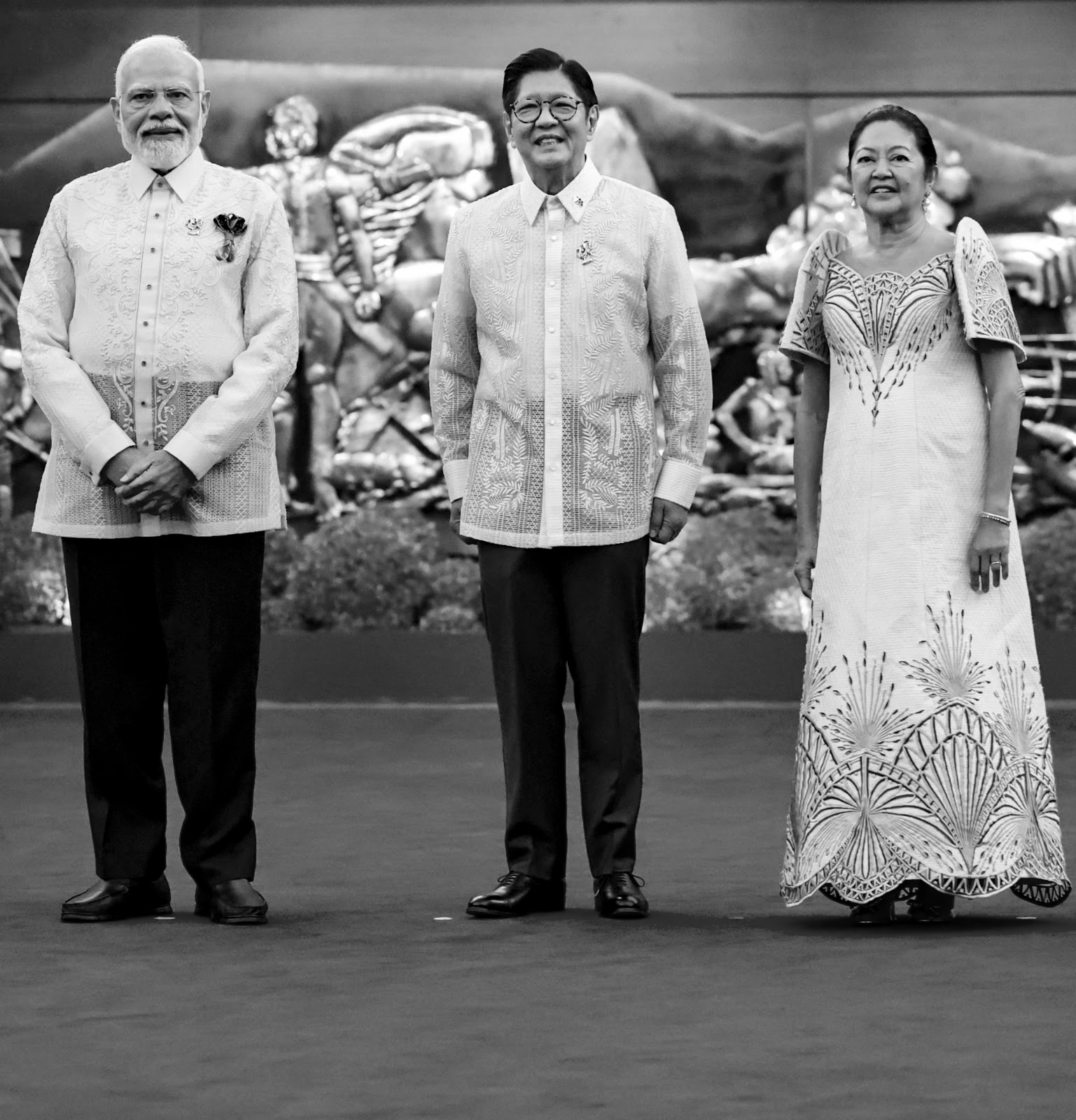
PM Modi in Philippines for ASEAN Summit, Quad Meeting, China Tensions in Focus
Prime Minister Narendra Modi arrived in the Philippines on Monday for a two-day visit to attend the 23rd ASEAN-India Summit and the 21st East Asia Summit, with maritime security, trade, regional stability and growing geopolitical tensions expected to dominate discussions.
Modi, who is visiting at the invitation of Philippine President Ferdinand R Marcos Jr., was received at Manila airport by Robert Joseph 'Jay' Montes de Claro, Secretary of the Department of Information and Communications Technology.
The Prime Minister will participate in both summits on November 17 and hold bilateral interactions with other leaders. The Philippines is hosting the meetings under its 2026 ASEAN chairmanship.
A major focus of the visit is expected to be the proposed Quad leaders' meeting involving India, the US, Japan and Australia. US officials have said Washington is working to formalise the meeting on the sidelines of the Manila summit. If held, it would be the first Quad leaders' summit since September 2024. However, India's Ministry of External Affairs had not officially confirmed the meeting as of Monday.
The Quad discussions are expected to cover maritime security, critical minerals, secure shipping routes and resilient supply chains, amid increasing strategic competition in the Indo-Pacific.
At the ASEAN level, India will seek to strengthen its Comprehensive Strategic Partnership, with particular emphasis on trade, investment, defence cooperation, digital connectivity and maritime collaboration. Bilateral trade between India and ASEAN countries is worth approximately USD 122 billion annually.
The year 2026 has been designated the India-ASEAN Year of Maritime Cooperation. New Delhi is looking to expand collaboration in maritime surveillance, coordinated patrolling, combating piracy and illegal fishing, and maintaining security at sea.
The South China Sea dispute is another major concern at the summit. ASEAN and China have provisionally agreed on around 80 per cent of a proposed Code of Conduct, but differences over its geographical scope and legal status remain unresolved. Negotiations are expected to continue next year.
The continuing conflict in Myanmar and its humanitarian consequences are also expected to feature in regional discussions.