
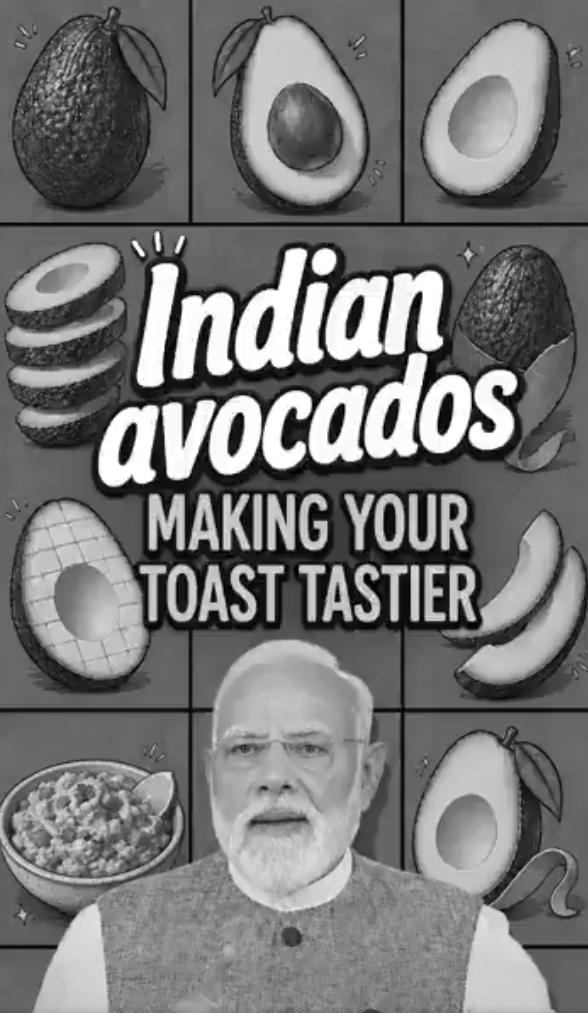
PM Modi Posts Avocado Reel, Reveals How India’s ‘Butter Fruit’ Became ‘Green Gold’
Prime Minister Narendra Modi’s latest Instagram reel on avocado may look like a Gen Z food story, but it carries a bigger message about India’s changing food habits and a new opportunity for farmers.
For decades, India had a fruit that few people wanted. Known locally as butter fruit, avocado was grown mainly in parts of southern India, often as a shade tree in coffee plantations. Green outside and soft inside, it remained a niche crop because local varieties were generally greener, more watery and less creamy than the popular Hass avocado sold globally.
Then came the health boom, the pandemic and Instagram. Suddenly, avocado toast, green smoothies and fitness culture made the fruit fashionable. Cafes began serving avocado in toast, salads, sandwiches and dips, while Indian versions appeared in chutneys, chaats, tikkis and even pani puris.
But India was eating avocados faster than it was growing them.
The country relied heavily on imports from Tanzania, Peru, Kenya, Australia and other countries, pushing prices higher and turning avocado into a premium fruit for many consumers.
In his latest reel, Modi highlighted the country’s growing avocado cultivation and cited Andhra Pradesh farmer Karpa Varadaraj. According to the Prime Minister, Varadaraj became interested in the crop after seeing it on a friend’s farm and learning about cultivation through YouTube. He now produces around four tonnes of avocados and supplies them directly to local shops.
Farmers across Karnataka, Tamil Nadu and Andhra Pradesh are increasingly experimenting with avocado. In coffee-growing regions such as Chikmagalur, the crop can also be intercropped with coffee and black pepper, creating another potential income stream.
The bigger opportunity could be premium Hass avocado, known for its creamier texture and suitability for premium markets. Farmers and companies are exploring commercial cultivation of such varieties in India, raising the possibility of reducing import dependence and eventually exporting Indian-grown avocados.
However, the avocado boom is not without risks. The crop is climate-sensitive, quality planting material can be expensive and trees can take several years to produce commercially. If too many farmers enter the market, rising supply could also put pressure on prices.
Modi had also discussed avocado during Mann Ki Baat, noting how a fruit once barely known in India is now increasingly appearing on dining tables.
From plantation shade trees to cafe menus and Indian farms, avocado’s journey reflects changing consumer tastes and agricultural experimentation.
For Gen Z, it may be avocado toast. For farmers, the fruit could become green gold.