
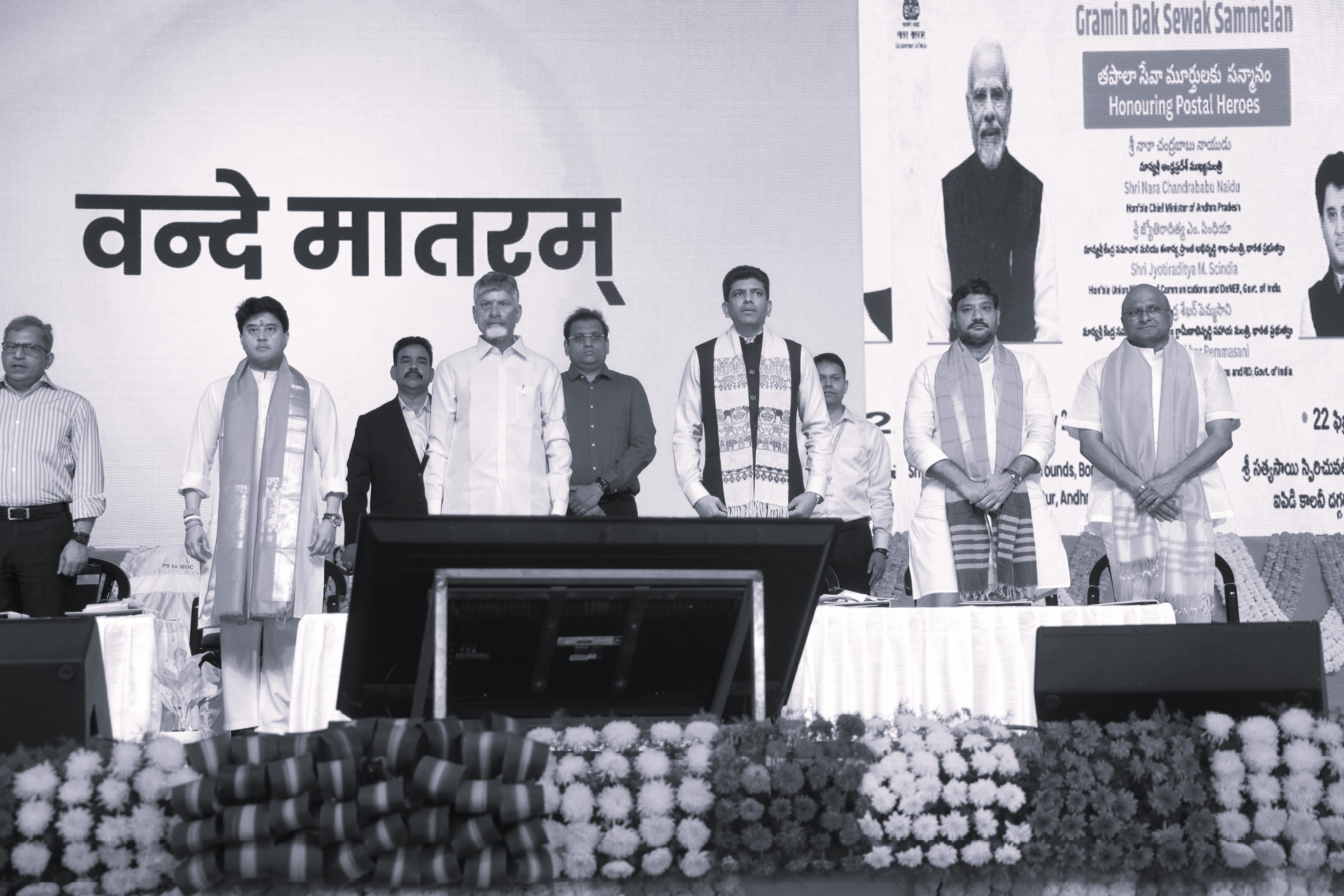
Postal Network Remains Backbone of Last-Mile Governance, Says AP CM
Andhra Pradesh Chief Minister N. Chandrababu Naidu underscored the enduring relevance of India’s postal network and Gramin Dak Sevaks (GDS) in delivering essential services to rural citizens, despite rapid advances in digital communication and artificial intelligence. Speaking at the Gramin Dak Sevak Sammelan held in Vijayawada alongside Union Communications Minister Jyotiraditya Scindia , he described Dak Sevaks as the critical link between governance and grassroots communities.
Recalling his childhood, the Chief Minister said the postman was once regarded as a trusted member of the family, delivering letters, money orders, and important news. While smartphones and instant messaging now dominate communication, he emphasized that dependable last-mile delivery in remote regions still relies heavily on Dak Sevaks. India’s network of roughly 1.64 lakh post offices , the largest in the world, continues to anchor rural connectivity and public service access.
Naidu credited Dak Sevaks with strengthening welfare delivery and financial inclusion across Andhra Pradesh. More than 17,000 Dak Sevaks in the state assist citizens with banking access, insurance services, e-commerce deliveries, and doorstep governance. Nationally, the postal network facilitates a substantial share of Direct Benefit Transfers (DBT) , ensuring pensions, subsidies, and welfare payments reach beneficiaries safely and on time. He emphasized that while machines and AI can automate processes, they cannot replicate the human touch and trust Dak Sevaks bring to public service.
Highlighting modernization needs, Naidu urged the Centre to provide eco-friendly electric bicycles to Dak Sevaks to improve mobility, reduce carbon emissions, and enhance efficiency in last-mile delivery. He also welcomed initiatives such as updated uniforms and welfare measures designed to enhance dignity, safety, and social recognition for postal workers. The postal department is increasingly evolving beyond traditional mail, expanding into parcel logistics, digital services, and financial inclusion as rural e-commerce and governance services grow.
Addressing broader development priorities, the Chief Minister said the Visakhapatnam Steel Plant , once weakened by neglect, has regained stability with central support and recently returned to profitability. He reaffirmed the state’s commitment to completing the Polavaram irrigation project by 2027, calling it transformative for agriculture, water security, and regional development. Expressing confidence in the “double-engine government” model, he said coordinated efforts between the state and Centre are accelerating growth.
Referring to India’s rising global stature in emerging technologies such as artificial intelligence, Naidu cautioned against actions that could damage the nation’s reputation. He urged citizens to support constructive progress and called upon Dak Sevaks to contribute to Prime Minister Narendra Modi’s vision of making India a global leader by 2047 .
As India’s postal system adapts to a digital era, Dak Sevaks remain indispensable—delivering not just mail and parcels, but trust, inclusion, and governance to the country’s most remote doorsteps.