
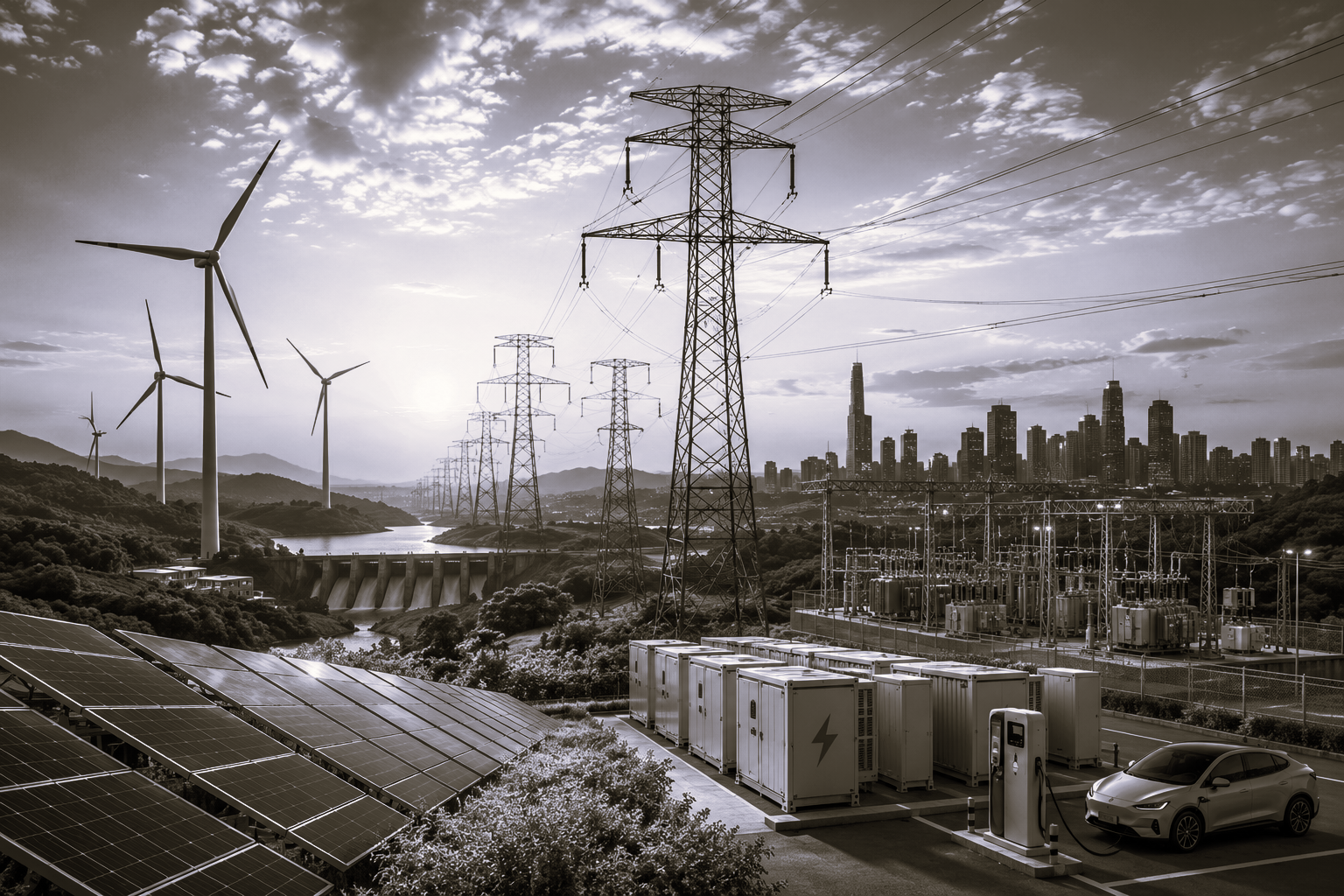
Powering India's Future: Smarter Grids, Bigger Networks, Greener Energy
India's electricity sector is undergoing one of the most significant transformations in its history. What was once a power-deficit nation grappling with electricity shortages is steadily evolving into a modern, technology-driven energy ecosystem capable of supporting rapid industrialisation, digital infrastructure, electric mobility and the country's ambitious clean energy goals.
The government's focus has moved beyond merely increasing electricity generation to building a resilient power ecosystem comprising generation, transmission, distribution, energy storage, smart grids and cyber security. The latest roadmap outlined in the National Electricity Plan (Volume-II: Transmission), 2024, coupled with massive investments in infrastructure, reflects India's determination to build a grid capable of meeting future demand while integrating renewable energy on an unprecedented scale.
From Power Deficit to Power Sufficiency
Over the past decade, India's power sector has witnessed remarkable growth. The country has emerged as the world's third-largest producer and consumer of electricity, generating nearly 1,828 Billion Units (BU) annually. More than 99.5% of this electricity is produced domestically, with only a small quantity imported from neighbouring Bhutan and Nepal under long-term bilateral agreements.
The transformation has been driven by sustained investments in generation, transmission and distribution infrastructure. Today, electricity has become the backbone of India's manufacturing, services, digital economy and agricultural sectors, while also supporting the country's expanding electric vehicle ecosystem and growing data centre industry.
A Blueprint for the Next Decade
The Ministry of Power, in a written reply in Parliament, said the National Electricity Plan (Volume-II: Transmission) has been designed to prepare the country for a projected peak electricity demand of 388 GW by 2032.
The plan envisages expanding India's transmission network from 5.09 lakh circuit kilometres (ckm) to 6.48 lakh ckm by 2032. During the same period, transformation capacity is expected to rise from 1,478 GVA to 2,345 GVA, while inter-regional transmission capacity will increase from 120 GW to 168 GW, enabling seamless transfer of electricity across the country.
The roadmap also takes into account the rapidly increasing share of renewable energy, regional demand patterns and emerging electricity-intensive sectors such as AI-enabled data centres, electric vehicles, green hydrogen production and advanced manufacturing.
Building the Highways of Electricity
Transmission infrastructure has become the backbone of India's electricity revolution.
During the last three financial years (FY 2023-24 to FY 2025-26), the country commissioned 35,172 circuit kilometres of new transmission lines and added 270,174 MVA of transformation capacity at 220 kV and above. These investments include both Inter-State Transmission Systems (ISTS) and Intra-State Transmission Systems (InSTS), ensuring reliable electricity flow across regions.
The expansion has become particularly important because renewable energy projects are often located far from consumption centres. Large solar parks in Rajasthan and Gujarat, wind farms in Tamil Nadu and Karnataka, and hydroelectric projects in the Himalayan states require a robust transmission network to deliver electricity to industries and cities across India.
Generation Capacity Continues to Expand
India's electricity generation capacity has more than doubled over the past decade, making the country one of the fastest-growing power markets globally.
Coal continues to remain the largest source of electricity generation, but renewable energy has emerged as the fastest-growing segment. Solar and wind installations have expanded rapidly, helping India achieve one of the world's largest renewable energy programmes.
The country's diversified generation mix including thermal, hydro, nuclear, solar, wind and biomass has significantly improved energy security while reducing dependence on imported fossil fuels.
Why Transmission Is Becoming More Important Than Generation
Power sector experts increasingly describe transmission as the "new growth engine" of India's electricity sector.
Unlike conventional power plants, renewable energy generation is location-specific and weather-dependent. Electricity generated in renewable-rich states must be transported hundreds of kilometres to major demand centres.
Without adequate transmission infrastructure, renewable energy cannot be fully utilised. Recent studies have shown that transmission bottlenecks have occasionally limited the evacuation of solar power, underlining the need for continuous investments in high-capacity transmission corridors.
Smart Grid Technologies Reshaping Power Management
India is simultaneously modernising the way electricity is managed.
The government has deployed Static Synchronous Compensators (STATCOMs), Synchronous Condensers (SynCONs) and other Flexible AC Transmission System (FACTS) technologies to improve voltage stability and strengthen grid reliability.
In addition, Regional Energy Management Centres (REMCs) have been established to forecast renewable energy generation and optimise grid operations. Technologies such as Automatic Generation Control (AGC) and ancillary services like Secondary Reserve Ancillary Service (SRAS) and Tertiary Reserve Ancillary Service (TRAS) are helping maintain grid frequency and improve operational efficiency.
Battery Storage: Powering the Renewable Future
As renewable energy grows, energy storage is becoming equally important.
According to the Ministry of Power, India had installed 2,927.85 MW / 8,660.20 MWh of Battery Energy Storage Systems (BESS) as of June 30, 2026.
Battery storage enables surplus solar power generated during the day to be stored and supplied during evening peak demand, reducing dependence on coal-based peaking plants. The National Electricity Plan projects that India will require several times its current storage capacity by the early 2030s as renewable energy becomes a larger share of the electricity mix.
Modernising Distribution Networks
Electricity reforms are also extending to the distribution sector.
Through the Revamped Distribution Sector Scheme (RDSS), the Centre is investing in smart metering, modern substations, advanced distribution infrastructure and digital monitoring systems to improve operational efficiency and reduce Aggregate Technical and Commercial (AT&C) losses.
Smart meters are expected to improve billing accuracy, reduce power theft and provide consumers with real-time information on electricity consumption, while strengthening the financial health of Distribution Companies (DISCOMs).
Securing India's Digital Power Grid
With increasing digitalisation comes greater cyber risk.
To safeguard critical electricity infrastructure, the government established the Computer Security Incident Response Team – Power (CSIRT-Power) in April 2023.
Dedicated Security Operations Centres (SOC) and Network Operations Centres (NOC) now provide round-the-clock monitoring of the national power grid. Regular cyber drills, vulnerability assessments and capacity-building programmes are also being undertaken in collaboration with leading institutions such as the Indian Institutes of Technology (IITs), Rashtriya Raksha University (RRU) and the National Critical Information Infrastructure Protection Centre (NCIIPC).
The government has also initiated measures to make power infrastructure resilient against natural disasters through emergency restoration systems, mobile substations, drone-based inspections and digital monitoring technologies.
One Nation, One Grid
India today operates one of the world's largest synchronised electricity networks under the "One Nation, One Grid, One Frequency" framework.
The National Grid enables electricity generated in surplus states to be transmitted efficiently to power-deficit regions, ensuring better utilisation of resources and improving energy security. The integrated grid has also facilitated cross-border electricity trade with neighbouring countries, allowing India to import clean hydropower from Bhutan and Nepal while exporting electricity to countries such as Bangladesh, strengthening regional energy cooperation.
Electricity Demand Is Entering a New Era
The nature of electricity demand in India is changing rapidly.
Apart from households and industries, emerging sectors such as electric vehicles, AI-driven hyperscale data centres, semiconductor manufacturing, metro rail systems, green hydrogen projects and widespread air-conditioning are expected to become major consumers of electricity over the next decade.
These sectors require not only more electricity but also uninterrupted, high-quality power, making investments in transmission, storage and digital grid technologies increasingly critical.
Challenges That Still Remain
Despite remarkable progress, significant challenges remain.
Transmission bottlenecks continue to affect the evacuation of renewable energy in some regions. Land acquisition, financing of large infrastructure projects, integration of intermittent renewable power and improving the financial health of DISCOMs remain key priorities for policymakers.
Experts believe that India's next phase of power sector reforms will focus on building a flexible, intelligent and resilient electricity ecosystem capable of balancing conventional and renewable energy while meeting rapidly rising demand.
The Road Ahead
India's electricity sector is no longer defined merely by the number of power plants it builds. The focus has shifted towards creating a future-ready energy ecosystem where generation, transmission, storage, digital technologies and cyber security work together seamlessly.
With ambitious plans to expand transmission infrastructure, strengthen distribution networks, deploy battery storage, modernise grid management and integrate renewable energy at scale, India is laying the foundation for one of the world's most advanced power systems.
As electricity becomes central to economic growth, digital transformation and climate action, the country's investments today are not just building power infrastructure, they are powering the next chapter of India's development.