
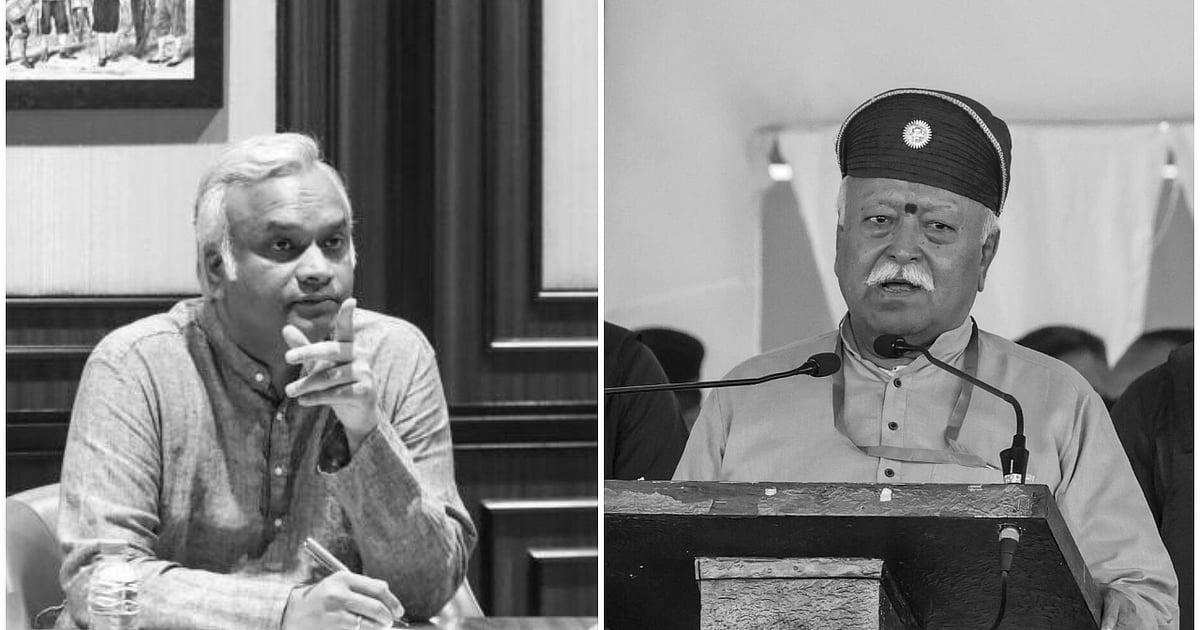
Priyank Kharge-RSS Feud Puts Spotlight on Sangh’s Unregistered Power Structure
The defamation case against Karnataka Home Minister Priyank Kharge has reopened a question many citizens rarely pause to ask: how does the Rashtriya Swayamsevak Sangh (RSS) , one of India’s most influential socio-cultural forces, function with such reach and discipline without being formally registered as a legal entity?
A Bengaluru court has summoned Kharge and former Karnataka Youth Congress president Mohammed Haris Nalapad to appear on July 21 after taking cognisance of a private complaint filed by RSS member Tejas A . The complaint alleged that the Congress leaders made defamatory remarks against the Sangh through public statements and social media posts. Proceedings against former minister Dinesh Gundu Rao were dropped.
Responding to the summons, Kharge said he would fight the case legally and maintained that the Constitution and law were on his side. But his larger political point remains the RSS’s lack of formal registration, a status that would normally bring clearer disclosure of office-bearers, finances, donations, bank accounts and assets.
The RSS has long maintained that it is a body of individuals and not required to register like a society, trust, company, NGO or political party. That position gives it unusual flexibility. Unlike registered entities, the core organisation does not have to present public statutory disclosures in the same format. Critics argue that this makes it difficult to know whether the RSS itself operates bank accounts or owns physical assets directly, or whether properties, offices and infrastructure are held through a wider web of trusts, samitis and allied bodies that allow the Sangh to function as a single force without appearing as one centralised legal entity.
This distributed structure is often described by critics as one of the RSS’s institutional strengths. It resembles a decentralised network: hard to reduce to one office, one balance sheet or one set of attachable assets. In political terms, that also makes it difficult for any government hostile to the RSS to restrain it simply by freezing one entity’s accounts or properties.
Backing Kharge , Karnataka Congress president B K Hariprasad accused the RSS of double standards and said an organisation that welcomes legal action against others should itself function within a transparent legal framework.
The court case will proceed on defamation. But politically, it has revived a larger debate over whether an organisation with the RSS’s scale of soft and hard power can continue to operate without formal institutional transparency.