
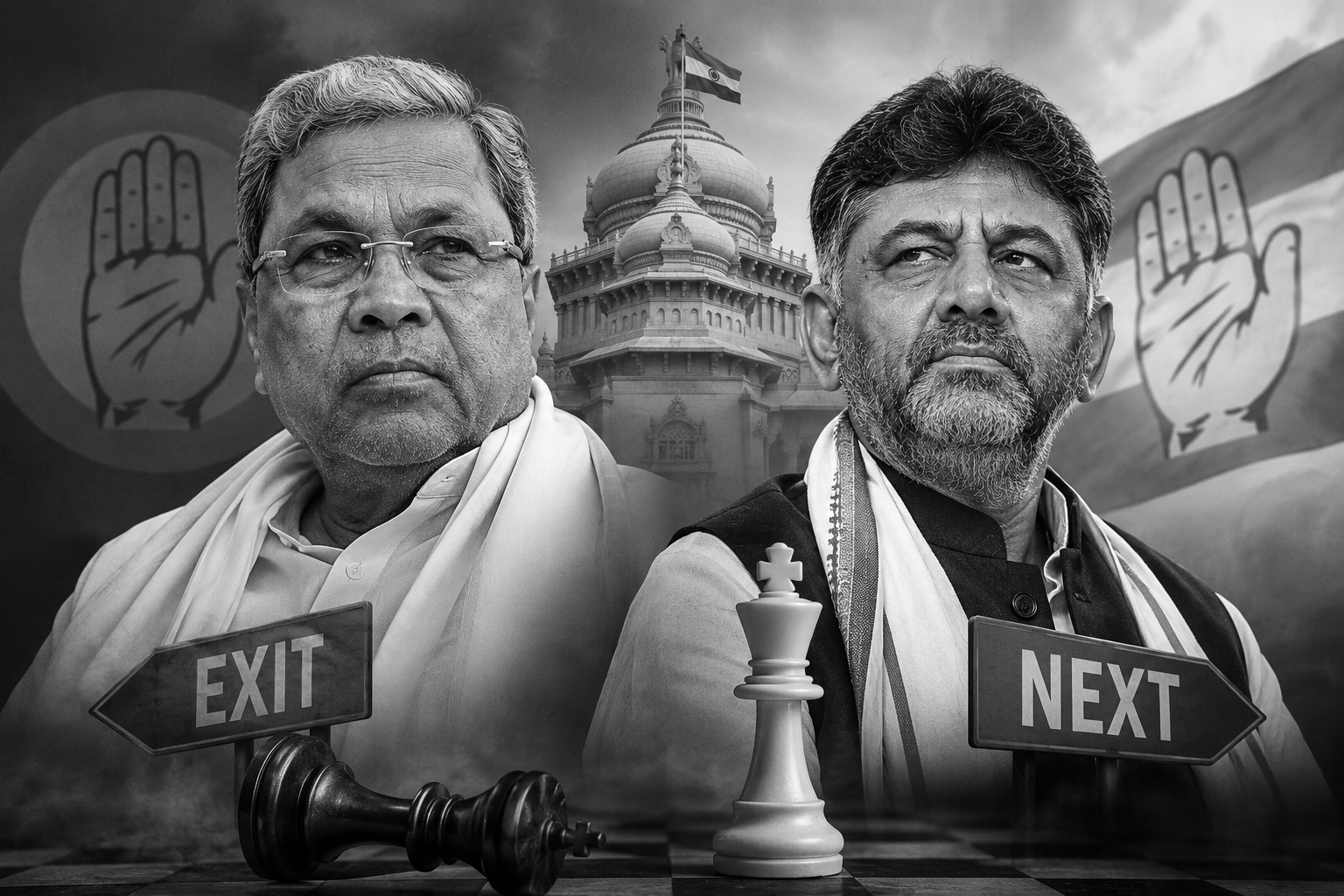
Promised Rotation, Reluctant Exit: K’taka Congress Power Shift, Siddaramaiah Resigns, Shivakumar Aligns
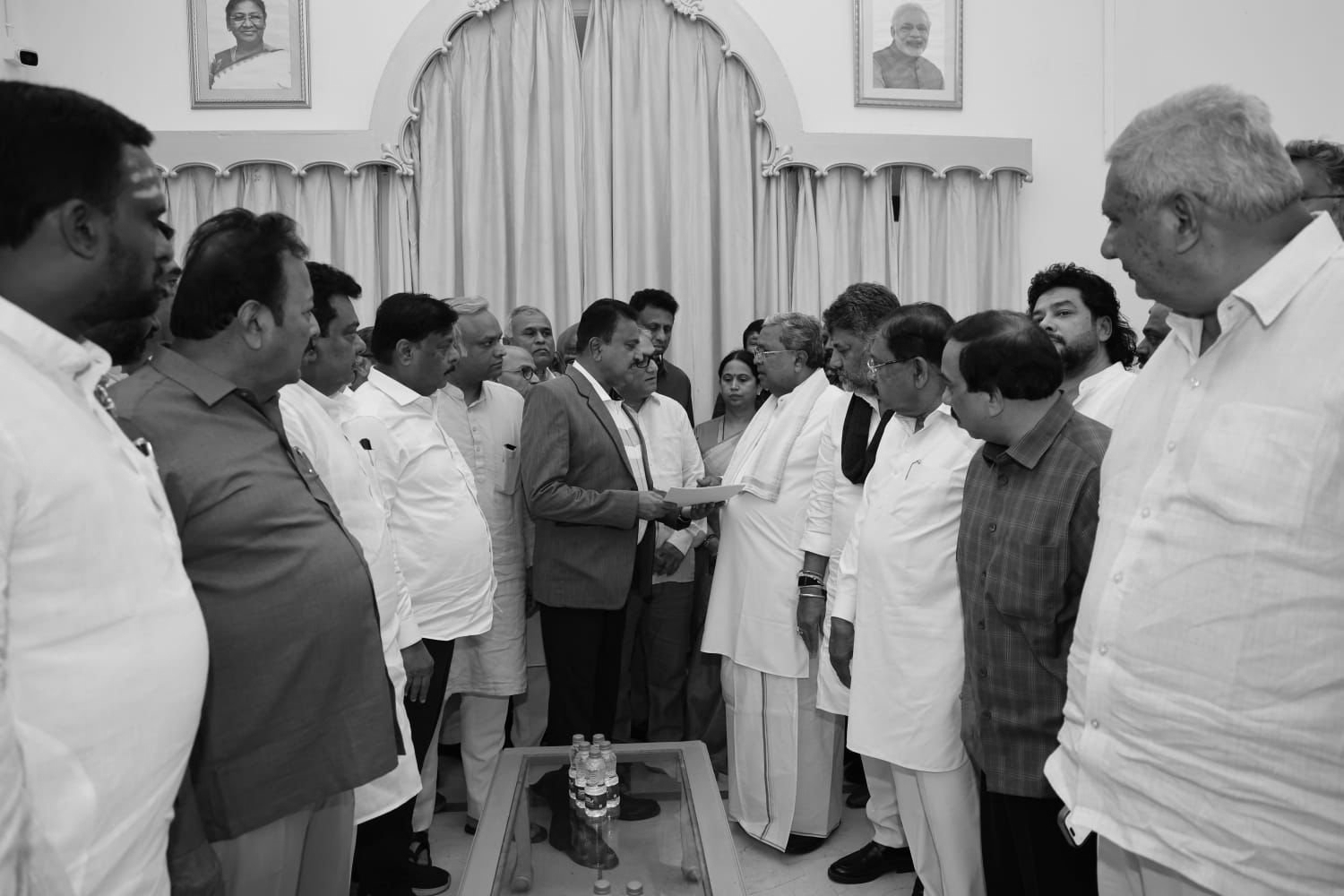
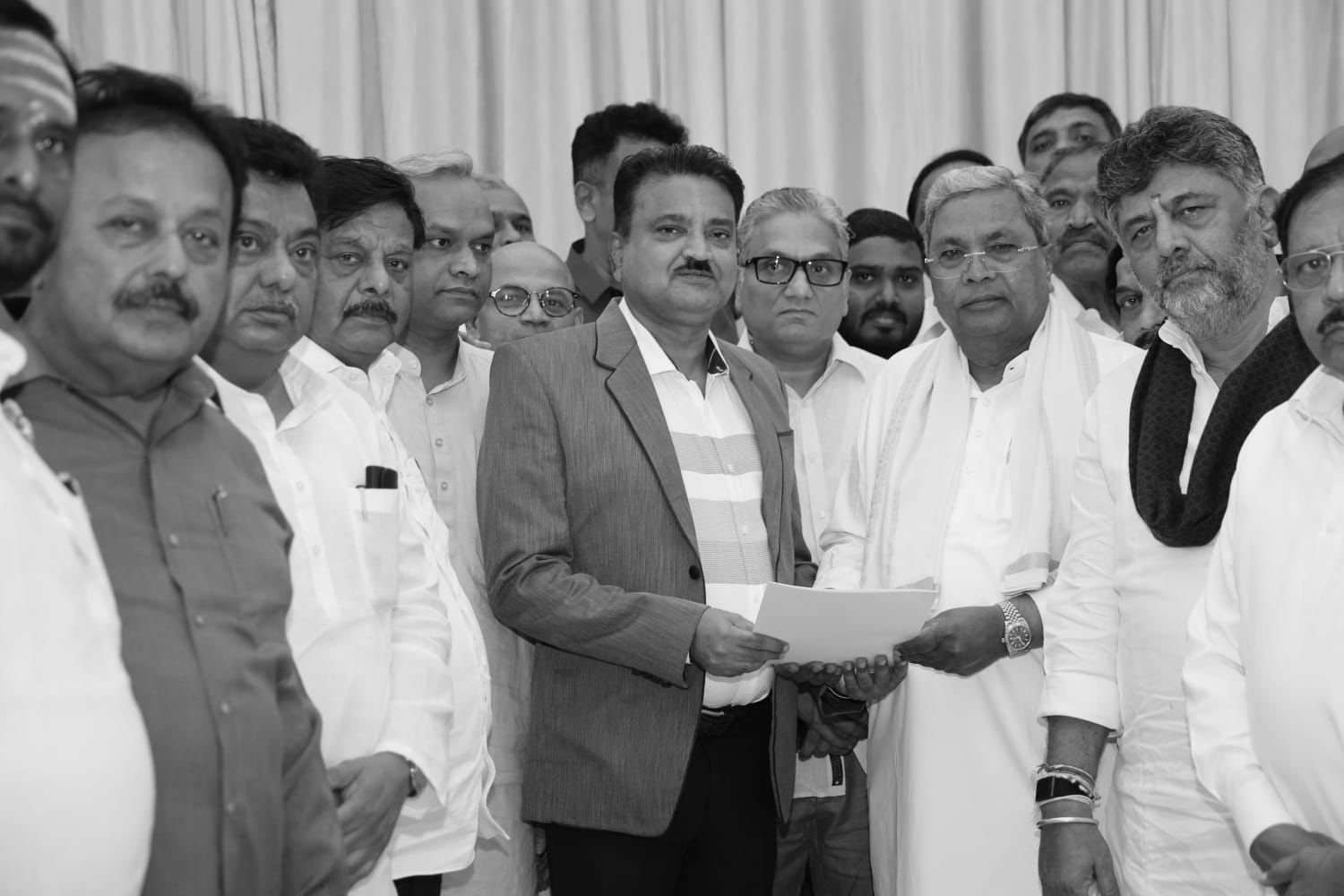
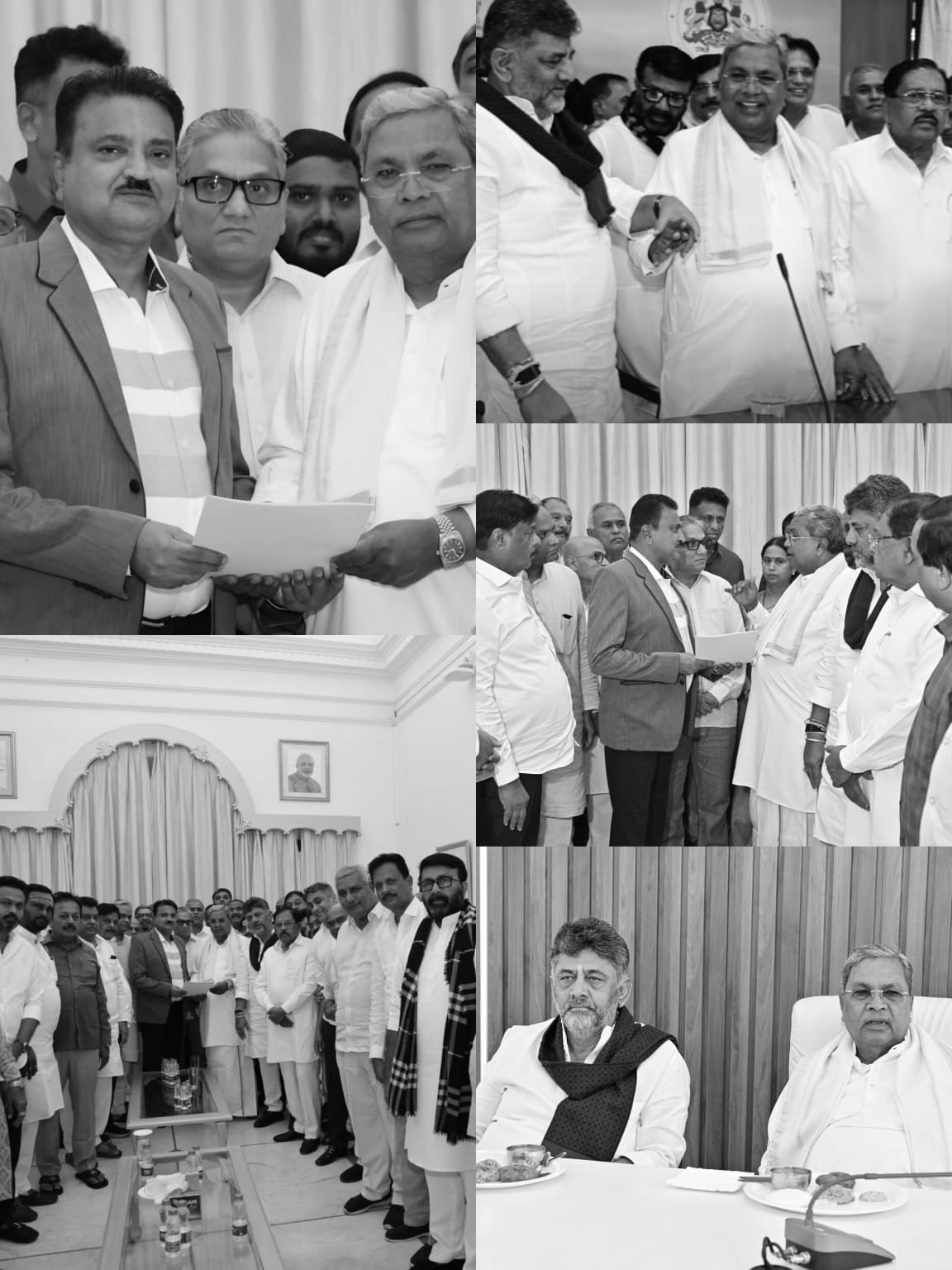
Karnataka’s political landscape was dramatically reshaped on Thursday as Siddaramaiah formally submitted his resignation , bringing an end to a three year tenure marked by welfare schemes, internal friction, and a caste census that altered the state’s political arithmetic. The seventy seven year old veteran submitted his resignation at Lok Bhavan in Bengaluru around 3 PM, with Governor’s Secretary Prabhu Shankar receiving the letter on behalf of Governor T haawarchand Gehlot , who had left for Mumbai the previous night, a detail that immediately triggered speculation over the timing of the transition.
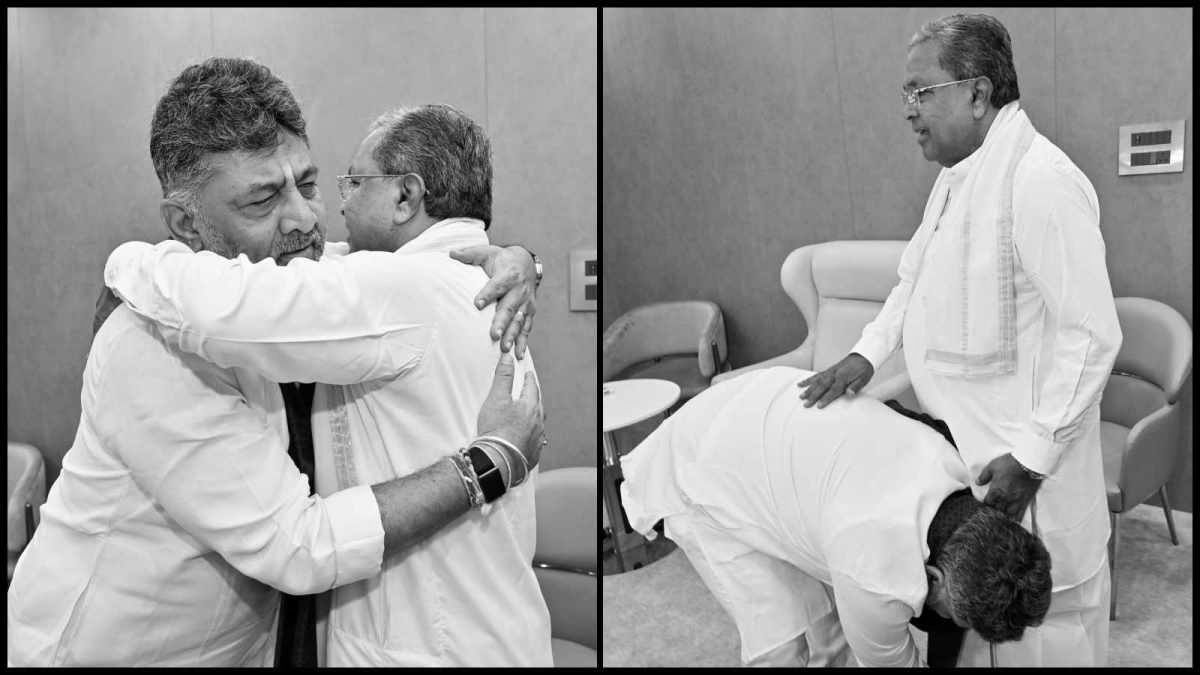
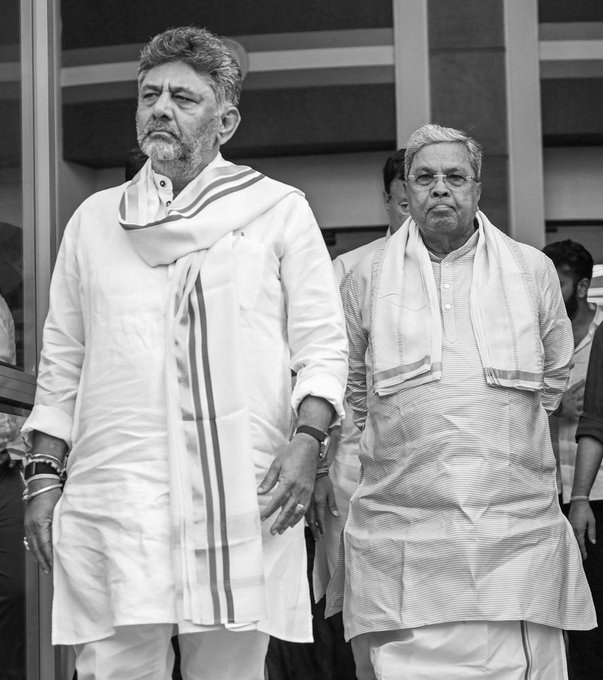
The day unfolded with carefully staged political messaging . Siddaramaiah hosted a farewell breakfast at his official residence Kaveri, where DK Shivakumar was seen touching Siddaramaiah’s feet , followed by an embrace that projected unity within the Congress even as months of internal tension lingered beneath the surface. Senior leaders including G Parameshwara, Priyank Kharge, M B Patil, K J George, and Ramalinga Reddy were present, reinforcing the image of collective alignment.
The transition was driven by the Congress high command , which revisited an informal understanding on rotational leadership after two and a half years, a period that ended in November 2025. Pressure from Shivakumar’s camp had steadily built up since then, culminating in a series of meetings in Delhi involving Rahul Gandhi, Mallikarjun Kharge, K C Venugopal, and Randeep Surjewala . Those discussions ultimately cleared the path for the leadership change.
In a significant parting move, Siddaramaiah approved a report just before stepping down, a document that revealed that Vokkaligas and Lingayats are no longer the state’s dominant communities, with Scheduled Castes now topping the list. The report, commissioned during his first term, is expected to reshape reservation politics in Karnataka for years to come.
At a press conference shortly after, he was characteristically direct . He declined the Rajya Sabha seat offered by the high command , saying “I am not interested in national politics” , and made clear he would serve out his remaining two years as Varuna MLA . On whether he had been pressured to quit, he was blunt: “What pressure? I voluntarily resigned immediately after they asked me to do so.”
Outside Kaveri, emotions ran high. Supporters broke down in tears , some attempted to block his vehicle, and protests erupted in several districts including Shivamogga and Yadgir, reflecting the depth of his support base, particularly within the Kuruba community. The BJP, meanwhile, seized on the moment, with state president B Y Vijayendra arguing that the resignation reflected governance failure and predicting early electoral turbulence.
Attention now turns to DK Shivakumar , who is set to assume the Chief Minister’s post after years of political anticipation. After the resignation, both leaders travelled to Delhi for consultations with the Congress high command, with discussions expected to finalise the next cabinet structure and Deputy Chief Minister appointments. The swearing in is tentatively expected on May 30 or June 2, likely during an auspicious muhurta in Bengaluru.
For Shivakumar, the transition marks a shift from organiser to head of government, but he inherits a politically delicate balance. A strong Siddaramaiah camp remains influential, while the caste census report has opened new fault lines in social and electoral equations. As Karnataka prepares for the next phase of leadership, the state enters a period of cautious transition, where unity, ambition, and legacy will all be tested in equal measure.