
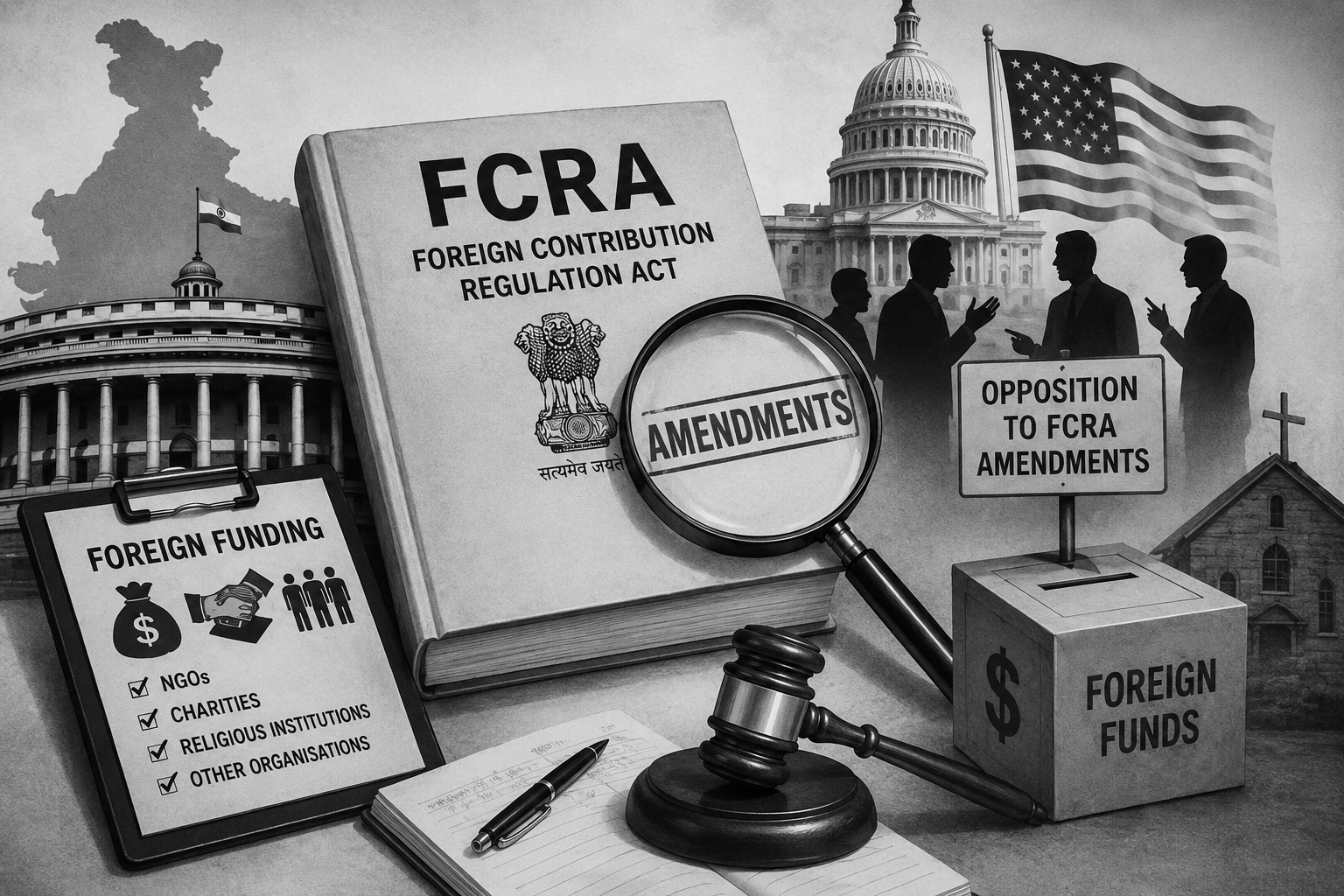
Proposed FCRA Amendments Draw Criticism From Nagaland Church Bodies
The Nagaland Baptist Church Council (NBCC) has urged Nagaland Chief Minister Neiphiu Rio to press the Union Government to withdraw the proposed Foreign Contribution (Regulation) Amendment Bill, 2026 , contending that the legislation could adversely affect churches, Christian institutions, charitable organisations and civil society groups engaged in humanitarian and development work across the country. The appeal comes amid growing concerns among faith-based organisations that the proposed amendments could tighten restrictions on overseas funding and increase regulatory oversight of non-profit institutions.
In a representation submitted to the Chief Minister, the NBCC , representing 21 Baptist Associations, four associate members, 1,626 congregations and 7,48,532 baptised members across Nagaland, said the Church has been a key partner in the state's development for over a century. It highlighted its contributions in education, healthcare, peacebuilding, disaster relief, youth and women's empowerment, de-addiction programmes , and welfare initiatives for poor and marginalised communities, particularly in remote tribal areas. The council said lawful foreign contributions have enabled Christian organisations to sustain these services and should be viewed as humanitarian partnerships rather than political influence.
While acknowledging the Centre's authority to regulate foreign funding in the interests of national security, transparency and accountability , the NBCC argued that the proposed amendments go beyond reasonable regulation and could adversely affect genuine charitable organisations.
India's Foreign Contribution (Regulation) Act (FCRA) was first enacted in 1976 and replaced by a more comprehensive law in 2010 . The regulatory framework was significantly tightened through the FCRA Amendment Act, 2020 , which prohibited the transfer of foreign contributions between FCRA-registered organisations, reduced the ceiling on administrative expenditure from 50% to 20% , mandated that all overseas donations be received through a designated State Bank of India branch in New Delhi , required Aadhaar identification for key office-bearers, and empowered the government to suspend an organisation's FCRA registration for up to 360 days during investigations.
The Centre introduced limited relaxations through amendments to the FCRA Rules in 2022 , extending compliance timelines, removing the requirement for NGOs to publish quarterly foreign contribution details on their own websites, and increasing the limit for foreign remittances that close relatives can receive without prior approval from ₹1 lakh to ₹10 lakh , subject to post-facto intimation. Additional compliance norms introduced in May 2025 require office-bearers to disclose their citizenship, Overseas Citizen of India (OCI) status, past convictions and pending criminal cases.
The proposed FCRA Amendment Bill, 2026 , introduced in Parliament in March 2026 , seeks to further strengthen the regulatory framework. One of its key provisions is the creation of a Designated Authority to take custody of foreign-funded assets if an organisation's FCRA registration expires, is cancelled or surrendered. It also proposes stricter reporting requirements, tighter timelines for utilisation of foreign contributions received under prior permission and enhanced oversight of assets created using overseas funds.
The NBCC said these provisions could restrict churches and charitable institutions from receiving and utilising legitimate foreign contributions, increase compliance burdens on smaller churches and grassroots ministries, disrupt long-standing partnerships with international Christian organisations, and affect programmes serving children, youth, women, persons with disabilities, the elderly and economically weaker communities . It also expressed concern that institutions could lose control of assets if their FCRA registration is cancelled.
According to the Ministry of Home Affairs (MHA) , FCRA-registered organisations across India received around ₹22,085 crore in foreign contributions during 2021-22 , compared with approximately ₹17,059 crore in 2020-21 and ₹16,998 crore in 2019-20 . These funds support activities in education, healthcare, rural development, social welfare, disaster relief, research, religious and cultural programmes , with major contributions originating from countries including the United States, the United Kingdom, Germany, Canada and Italy . While the Centre says tighter regulations are essential to ensure transparency and safeguard national security, church organisations and civil society groups argue that excessive restrictions could hamper legitimate humanitarian work and weaken social welfare initiatives across India.
The representation, signed by NBCC President Rev Achu Chang, General Secretary Rev Dr Mar Pongener and Secretary (Social Concern) Dr Villo Naleo , reaffirmed the council's commitment to working with the government in promoting peace, justice, social harmony and holistic development , while expressing confidence in Chief Minister Rio's leadership in safeguarding the interests of Nagaland.