
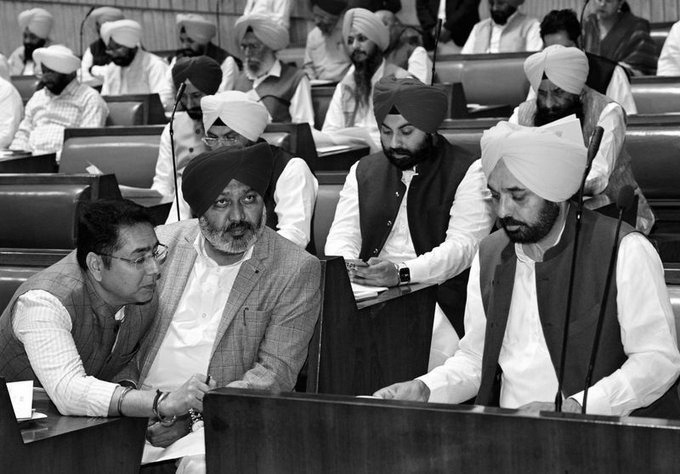
Punjab Assembly Passes Resolution Against E20 Fuel Policy, Raises Vehicle Safety Concerns
The Punjab Assembly on Tuesday passed a resolution opposing the Centre’s E20 ethanol-blended fuel policy, raising concerns over the impact of the fuel mix on vehicles that are not designed to support higher ethanol content. The resolution was introduced during the second day of the monsoon session of the Punjab Assembly by state Finance Minister Harpal Singh Cheema.
While presenting the resolution, Cheema questioned the Centre’s decision to advance the implementation of E20 fuel, stating that the policy was originally planned to be fully implemented by 2030. He sought clarity on why the rollout was accelerated and raised concerns over the possible consequences for vehicle owners.
Cheema also alleged that the BJP-led central government had moved ahead with the policy under external influence, pointing towards the global ethanol market and major ethanol-producing countries.
Participating in the debate, Punjab Chief Minister Bhagwant Mann criticised the Centre’s approach, alleging that E20 fuel was introduced without adequate consultation with experts or a detailed assessment of its impact. Mann claimed that there had been no comprehensive expert study on the long-term effects of E20 usage and said that some vehicles were facing damage due to the fuel blend.
Questioning the urgency behind the policy, Mann asked why the implementation timeline was moved forward from 2030 to 2026. He argued that vehicle owners should not be forced to use a particular fuel type without having alternatives.
The Punjab government demanded that consumers should be given the option to choose between E20 fuel and pure petrol, especially for vehicles that may not be compatible with higher ethanol blending.
The resolution adds to the ongoing debate over India’s ethanol blending programme, which aims to reduce dependence on imported crude oil, cut carbon emissions, and promote renewable fuel alternatives. However, concerns over vehicle compatibility, fuel efficiency, and infrastructure readiness have sparked discussions among stakeholders.