
Punjab Farmers’ Protest Highlights Deeper Crisis In Agriculture And Water Politics
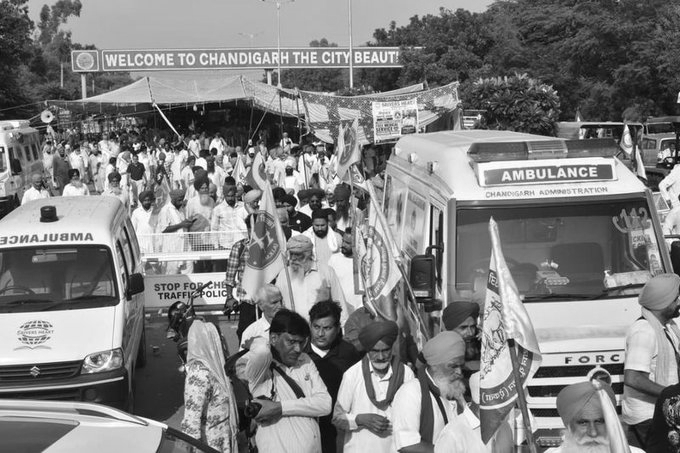
The Samyukta Kisan Morcha (SKM) ended its week-long protest at the Chandigarh-Mohali border on September 7, 2026, after the Punjab government gave written assurances on several long-pending demands concerning agriculture, farm loans and the state’s river waters. The protest, which began on September 1, reflected deeper concerns surrounding Punjab’s farm economy and its longstanding dependence on government support.
Punjab’s agricultural politics are closely linked to the legacy of the Green Revolution. The state emerged as one of India’s major wheat and rice producers through high-yielding varieties, irrigation, fertilisers and government procurement. Over time, however, the wheat-paddy system created heavy dependence on MSP and assured procurement, while extensive cultivation of water-intensive crops contributed to groundwater depletion.
This explains why farmers continue to demand a legal guarantee for MSP, with prices based on the C2+50% formula, along with debt relief for farmers and agricultural labourers. They argue that assured prices are necessary to protect incomes amid rising cultivation costs and limited crop diversification.
Farmers are also concerned about policies they believe could affect agriculture, including the proposed Seed Bill, 2025, the Electricity Amendment Bill and trade agreements that they fear could expose domestic farmers to greater competition. Sugarcane growers have separately sought timely clearance of outstanding payments from private mills.
The issue of Punjab’s river waters has an additional economic and political dimension. Agriculture depends heavily on irrigation, while excessive groundwater extraction has placed the state’s water resources under severe pressure. Farmers therefore view river-water agreements as directly connected to their future agricultural security. The dispute also involves broader questions of Punjab’s rights, Centre-state relations and control over natural resources.
In response, the Punjab government assured the SKM that it would convene an Assembly session within a month to consider resolutions on old water agreements, provisions of the Punjab Reorganisation Act and other demands. It also promised an One-Time Settlement policy for certain farm loans and action on pending sugarcane dues.
The latest protest therefore highlights a larger challenge for Punjab: balancing farmer incomes and political demands with the need for crop diversification, sustainable water use and a less agriculture-dependent economy.