
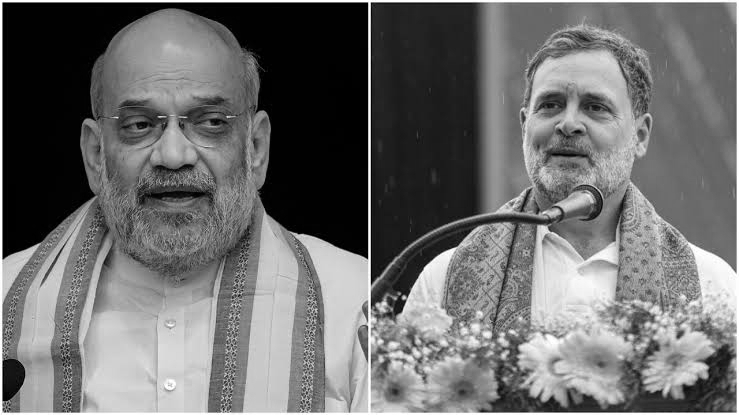
Rahul Gandhi Amit Shah Defamation Case Hearing Deferred Again Over Voice Sample Dispute
The hearing in the long-running 2018 defamation case against Congress leader Rahul Gandhi over alleged remarks against Union Home Minister Amit Shah has once again been delayed, with proceedings in Sultanpur district court linked to an unresolved dispute over a forensic voice sample examination and a pending revision petition before a higher court.
According to court-linked proceedings, the matter was scheduled before the ADJ-5 court in Sultanpur on July 1 , but substantive arguments could not proceed as the complainant’s counsel sought adjournment , and the hearing remains tied to a revision plea challenging the lower court’s refusal to order a forensic voice test of Gandhi’s audio recording. The case, originally filed in 2018 by BJP leader Vijay Mishra, alleges that Rahul Gandhi made derogatory remarks against Amit Shah during the Karnataka Assembly election campaign when Shah was BJP national president.
Recent developments indicate that the central legal dispute now revolves around whether Gandhi’s voice should be matched with an audio clip submitted as evidence , a request earlier rejected by the trial court on the ground that there was no categorical denial of the voice attribution. That rejection has been challenged in the ADJ court, effectively stalling further progress at the trial level.
Multiple recent media reports confirm that similar hearings in May and June 2026 were also deferred or limited due to the same pending revision petition, with the next effective hearing date in the broader matter previously indicated as July 6, 2026 , reflecting continued procedural delays rather than substantive trial advancement. The case has seen prolonged litigation since 2018, including summons, bail proceedings, and a brief warrant period in 2023–24 before Gandhi secured bail and recorded his statement in court in 2024.
The matter remains under judicial consideration, with no final decision on the forensic examination request, which continues to be the key factor delaying trial progression.