
Railways ‘Surplus’ under lens as operating costs eat up nearly all revenue
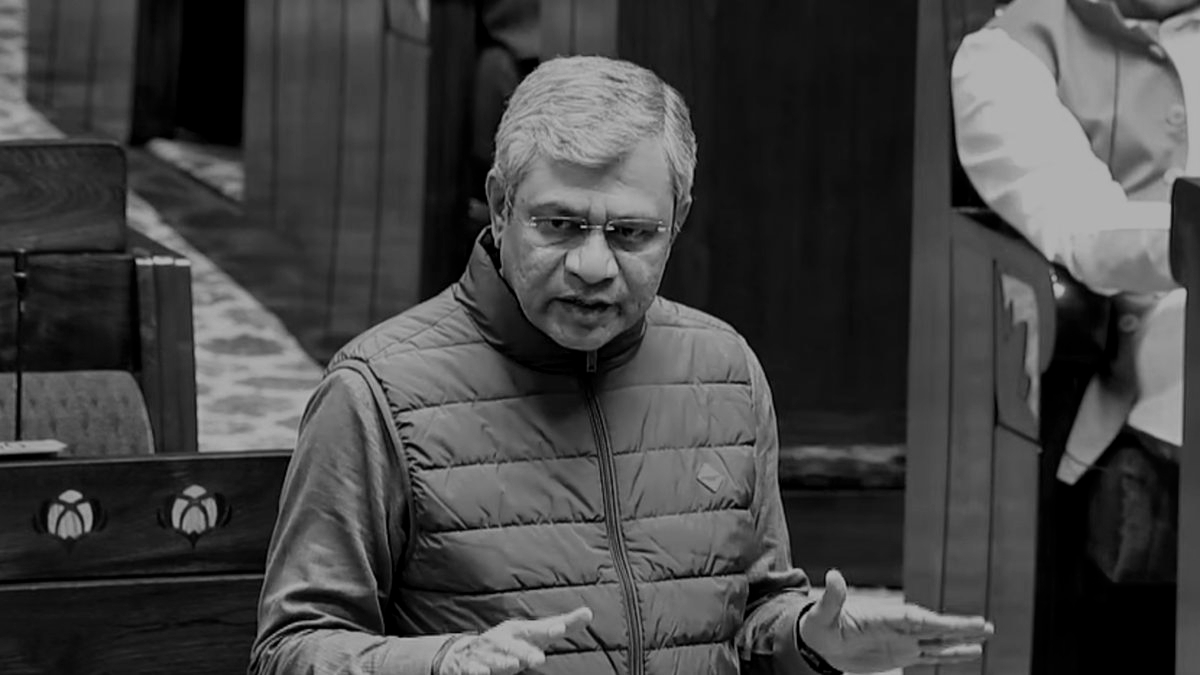
Union Railway Minister Ashwini Vaishnaw on Friday told the Rajya Sabha that Indian Railways has achieved a “small revenue surplus” after meeting all operational costs over the last decade, crediting higher freight traffic, electrification and cost control measures under the Narendra Modi government. However, an examination of official financial data indicates that while revenues have risen, the Railways’ financial position remains strained, with operating expenses absorbing almost the entire income.
According to figures presented in Parliament, Indian Railways recorded gross traffic receipts of Rs 2.65 lakh crore in 2024-25 with a surplus of only Rs 2,660 crore , while the operating ratio stood at 98.22 per cent . This implies that for every Rs 100 earned, more than Rs 98 was spent on operations , leaving a margin of less than Rs 2, a level economists consider insufficient to indicate genuine financial strength or long-term sustainability.
The minister stated that the total annual expenditure of the Railways stands at about Rs 2.74 lakh crore , comprising staff costs of Rs 1.18 lakh crore for nearly 12 lakh employees, pension payments of Rs 65,000 crore for around 18 lakh pensioners, energy costs of Rs 32,000 crore , finance costs of Rs 23,000 crore and maintenance costs of Rs 8,000 crore . While the government highlighted savings of about Rs 5,500 crore from electrification and energy efficiency measures, analysts note that these savings are modest when compared to the heavy burden of salaries and pensions , which together account for more than two-thirds of total expenditure .
Over the past decade, the Centre has significantly increased capital investment in Railways , with cumulative spending exceeding Rs 13 lakh crore between 2014 and 2024 . Annual capital expenditure has grown from around Rs 93,000 crore in 2013-14 to more than Rs 2.4 lakh crore in recent budgets . Much of this expansion has been financed through budgetary support from the Union government and extra-budgetary borrowings through the Indian Railway Finance Corporation, raising concerns that the apparent improvement in financial health is driven more by state funding than by internally generated surplus.
Vaishnaw said freight traffic increased by about 400 million tonnes and that passenger fares remain subsidised at nearly 45 per cent , costing the exchequer around Rs 60,000 crore annually . While growth in freight movement has contributed to higher revenue, passenger services continue to operate at a loss , reflecting a structural imbalance in the Railways’ business model that limits the impact of operational efficiencies.
On employment generation, the minister claimed that 5.04 lakh jobs were provided between 2014 and 2024 and that recruitment of another 1.5 lakh workers is underway in the third term of the Modi government. However, critics argue that these numbers largely represent replacement hiring due to retirements rather than a net increase in the workforce, as the overall staff strength of Indian Railways has remained broadly stable.
The minister credited Prime Minister Narendra Modi’ s leadership for improving the Railways’ finances, citing complete electrification of the network, reduced energy costs and better maintenance practices. Yet independent assessments suggest that the Railways has achieved stability rather than profitability, with the narrow surplus remaining vulnerable to fuel price fluctuations, rising pension liabilities and debt servicing costs.
Vaishnaw also said the Railways’ budget allocation for the Northeast had increased to Rs 11,486 crore from about Rs 2,000 crore during the UPA government, reflecting a sharp rise in infrastructure spending in the region. While the government portrays the current financial position as evidence of a turnaround, analysts caution that an operating ratio close to 100 per cent and continued reliance on state support indicate that the claimed surplus is fragile and not structurally transformative.