
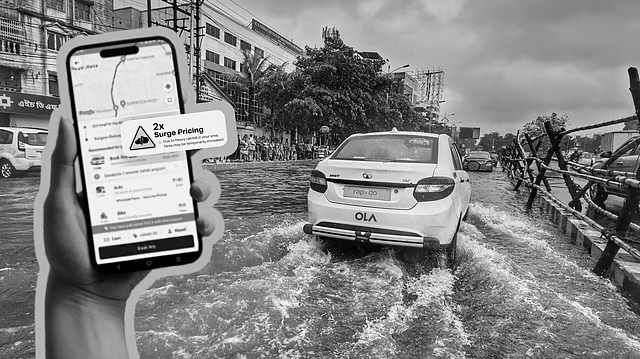
Rain Tax Or Surge Pricing? Fares Soar Up To 3 Times During Monsoon Showers Across Indian Cities
Commuters across Delhi NCR , Hyderabad and Bengaluru are being forced to pay up to three times the normal fare for cab and auto rides as monsoon showers trigger aggressive surge pricing on ride hailing apps. With rainfall disrupting traffic and reducing driver availability across major Indian cities, platforms including Ola , Uber and Rapido are activating dynamic pricing algorithms that push fares well beyond standard rates during peak downpours.
The scale of the surge has become impossible to ignore. For a distance of approximately 11 kilometres, a ride that would usually cost between ₹110 and ₹150 shot up to ₹276 and beyond around 8:20 am, as commuters set out after a night of continuous rain. Media professional Renee Fernandez described the pattern as near instantaneous, saying the moment there is a sense that it may rain, prices begin climbing, and that the hike on a day when it had rained all night felt bizarre. Her experience echoes a wider trend of riders in Gurugram, Noida and Bengaluru reporting fares more than doubling for short trips, with some Bengaluru commuters previously charged as high as ₹415 for a six kilometre journey.
Surge pricing works by matching real time demand with available drivers in a given micro market, sometimes calculated at a resolution as narrow as a few hundred metres. When rainfall floods streets and drivers log off or slow down, the algorithm interprets the resulting shortage as a demand spike and raises prices accordingly. Companies maintain that this system incentivises more drivers to stay on the road during difficult conditions, but commuters argue it amounts to profiteering during weather beyond their control.
The rain penalty is not limited to cabs and autos. Food and instant delivery platforms Swiggy and Zomato have also built weather linked charges into their pricing, with rain fees on individual orders ranging from about ₹15 to ₹35 depending on distance and demand. Both companies have in recent months withdrawn the rain surge waiver that was previously offered to premium subscribers under Swiggy One and Zomato Gold, meaning even paying members are no longer shielded from the extra charge once wet weather hits.
Commuters and delivery customers have taken to social media in large numbers, questioning why fare and fee increases show no consistent logic and accusing platforms of exploiting a captive audience that has no viable alternative once it starts raining. Public transport networks including metro services in Delhi and Bengaluru have absorbed some of the overflow, but for those without easy metro access, particularly in the sprawling suburbs of the National Capital Region and outer Hyderabad, app based cabs and delivery services remain the only practical option, leaving them with little choice but to pay the inflated rates every time the clouds gather.