
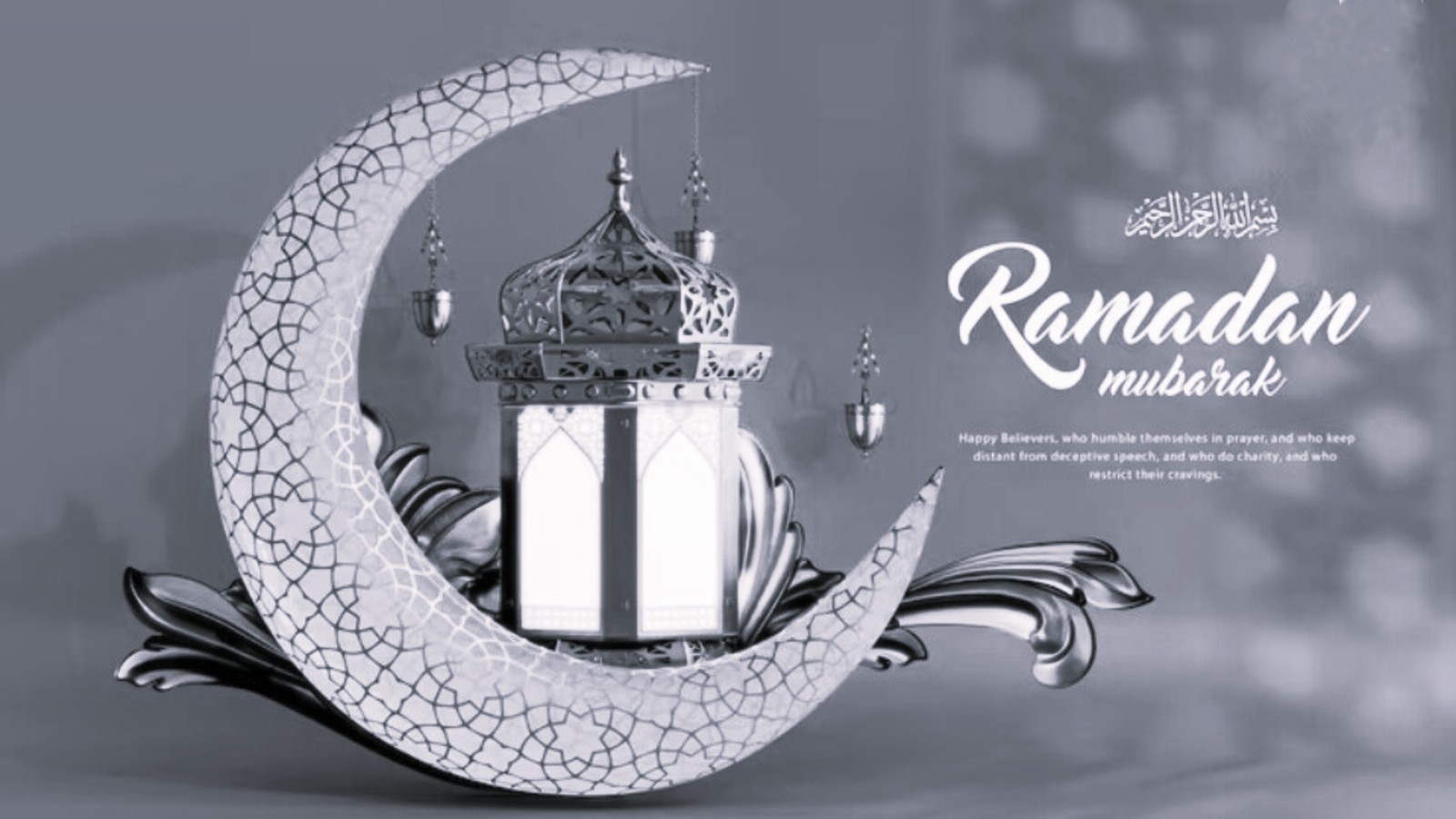
Ramadan: The Month of Blessings and Spiritual Radiance
The holy month of Ramadan begins today across India. With the sighting of the crescent moon, the Muslim community embarks on a month-long journey of rigorous fasting and profound devotion. But what is the true essence of Ramadan? How did this tradition originate, and what is the profound meaning behind the rituals observed during this period? Let us explore this sacred journey in detail.
The Essence of Ramadan: Origins and Significance
In the Islamic lunar calendar, the ninth month is known as Ramadan . This month is held in the highest esteem primarily because of its connection to the Holy Quran . According to Islamic belief, it was during this month in 610 AD that Allah, through the Archangel Jibreel (Gabriel), revealed the first verses of the Quran to Prophet Muhammad. This momentous event is commemorated as Laylat al-Qadr (The Night of Power or The Night of Decree).
Since that historic revelation, Ramadan has served as a sanctuary for divine contemplation and spiritual growth. Fasting is not merely a physical ritual but a core component of prayer. Through fasting, believers feel a closer proximity to the Divine, enhancing their spiritual health and fortifying their self-discipline.
The Five Pillars of Islam and the Role of Fasting
The foundation of the Islamic faith rests upon five fundamental pillars:
Shahada:
The profession of faith (Belief in one God).
Salah:
The performance of ritual prayers five times a day.
Zakat:
Almsgiving or charity to the needy.
Hajj:
The pilgrimage to the holy city of Mecca.
Sawm (Roza):
Fasting during the month of Ramadan.
For every healthy adult Muslim, fasting during Ramadan is an obligatory duty. It is a comprehensive practice that extends beyond abstaining from food and water; it requires a conscious effort to distance oneself from negative thoughts, falsehoods, and anger.
Fasting, referred to as Roza in Persian and Sawm in Arabic, is observed from dawn until sunset. This practice is believed to instill self-control and mastery over one's desires. Parallel to fasting, the concept of Zakat is emphasized, the mandatory donation of a portion of one's wealth to the poor. Furthermore, the Iftar gathering is cherished as a vital tradition that fosters communal harmony.
From Dawn to Dusk: Sehri and Iftar
During Ramadan, the daily routine of a practitioner begins well before sunrise. The pre-dawn meal, consumed at a designated time, is called Sehri . Following this meal, a strict fast is observed, where even a drop of water is not consumed until the sun sets.
As the sun disappears below the horizon, the fast is broken, typically with a date or a sip of water, in a ritual known as Iftar . These Iftar gatherings are more than just meals; they are vibrant social events where family, friends, and neighbors congregate, symbolizing unity and collective gratitude.
Taraweeh: The Spiritual Nights
In addition to the five daily prayers, special congregational prayers called Taraweeh are performed at night during Ramadan. In mosques, Imams recite the Quran in its entirety over the course of the month while the faithful listen with rapt attention. Completing the reading or hearing of the entire Quran during this month is considered an act of immense spiritual merit. Consequently, mosques are beautifully illuminated and resonate with the presence of devotees throughout the night.
Zakat and Fitra: Prioritizing Humanity
Ramadan is as much about humanism as it is about piety. Zakat refers to the structured charity given to the underprivileged. Additionally, before the Eid celebrations begin, every Muslim is required to give Fitra . The noble intent behind this tradition is to ensure that the less fortunate members of society can also wear new clothes and enjoy a wholesome meal, allowing them to celebrate the festival with dignity alongside the rest of the community.
Exemptions from Fasting
Islamic law is rooted in compassion and does not make fasting an absolute burden. Exemptions are granted to:
Those suffering from illness. The elderly and physically frail. Young children. Pregnant and breastfeeding women. Individuals currently traveling. The belief is that God intends to foster discipline, not cause undue hardship. Those who cannot fast due to health reasons can earn spiritual merit by providing meals to the poor, a practice known as Fidya .
The Sighting of the Crescent: Determining the Festival
The Islamic calendar is lunar, meaning the start and end of Ramadan are dictated by the sighting of the new crescent moon. Typically, the moon is sighted in India a day after it appears in Saudi Arabia. An Islamic month lasts either 29 or 30 days. The appearance of the crescent moon for the month of Shawwal marks the end of Ramadan and the beginning of Eid-ul-Fitr .
Since Muslim-majority countries span a vast geographical area, from Indonesia to Morocco, the timing of the moon sighting varies by region. While traditionalists often look to Mecca's sighting as a global benchmark, local sightings remain significant. Because the lunar calendar is roughly 10 to 11 days shorter than the solar Gregorian calendar, Ramadan moves forward each year.
Eid-ul-Fitr: A Symbol of Victory
Eid-ul-Fitr is the joyous celebration that follows the successful completion of a month of rigorous devotion. "Eid" means festival and "Fitr" refers to the breaking of the fast. On this day, Muslims gather in large open grounds called Eidgahs for special morning prayers.
The atmosphere is one of brotherhood, as people embrace and exchange the greeting " Eid Mubarak ." A hallmark of this festival is the serving of " Sheer Khurma " (a rich vermicelli pudding) to guests, earning it the nickname "Meethi Eid" (Sweet Eid).
Tradition Meets Modernity
While times have changed, the fervor of Ramadan remains undiminished. In the past, the moon was sighted only with the naked eye, today, telescopes and sophisticated astronomical calculations are employed. However, the core message of the festival remains constant: peace and patience. From the Gulf countries to the heart of India, this month transforms the landscape into one of spiritual reflection.
The Message of Ramadan
Ramadan is not merely about the mechanics of fasting or the frequency of prayer; it is a way of life. It teaches individuals to conquer their ego and cultivate a heart full of compassion. The sight of people from various backgrounds participating in Iftar parties highlights the "Unity in Diversity" that is the hallmark of Indian culture. May this holy month bring peace, prosperity, and happiness to all.