
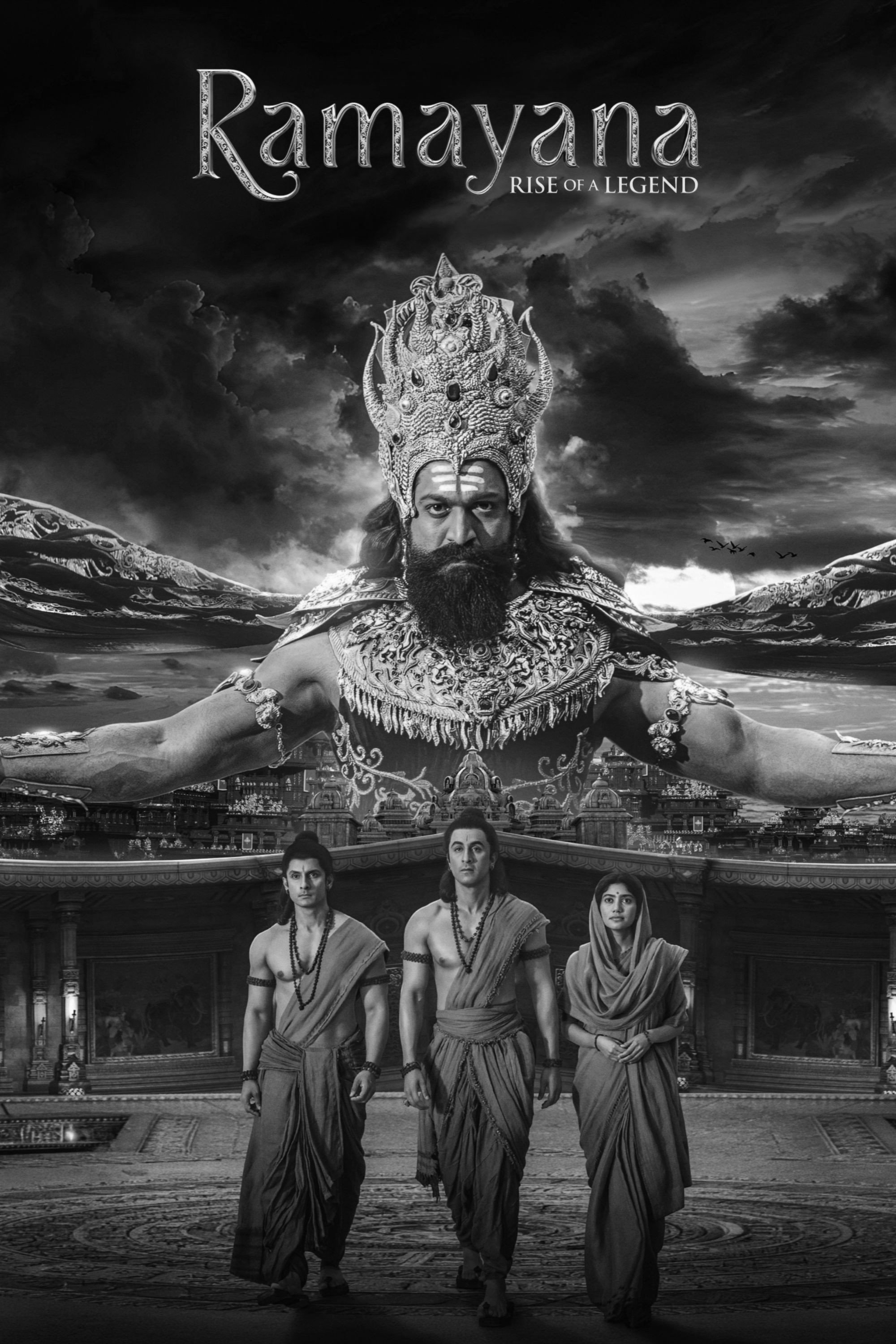
‘Ramayana’ Part 1 Review: Is Rama Responsible for His Fate, and Can He Change It?
In the shadowed, glittering world of the Lankan king. Director Nitesh Tiwari makes a bold storytelling choice. The film begins with Ravana, not with Rama, and it traces his origins, childhood, family, education, devotion and rise to power. The result is a fresh perspective on a story we all think we know, and Ravana's journey becomes one of its most gripping threads.
Rather than treating Ravana as the villain who eventually abducts Sita, the film shows why he becomes one of the epic's most formidable figures. His ambition, scholarship, devotion to Lord Shiva and extraordinary abilities form the foundation of the narrative. We see the making of a king before we see the making of a war.
His family background matters deeply. His mother Kaikasi chooses a rishi as her husband because she wants her children to inherit knowledge and strength. The siblings Kumbhakarna, Vibhishana, Shurpanakha grow up with strikingly different personalities, and Ravana emerges as an exceptionally brilliant scholar. He studies the scriptures and knows the devas, asuras and rishis intimately. His mother's expectations, his sharp mind and his iron determination shape every ambition that follows.
Then comes his devotion to Lord Shiva, one of the character's defining traits. Picture the intense, punishing penance, and then the boon from Brahma, along with the careful conditions Ravana demands about his own death. Convinced he has shielded himself against almost every threat, he grows into a king of towering confidence. The film then follows his hunger to conquer Lanka, his confrontation with Kubera and his daring challenge to Indra. Each episode shows how he swells into a force that the world must reckon with. Quietly, they also lay the groundwork for the larger mythological conflict and the arrival of Vishnu's seventh avatar, Rama.
Yash is a triumph as Ravana. His walk, expressions, mannerisms, dialogue delivery and commanding screen presence make the character utterly convincing. He brings together scholarship, devotion, pride, intelligence, ambition and authority without ever shrinking Ravana into a conventional villain. His physical presence lends the king enormous weight, and the portrayal is so vivid that you can imagine exactly how Ravana might have looked, walked and spoken. The film gives him a substantial point of view, so his story unfolds alongside Rama's rather than in its shadow.
As the narrative moves forward, Rama enters the story, and the film begins to move between the two worlds. We come to understand Ravana's ambitions and circumstances alongside Rama's journey, and we watch their paths slowly bend toward confrontation. Along the way come the familiar milestones: Ayodhya, Shiva's bow, Sita's swayamvar and the events that lead to Rama's exile.
Ranbir Kapoor plays Rama with restraint and composure. This is not an invincible divine figure untouched by human feeling or difficult decisions. His identity as Vishnu's avatar remains part of the larger mythology, but the film also shows a man with relationships, responsibilities, emotions and hard choices. That gives Rama a deeply relatable dimension without taking anything away from his stature.
Sai Pallavi brings grace, dignity and strength to Sita. Unlike familiar portrayals that largely focus on her devotion and suffering, the film presents her as a fierce warrior woman who can wield a sword, fight alongside Rama and Lakshman, and defend herself. Ravie Dubey deserves special appreciation as Lakshman. After watching him in television mythological serials, seeing him step into the role on the big screen is especially exciting. His expressions, dialogue delivery, emotional intensity and protective nature make him a natural fit. The bond between Rama and Lakshman gives the journey real warmth, particularly in the way the brothers support and shield one another. The casting is superb across the board, with every actor fitting the character and adding to the larger experience. There is no weak character and no underwhelming performance.
What makes the screenplay so impressive is that every episode is connected to what happens next. The film never introduces powers, weapons or abilities simply to make a scene dazzle. It shows how Ravana acquires his powers and later shows how he uses them. The same care shapes Rama and Lakshmana, whose abilities, knowledge and training are built into the story. Their strengths become vital when they face challenges, defend themselves and protect each other. No incident is followed by an unrelated incident; what was established earlier shapes what comes after.
Equally impressive is the logic behind the characters' actions. Across generations, audiences have asked why a character acted a certain way . Why did Sita cross the Lakshmana Rekha? What led Ravana to abduct Sita? What circumstances drove each character to make those decisions? The film answers by laying out circumstances, motivations and thought processes, so a decision grows from what has happened before, what the character believes and the situation they face.
Every major action has a reason, and every important development has a logical buildup. That does not mean every decision is right or justified. The film simply works to explain why a choice was made and how it shapes the story. This gives the characters greater depth and makes the narrative easier to follow, even when their actions are complicated or open to interpretation.
Among the most memorable sequences is the confrontation between Jatayu and Ravana. Action, emotional intensity, visual effects and the presentation of the Pushpak Vimana combine into a spectacular theatrical moment. Jatayu's death also becomes central to Rama's emotional journey. Rama recalls that he could not perform the last rites for his own father, and he vows to perform them for Jatayu, who was like a father to him. It is far more than an emotional beat. It ties together relationships, duty, loss and karma.
Fate is another philosophical thread, and it grows more powerful toward the end. At the start, Rama wonders what his fate will be. Later, he approaches a sage and asks what fate truly means and what destiny holds for him. The answer is that fate is shaped by a person's choice, actions and decisions, and that what a person does can change the course of their destiny.
The ending brings that idea blazing back into focus. Rama recognises that the tragedies around him, including his father's death, Sita's abduction and Jatayu's death, are part of the fate he must now confront. The end card points to his resolve to rewrite his fate rather than simply accept what has happened.
The visual presentation is another major attraction. Expansive landscapes, elaborate kingdoms, towering architecture, mythic weapons and large-scale action build a world that feels enormous.These visuals do more than decorate. They bring to life the world generations have imagined while reading or hearing the Ramayana.
The music is equally striking. Hans Zimmer and AR Rahman give the film a distinctive musical identity, adding grandeur and emotion to its key moments. The background score lifts the visuals and deepens the atmosphere, while the songs add to the film's richness. Some Telugu reviewers and social media users have compared the music with the high energy, extra masala soundtracks common in Telugu commercial cinema. That, however, is a difference in expectation, not a shortcoming. Ramayana has its own musical style, and it works beautifully within the world Tiwari has created.
Anyone who grew up reading the Ramayana knows how hard it is to visualise every character, kingdom and episode on the page. This film offers a s triking picture of how that world can look on screen. Characters, settings, action and emotional moments come together into an immersive experience.