
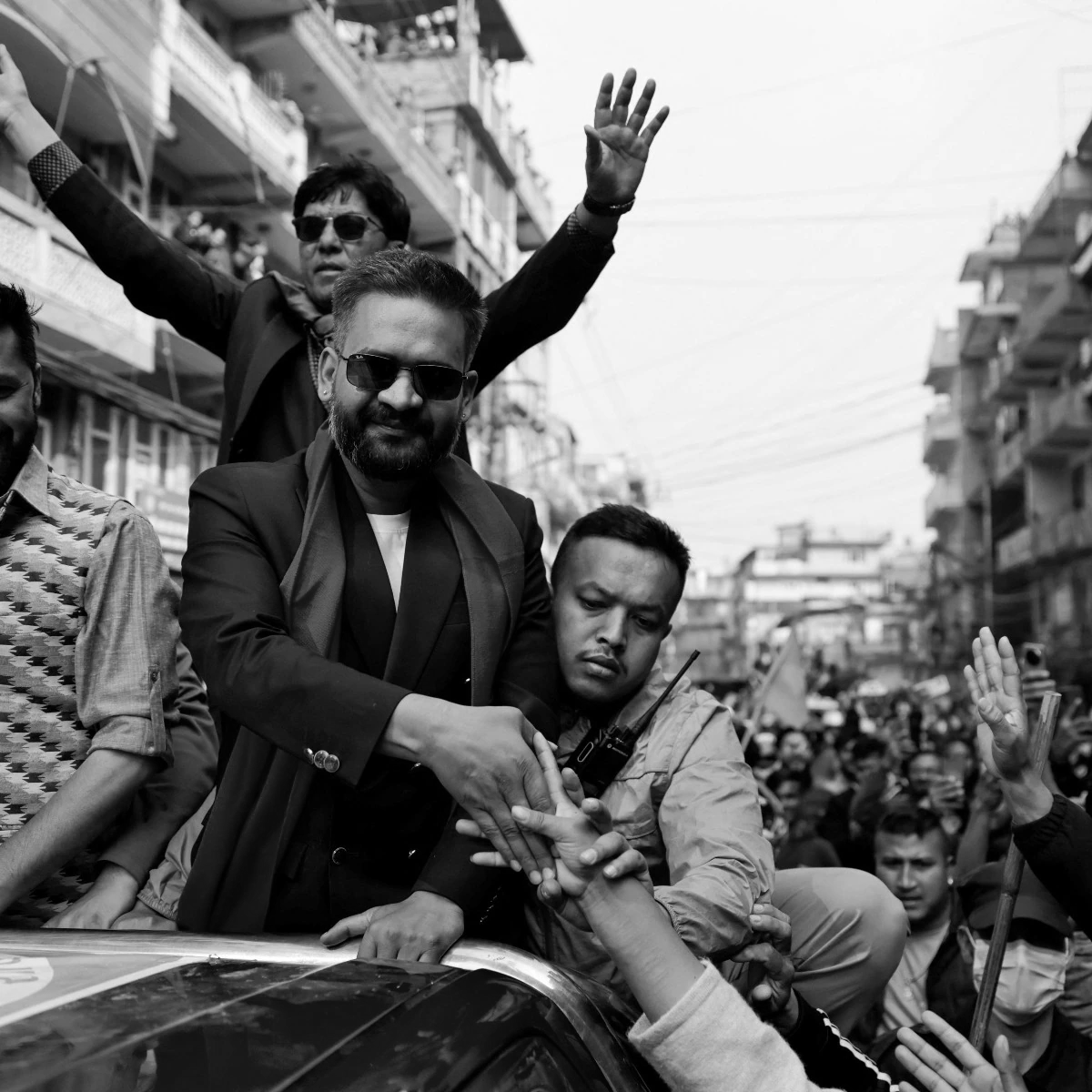
Rastriya Swatantra Party Heads for Landslide Win, Balendra Shah Likely Nepal PM
Rapper-turned-politician Balendra Shah’s newly formed Rastriya Swatantra Party (RSP) is on course for a sweeping victory in Nepal’s first general elections since the violent Gen Z protests , breaking the long-standing dominance of established political parties in the politically fragile nation.
According to data from the Election Commission , of the total 165 constituencies , the RSP has already secured six seats and is leading in 110 others , local media reported.
Balendra Shah, popularly known as ‘Balen’ , who recently served as the Mayor of Kathmandu , secured a decisive victory in Jhapa-5 , defeating four-time Prime Minister and CPN-UML chair K P Sharma Oli . Shah garnered more than 15,000 votes , while Oli managed only 3,300 votes in his traditional stronghold, signalling a dramatic rejection of the established political leadership.
The 35-year-old engineer is widely expected to become the next Prime Minister of Nepal , reflecting a broader public desire for political renewal. Nepal has witnessed 14 governments in the last 18 years , highlighting chronic political instability.
The election outcome is being closely observed by India , which has expressed hope for a stable Nepali government to further strengthen developmental cooperation. Ministry of External Affairs spokesperson Randhir Jaiswal stated, “We look forward to working with the new Government of Nepal to further build on the robust multifaceted ties between our two countries and peoples for mutual benefit.” He added that India had provided logistical support for the elections in line with its commitment to peace and stability in Nepal.
Meanwhile, the Nepali Congress has won three seats, while the CPN-UML is leading in 11 constituencies. The Nepali Communist Party has won two seats, and the Shram Sanskriti Party is ahead in six constituencies. The Rastriya Prajatantra Party and Progressive Democratic Party are leading in one constituency each. So far, 11 seats have been declared, with a total of 275 parliamentary members to be elected 165 via direct voting and 110 through proportional representation.
Balen was a popular choice to lead the interim government after the protests toppled the Oli-led coalition in September last year over corruption and social media restrictions. However, Shah declined the interim post and chose to contest the parliamentary election for a full-term mandate.
The RSP, formed in 2022 by Ravi Lamichhane , quickly emerged as a significant political force with Shah as its prime ministerial candidate. The party’s strong showing in Kathmandu, Jhapa and other constituencies underscores its appeal among youth voters and urban electorates seeking anti-corruption , good governance and generational change.
Other notable results include Pushpa Kamal Dahal Prachanda winning from Rukum Purba with 10,240 votes, Ranju Darshana of RSP winning Kathmandu-1 with 15,455 votes, and Biraj Bhakta Shrestha and Shishir Khanal securing victories in Kathmandu constituencies 8 and 6, respectively.
With around 60% voter turnout , Nepal’s 18.9 million eligible voters participated in choosing members of the House of Representatives, marking a historic shift in the nation’s political landscape driven by the Gen Z demand for transparency and change.