
RBI Raises FY27 GDP Growth Forecast to 6.7%, Cuts Inflation Outlook to 5%
The Reserve Bank of India (RBI) has raised its GDP growth projection for FY2026-27 to 6.7% from the earlier 6.6%, while lowering its Consumer Price Index (CPI) inflation forecast to 5% from 5.1%, reflecting confidence in the resilience of the domestic economy despite persistent global uncertainties.
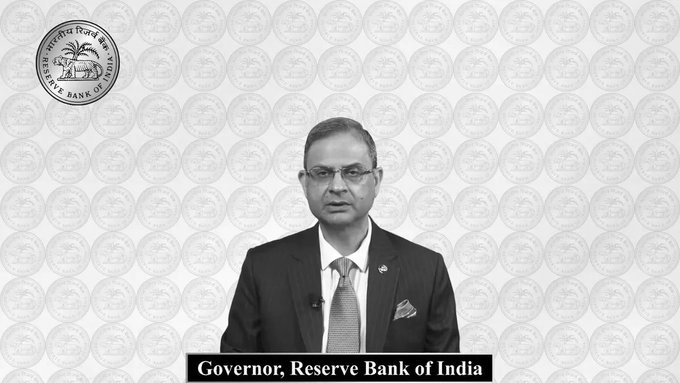
Announcing the decisions after the August bi-monthly Monetary Policy Committee (MPC) meeting on Wednesday, RBI Governor Sanjay Malhotra said India's economy has remained resilient, supported by encouraging high-frequency economic indicators during the first quarter of FY27. The central bank projects real GDP growth at 7.0% in Q1, 6.4% in Q2, 6.5% in Q3, and 6.8% in Q4, with risks to growth remaining evenly balanced.
The RBI noted that supply-side pressures caused by the West Asia conflict had eased since June, allowing the government to withdraw temporary measures and normalize key input supplies. However, the renewed escalation of the conflict since early July has increased volatility in global energy prices and revived uncertainty over international supply chains, which could weigh on economic activity.
On the inflation front, the RBI said overall price pressures remain moderate, but warned that rising food, fuel, and other input costs could eventually lead to broader inflationary pressures. It also identified the possible impact of El Niño on rainfall patterns as a key risk to food prices, although proactive supply management and adequate food grain stocks are expected to provide some relief.
For FY2026-27, the RBI projects CPI inflation at 5%, with Q2 inflation at 4.7%, Q3 at 5.9%, and Q4 at 5.5%. Inflation for Q1 of FY2027-28 is estimated at 5.3%, while core inflation is projected at 4.3% for the current fiscal.
The revised projections suggest that the RBI expects stronger economic growth alongside relatively stable inflation, creating a supportive environment for investment, consumption, and employment. At the same time, the central bank cautioned that geopolitical tensions, volatile crude oil prices, weather-related uncertainties, and global supply-chain disruptions continue to pose risks to India's economic outlook.