


Reimagining Partnership: India Rolls Out $1.62-Bn Package For Nepal, Focuses On Energy, Trade And Connectivity
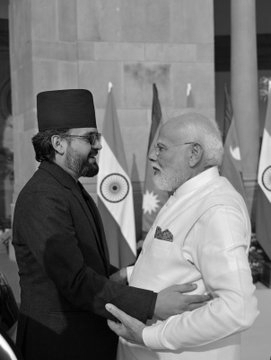
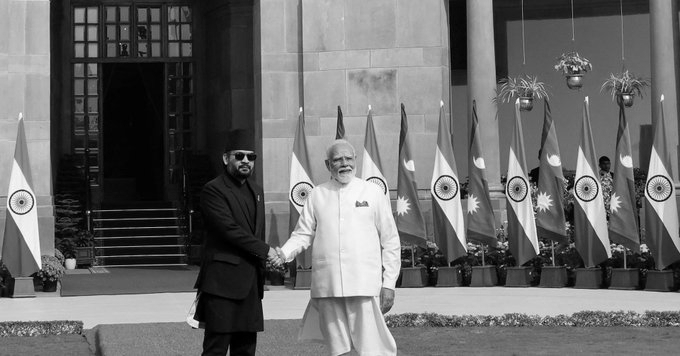
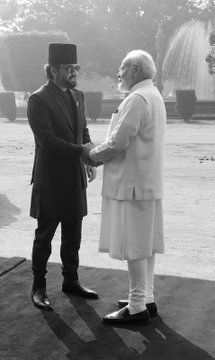
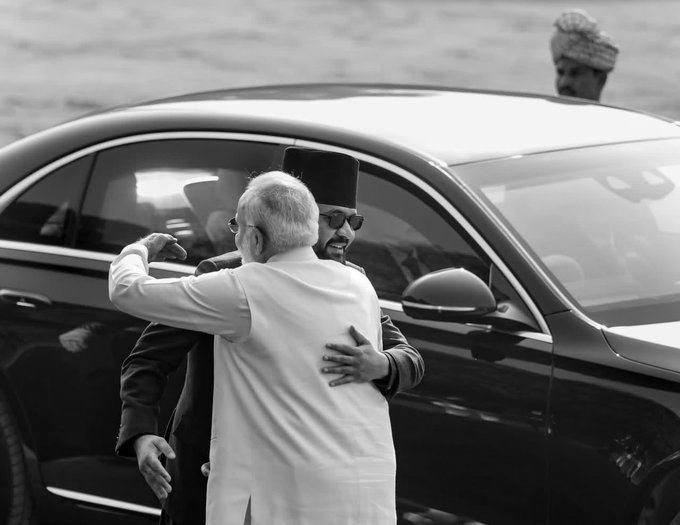
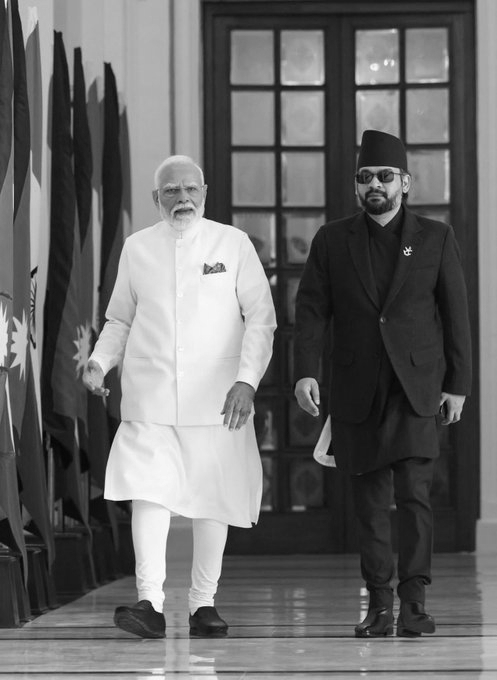
India and Nepal are seeking to reshape their bilateral relationship, with Prime Minister Narendra Modi and his Nepalese counterpart Balendra Shah adopting a new joint vision for future cooperation and announcing a $1.62-billion development assistance package during talks in New Delhi on November 23.
Titled 'Viksit Bharat and Samunnat Nepal: Re-imagining the Partnership', the joint vision document provides a roadmap for a modern, forward-looking and results-oriented partnership. It seeks to expand cooperation across economic development, trade, connectivity, energy, water resources, climate resilience, technology and people-to-people exchanges.
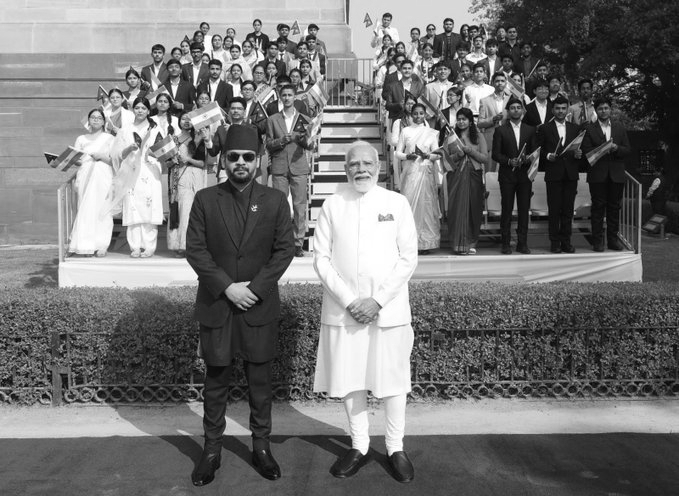
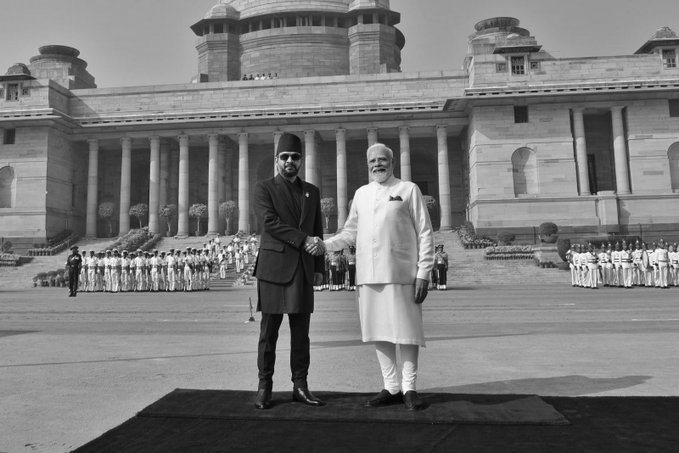
Shah's visit, from November 22 to 23, was his first trip to India since becoming prime minister in March and his first bilateral foreign visit. He received a ceremonial welcome at Rashtrapati Bhavan and paid homage to Mahatma Gandhi at Rajghat before holding extensive discussions with Modi. The Indian government announced 19 major outcomes, including eight memorandums of understanding, covering sectors such as space, healthcare, education and security.
Modi described the relationship as one of unbreakable trust, emphasising shared history, culture, religion and civilisational connections. He called for writing a new golden chapter in India-Nepal relations. Shah stressed mutual respect, trust and the need to modernise the historical relationship.
The visit carries significance beyond diplomatic courtesies. Shah, a former rapper and Kathmandu mayor, rose to power following Nepal's Gen Z-led political upheaval in 2025, which brought an end to the government led by former prime minister KP Sharma Oli. His government inherited strained relations with India, with longstanding border disputes and Nepal's expanding engagement with China complicating bilateral ties.
The two countries also had different priorities. New Delhi sought to rebuild diplomatic confidence, while Kathmandu was looking for concrete economic assistance following devastating floods in August that caused widespread destruction across Nepal.
India announced Rs 15,000 crore ($1.62 billion) in development assistance, comprising Rs 3,500 crore in grants for post-disaster reconstruction and infrastructure projects and Rs 11,500 crore through a line of credit for energy projects.
Connectivity emerged as another major focus. Modi and Shah flagged off the Saryu-Kamala Express, connecting Ayodhya in Uttar Pradesh with Janakpur in Nepal. They also inaugurated a motorable bridge connecting Dharchula in India with Darchula in Nepal across the Mahakali River. India announced access to Kandla Port in Gujarat and Paradip Port in Odisha to facilitate Nepal's transit trade.
The two sides also advanced the Lower Arun hydropower project, petroleum pipeline infrastructure, integrated border checkposts and railway connectivity. Other initiatives include an IIT offshore campus in Nepal, satellite communications cooperation, training programmes for Nepalese civil servants and security personnel, and an agro-industrial park in Chitwan.
The new joint vision also extends beyond traditional infrastructure cooperation. It identifies opportunities in digital services, space, innovation, startups, climate resilience, disaster management and youth development, reflecting changing economic and technological priorities.
However, the diplomatic reset comes against the backdrop of China's growing economic and strategic presence in Nepal and across South Asia. India's neighbours are increasingly diversifying their partnerships, seeking investments and assistance from multiple countries rather than relying on a single regional power.
For New Delhi, the challenge is therefore not merely announcing financial packages or signing agreements. Their implementation will determine whether the new vision translates into lasting trust. As competition for influence intensifies in South Asia, India will need sustained diplomatic and economic engagement to strengthen its neighbourhood partnerships.