
RGCB Scientists Discover Hidden Pathway for Pneumonia Toxin to Spread Between Cells
Scientists at the Rajiv Gandhi Centre for Biotechnology (RGCB) have uncovered a previously unknown mechanism through which a pneumonia-causing bacterium may spread its toxin between neighbouring cells, potentially extending tissue damage.
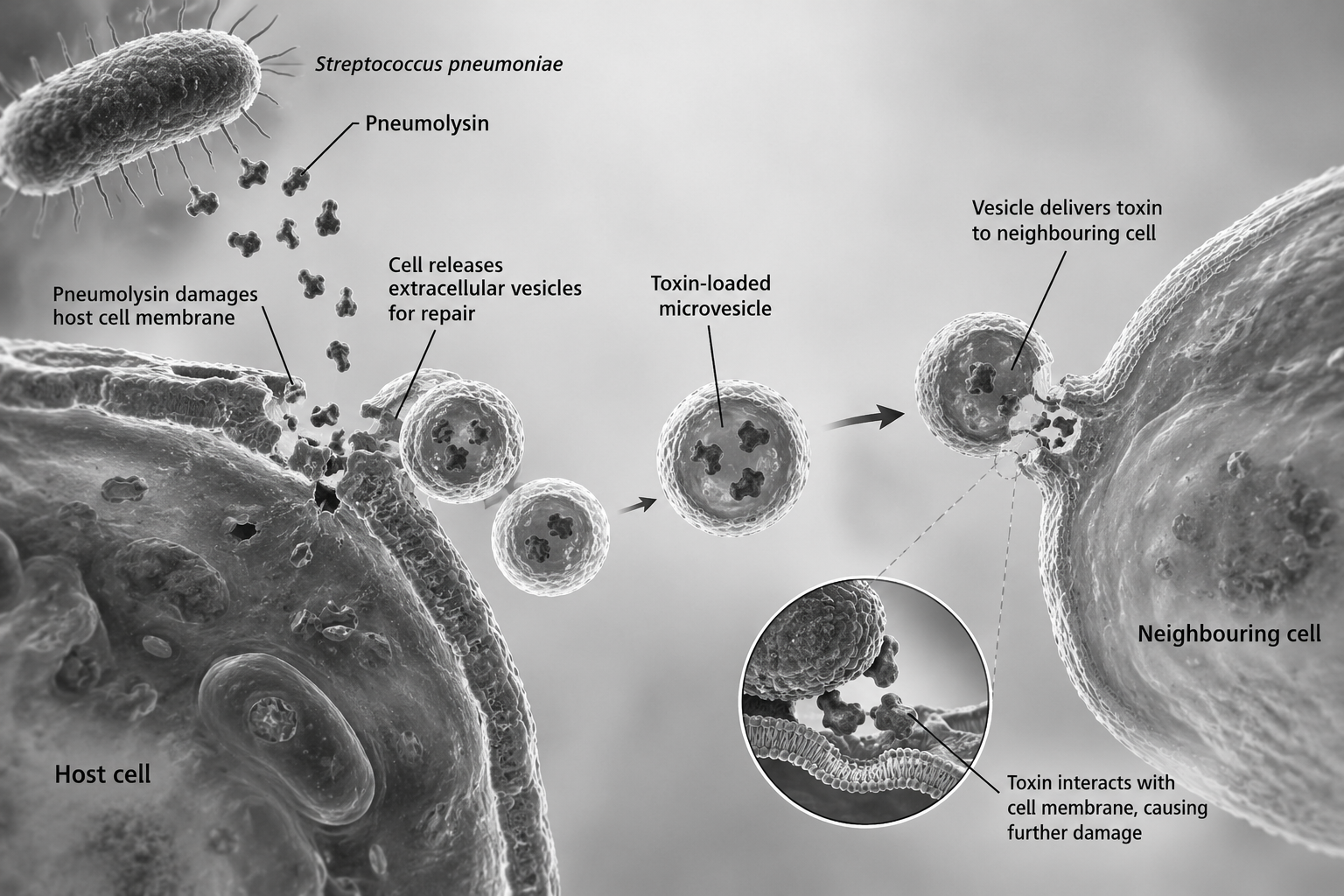
The study, published in the Journal of Extracellular Vesicles, found that pneumolysin, a major toxin produced by Streptococcus pneumoniae, can travel between cells through tiny membrane-bound structures released during cellular repair.
According to an RGCB release, pneumolysin damages host cells by binding to cholesterol in their membranes and creating destructive pores. When exposed to lower, non-lethal levels of the toxin, cells attempt to repair themselves by shedding damaged portions of their outer membranes as extracellular vesicles.
The researchers discovered that these vesicles, particularly plasma membrane-derived microvesicles, can carry biologically active pneumolysin. Instead of being discarded as cellular waste, the toxin remains attached to the vesicles and can interact with neighbouring cells, causing further membrane damage.
Molecular simulations conducted in collaboration with Dr Jagannath Mondal and colleagues at TIFR Hyderabad revealed that vesicle-bound pneumolysin can directly interact with lipids in recipient cell membranes, promoting membrane bending, thinning and water penetration. Altering specific amino acids involved in this interaction substantially reduced membrane deformation, supporting the proposed mechanism, the release said.
The researchers also demonstrated the phenomenon using human cells. Cryogenic electron microscopy analysis, conducted with Dr Somnath Dutta and colleagues at IISc Bengaluru, helped identify pneumolysin at sites where the vesicles interacted with cell membranes.
Senior researcher Dr Karthik Subramanian said the findings show how a cellular defence mechanism can inadvertently repackage the toxin into a form that facilitates further damage. The discovery could improve understanding of how pneumococcal infections cause tissue injury. However, the researchers cautioned that further studies in living organisms are necessary to establish the mechanism’s role in disease progression and determine whether blocking vesicle-mediated toxin transfer could have therapeutic potential.