
Rising Household Expenses: Why Does Everyday Living Feel More Expensive?
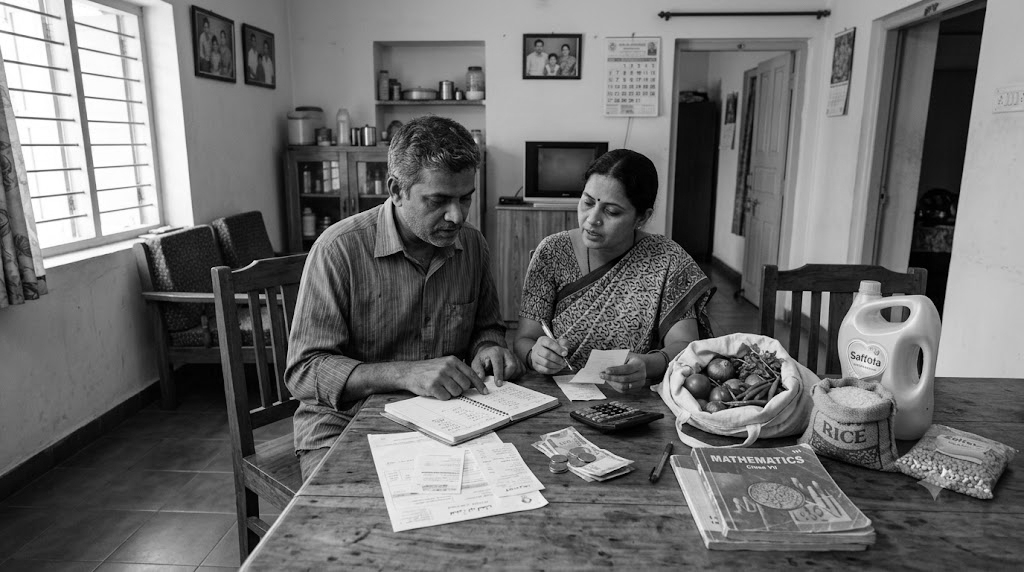
For millions of Indian households, managing everyday expenses has become an increasingly important financial challenge. From vegetables, rice, milk and cooking oil to house rent, transport, school fees and healthcare, essential costs determine how much money families can save after meeting their basic needs. While some prices fluctuate with seasonal conditions, increases across several spending categories can place considerable pressure on low- and middle-income households.
The latest official figures underline the growing concern. According to the Ministry of Statistics and Programme Implementation (MoSPI), India's retail inflation rose to 5.54 per cent in September 2026, compared with 4.83 per cent in August. Food inflation increased to 7.74 per cent, with rural food inflation at 8.06 per cent and urban food inflation at 7.18 per cent. The figures were provisional when released on October 12. They indicate that food prices were an important contributor to the increase in retail inflation. However, inflation measures the rate of price change, not the amount every household spends.
Food remains a major part of family budgets. The Household Consumption Expenditure Survey for 2023–24 found that food accounted for approximately 47 per cent of average monthly consumption expenditure in rural India and 40 per cent in urban India. This makes changes in the prices of vegetables, pulses, rice, milk and edible oils particularly significant for households with limited incomes.
Vegetable prices can change sharply because of seasonal production, weather conditions, crop damage and transportation difficulties. When fewer vegetables reach wholesale markets, traders may have to pay more to secure supplies. Retailers can then pass some of these costs on to consumers. However, prices do not always move in the same direction: a good harvest or improved market arrivals can bring prices down. Therefore, price comparisons over several months and years are essential to determine whether an increase is temporary or sustained.
Cooking oil is affected by additional factors, including international commodity prices, import dependence, shipping costs, currency movements and government policies. Rice and milk have different supply chains, with prices influenced by production costs, procurement, processing, distribution and demand. A reliable assessment should compare the actual retail prices of these products over time rather than assume that all essential items have become more expensive at the same rate.
Housing and transport create another layer of pressure. Rent, electricity, water charges, cooking fuel and maintenance are recurring expenses that families cannot easily avoid. In the 2023–24 consumption survey, rent accounted for around 6.58 per cent of average urban consumption expenditure, while conveyance accounted for 8.46 per cent. Families who rent homes or commute long distances may therefore have less money available for other needs.
Transport costs can also affect the prices of goods. Fuel, truck rentals, loading charges and delivery expenses contribute to the cost of moving products from farms and factories to wholesale markets and retail shops. When these costs increase, traders may have to adjust their selling prices or accept lower profit margins. Yet the contribution of transport to a particular price increase must be verified through purchase invoices and freight charges rather than assumed.
Education and healthcare are equally important in understanding household financial pressure. School fees, uniforms, books, examination charges, tuition and transport can make education expensive, particularly for families with more than one child. Healthcare expenses, meanwhile, can be unpredictable. Medicines, consultations, diagnostic tests and hospitalisation may require payments that exceed a family's normal monthly budget.
Households without sufficient savings or health insurance may borrow money, postpone treatment or reduce spending elsewhere to meet medical bills. Such decisions can have consequences beyond the immediate financial burden. The actual impact varies according to family size, medical needs, insurance coverage and access to public services.
The reasons behind rising costs are also visible across the supply chain. Vegetable vendors depend on the quantity and quality of produce arriving from farms and wholesale markets. Grocery shopkeepers face changes in the prices charged by distributors. Restaurants and other service businesses must manage expenses such as ingredients, cooking gas, electricity, rent and wages.
When purchase costs increase, retailers face a difficult choice: raise prices, reduce their profit margins or absorb part of the increase to retain customers. Small restaurants may find it particularly difficult to increase menu prices because customers can switch to cheaper alternatives. This means rising costs can affect both consumers and businesses, although the extent of the pressure differs from one sector to another.
Global developments can also influence domestic prices, particularly for imported commodities such as edible oils. International supply disruptions, shipping expenses and changes in import costs can affect prices paid by Indian importers and distributors. For agricultural goods, poor weather, lower production and supply disruptions can reduce market arrivals. Establishing the precise cause of an increase requires examining the relevant commodity and its supply chain.
The central issue for households is whether income is growing quickly enough to meet these expenses. Daily-wage workers and people employed in informal sectors may face irregular earnings, while salaried employees may receive predictable monthly incomes that do not necessarily keep pace with living costs. When several expenses increase together, even a household with a regular income can find it difficult to maintain its previous standard of living.
Families may respond by purchasing smaller quantities of groceries, switching to cheaper products, limiting travel, postponing household purchases or reducing savings. Some may cut spending on recreation and children's activities, while others may rely on borrowing to meet essential bills. These responses should be documented through interviews rather than presented as universal experiences.
A detailed investigation should compare household budgets across different income groups and locations. Interviews with families can establish how much they spend on essential items today compared with a year ago. Vegetable vendors, grocery traders and transport operators can explain changes in purchase prices and operating costs. Parents, schools, healthcare providers and service businesses can provide evidence about changes in fees and other expenses.
Local price records are especially important. National inflation figures provide the wider context, but prices in individual towns and markets can differ because of supply conditions, transport links and local demand. Comparing prices from the same shops or markets, using consistent units and dates, would help establish the actual changes experienced by consumers.
Ultimately, rising household expenses are not simply a question of higher prices. They are about the relationship between income, essential spending and financial security. The key question is how much money remains after families pay for food, housing, transport, education and healthcare. By combining official statistics with verified price comparisons and interviews, the investigation can show which expenses are placing the greatest pressure on households, what families are sacrificing and whether their incomes are sufficient to meet the cost of everyday living.