
Russia Wants More Than Ukraine: Merz Warns Of Growing Threats To Europe
Russian strikes on Ukraine's energy infrastructure disrupted electricity supplies across five regions, while German Chancellor Friedrich Merz warned on Wednesday that Moscow's ambitions extended beyond Ukraine, defending continued military assistance to Kyiv.
The overnight attacks damaged thermal power and gas production facilities, forcing several installations to suspend operations. DTEK, Ukraine's largest private energy company, said a Russian strike severely damaged equipment at one of its thermal power plants, marking the third major attack on its facilities in November.
State-owned Naftogaz reported a major fire at a gas production facility in the central Poltava region, forcing operations to stop.
Electricity supplies were disrupted in Dnipropetrovsk, Donetsk, Zaporizhzhia, Odesa and Kharkiv. The Russian-occupied Zaporizhzhia nuclear power plant also lost its external electricity connection for the 17th time this year and switched to backup diesel generators, Deputy Energy Minister Artem Nekrasov said.
Civilian infrastructure was also hit. Strikes in Zaporizhzhia injured six people, including two children, while an earlier residential building attack left at least 50 injured. One person was killed in the Kyiv region. Russian drones also damaged facilities belonging to retailer Epicentr and courier company Nova Poshta near Kyiv. In Odesa, two women were injured when a residential complex was struck, while logistics and manufacturing facilities were damaged.
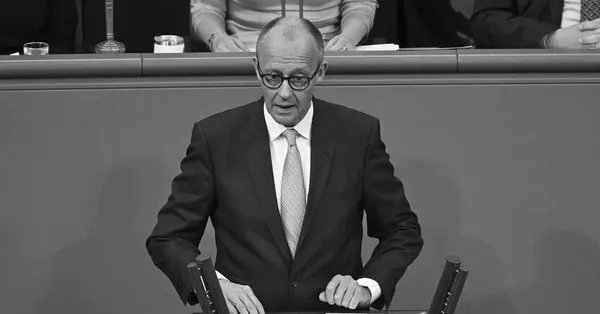
Against this backdrop, Merz addressed the Bundestag during a debate on Germany's 2027 budget, warning that Russia posed a wider threat to European security.
"Russia knows exactly what it wants. And Russia wants more than Ukraine," he said, citing escalating Russian activities in the Baltic region, Poland, the Black Sea, space and Germany.
Merz argued that supporting Kyiv was essential to Germany's security and defended cooperation with Ukraine on military and civilian technologies.
His remarks came amid declining domestic support for military aid. A Körber Foundation survey found that 53 per cent of Germans opposed continued military assistance, while 82 per cent considered Russia a military threat.
Despite the opposition, Germany plans to raise defence spending to more than €200 billion by 2030, equivalent to 3.7 per cent of economic output.
Merz also urged the EU to prioritise security and competitiveness in its proposed €1.582 trillion budget for 2028-2034, ahead of a November 26-27 summit. Russia has repeatedly denied plans to confront NATO members and rejected Western allegations of involvement in sabotage across Europe.