
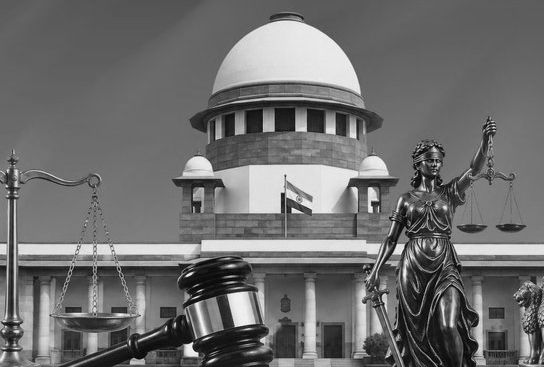
SC Special Lok Adalat Settles 1,712 Cases, Disburses ₹240.94 Crore
The Supreme Court’s three-day Special Lok Adalat, held under the Samadhan Samaroh 2026 initiative, concluded on Sunday with 1,712 cases settled or disposed of, the apex court said on Monday.
The Special Lok Adalat was organised from August 21 to 23 as the culmination of the three-day programme, Supreme Court Action for Mediated Adjudication and Disputes Harmonization Across Nation. The initiative was undertaken under the guidance of Chief Justice of India Surya Kant.
According to the Supreme Court, 3,285 cases were listed during the three-day exercise. Of these, 1,664 cases were settled or disposed of through the Lok Adalat, while another 48 cases were resolved through mediation.
On August 21, 588 cases were listed, of which 402 were settled or disposed of. The following day, 1,159 cases were listed and 350 were resolved. On the final day, 1,538 cases were taken up, with 912 cases settled or disposed of.
The court said ₹240.94 crore was disbursed during the three-day exercise.
The initiative began on April 21 with a structured pre-settlement process aimed at identifying pending matters that had the potential for amicable resolution. Litigants and their counsel were engaged beforehand to explore settlement possibilities.
The Lok Adalat benches were presided over by the CJI and included senior judges, judges, senior advocates and advocates-on-record, assisted by senior registrars and other officials of the Supreme Court Registry.
The matters included matrimonial and property disputes, motor accident claims, land acquisition and compensation cases, tax matters, and service and labour disputes.
The Supreme Court said the exercise demonstrated the benefits of consensual dispute resolution, including reducing litigation costs and delays, providing greater certainty to litigants, easing judicial pendency and conserving valuable court time.
The initiative underscored the judiciary’s efforts to promote settlement-based mechanisms for resolving disputes efficiently and reducing the burden on courts.