
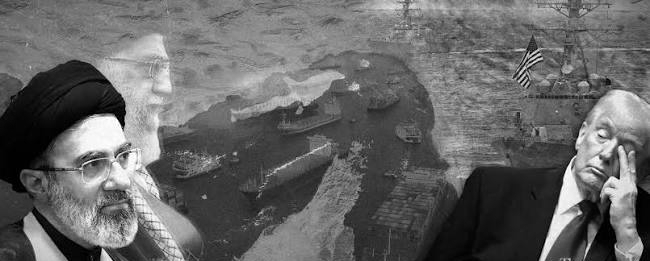
Schrodinger's Ceasefire: Washington Says Talks Are On, Tehran Says The Box Is Empty
There is an old thought experiment about a cat sealed inside a box, simultaneously alive and dead until someone actually opens the lid and checks. The United States and Iran seem to have borrowed that exact logic for diplomacy, because for the best casualties, one is truth, and the second, apparently, is basic comprehension between two nations at war. US President Donald Trump confidently announced the next round of talks with Iran in Qatar's Doha . Iran just as confidently rejected this. Forget the negotiations at this point. The first agreement these two countries need is on what day it is, where they are, and whether the meeting exists at all. Because the opening act is this chaotic, the sequel practically writes itself. At this point, the negotiations need a negotiation.
For weeks now, the United States and Iran have insisted they want to prevent another round of escalation. A fragile understanding was reached around two weeks ago, after weeks of military exchanges , when both countries signed what is essentially a sixty day pause button , a memorandum meant to reduce tensions, discuss Iran's nuclear program , reopen shipping routes, and hopefully negotiate a permanent end to this war. Call it a ceasefire still stuck in beta, virgin and pending.
The latest confusion captures the state of these negotiations perfectly. Trump announced that Iran had requested talks, and the White House even revealed its negotiating team, sending envoys Steve Witkoff and his son in law Jared Kushner to lead discussions. Also on the table is roughly six billion dollars in frozen Iranian funds, tied back to an agreement announced in 2023 between the United States and Iran establishing a humanitarian channel through Qatar. Washington wants to show that diplomacy is moving, especially after weeks of bruising confrontation raised fears of a wider regional war . A headline saying talks continue simply sounds better than one announcing everything has collapsed.
There is, of course, an equally awkward political problem inside Iran. Hardliners repeatedly accuse negotiators of making too many concessions, and talking openly with Washington is politically expensive. So Iranian officials have adopted a careful balancing act, doing diplomacy through technicalities, something happening and not happening at the same time depending entirely on who is asked.
Yet beneath this public theatre lies a more uncomfortable reality. Whether they admit it or not, both countries desperately need coordination, because the Strait of Hormuz has become the centre of this crisis. It becomes global inflation overnight. Iran has made one thing abundantly clear, it believes control over the strait is its biggest bargaining chip. Foreign Minister Abbas Araghchi recently warned other countries that instability there threatens global energy markets . Look at how desperate Trump appears, gas prices in the US skyrocketed during the war, Americans were furious, and now Trump is publicly urging retailers to bring prices down or face trouble ahead.
Then comes the true masterpiece of bureaucratic optimism, the memorandum itself. Buried inside it is a clause so circular even seasoned diplomats develop a migraine reading it. It essentially says future negotiations can only begin once disputes over frozen Iranian assets , US sanctions, shipping routes, and military confrontations have already been resolved. Think about that. You can only negotiate after solving the very issues you are supposed to negotiate. It is a perfect bureaucratic catch situation. Even customer service does not make you troubleshoot this much before speaking to an actual human.
Above all, statecraft is built on credibility , and right now both sides have plenty of confidence and very little trust. If the two countries cannot even agree the meeting exists, how exactly do you enforce a ceasefire ?