
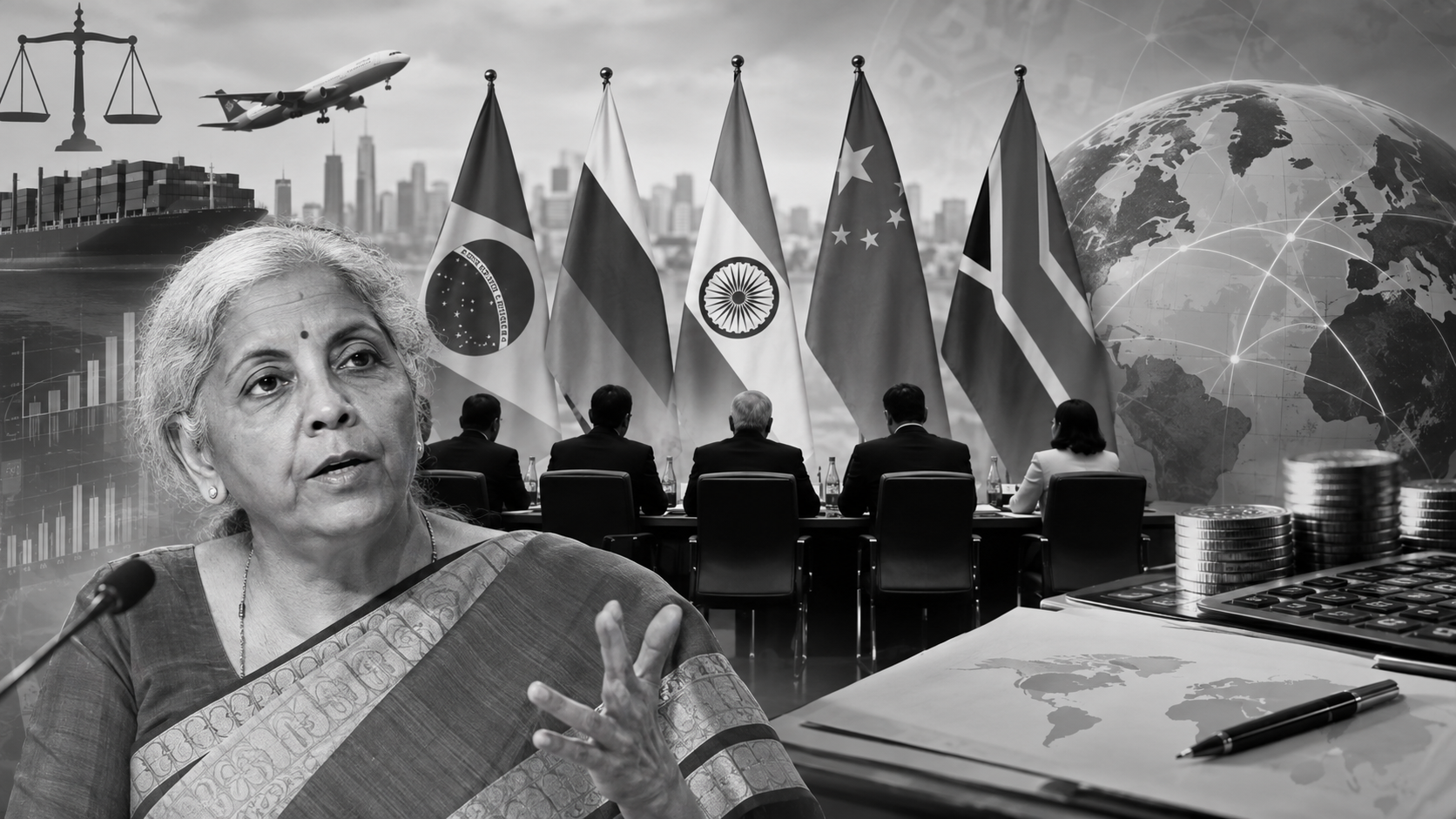
Sitharaman Says BRICS Must Shape Next Generation of Global Tax Rules
Finance Minister Nirmala Sitharaman on Wednesday said transfer-pricing disputes place a disproportionate burden on developing-country tax administrations, as India pushed for two new BRICS working groups aimed at strengthening cooperation on international taxation and developing revenue measures that better reflect the economic realities of emerging economies.
Addressing the BRICS Heads of Tax Authorities meeting, Sitharaman said the proposed groups - on International Taxation and Transfer Pricing and Revenue Statistics - would create permanent platforms for member countries to exchange expertise on cross-border taxation. She said the mechanisms were designed to continue beyond India's BRICS chairship, with China scheduled to assume the presidency in 2027.
“Transfer pricing disputes cost developing-country administrations disproportionately,” Sitharaman said, arguing that revenue frameworks that do not reflect developing economies' fiscal realities can distort how countries are assessed. She said the proposed working groups would provide sustained institutional space for addressing problems experienced across BRICS economies.
Transfer pricing determines how transactions involving goods, services, loans, intellectual property and other assets between related multinational companies are valued. The internationally accepted arm's-length principle requires such transactions to broadly reflect terms that independent enterprises would agree to. However, the UN has identified limited access to comparable data, specialist expertise and administrative resources as challenges for developing-country tax authorities.
The disputes can also be lengthy. OECD 2024 data shows transfer-pricing Mutual Agreement Procedure cases took an average of 30.89 months to resolve, compared with 24.49 months for other MAP cases. Transfer-pricing cases in the MAP inventory increased 3.9%, while new cases rose 29.1% in 2024. About 76% of MAP cases were fully resolved, highlighting both the effectiveness and continuing workload of international dispute-resolution mechanisms.
Revenue Secretary Arvind Shrivastava said the proposed International Taxation and Transfer Pricing Working Group would facilitate cooperation on treaty interpretation, transfer-pricing audits, Advance Pricing Agreements (APAs) and MAPs, besides strengthening BRICS' collective voice in negotiations on the UN Framework Convention on International Tax Cooperation.
The second group on Revenue Statistics would develop fiscal-performance measures reflecting BRICS realities, rather than assumptions designed for different economies.
Sitharaman also highlighted technology, governance and investment in people, saying digital tax administration could improve precision and reduce individual discretion. BRICS initiatives include a Tax Support Network, Tax Cross-Learning Lab and Young Tax Professionals Programme.
The initiative comes amid a broader redesign of global tax rules. The BRICS New Delhi Declaration endorsed the two working groups and called for a fair, inclusive and efficient international tax system. Sitharaman said decisions taken during current multilateral negotiations could shape cross-border taxation for a generation, making stronger developing-country participation increasingly important.