
Smart Coaching Era: How Technology Is Changing Grassroots Cricket Forever
Grassroots cricket coaching is undergoing a major transformation as artificial intelligence (AI), data analytics, video-based learning systems, wearable devices, and digital coaching platforms steadily reshape how young cricketers are trained and developed. What was once largely dependent on the experience and observation of local coaches is now evolving into a technology-enabled, data-driven and highly personalised training ecosystem that is expanding access to structured coaching across urban and rural regions.
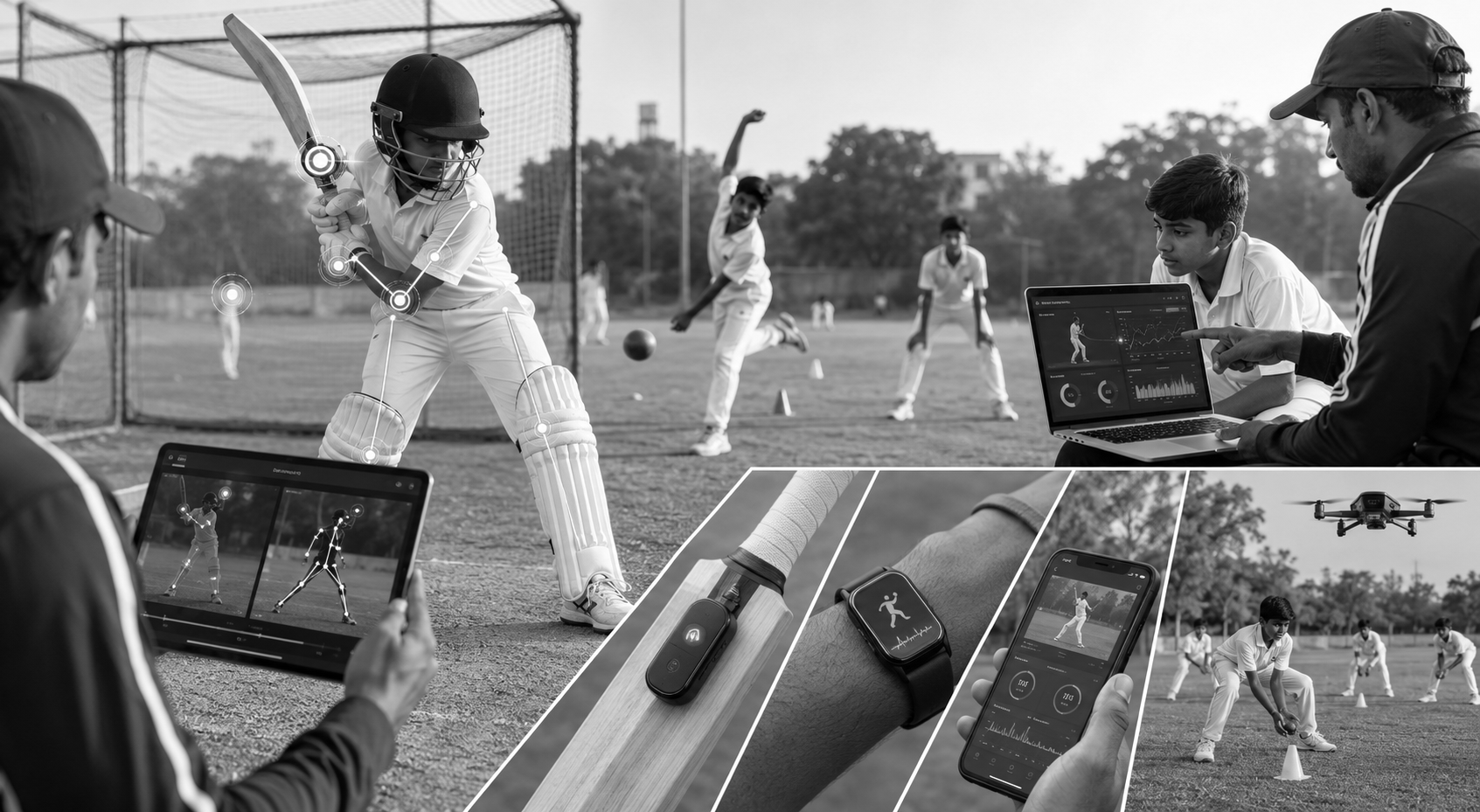
At the centre of this shift is the rapid adoption of AI-powered video analysis tools , which allow players to record practice sessions using smartphones or cameras and receive detailed technical feedback almost instantly. These systems analyse batting, bowling and fielding actions frame by frame, identifying key technical aspects such as bat swing path, timing, footwork alignment, balance, release point and body posture . By comparing movements with established performance benchmarks, AI systems highlight subtle errors that are often difficult to detect through manual observation alone. This has significantly improved the precision of coaching feedback, moving it from subjective judgement to objective, data-backed analysis .
Alongside video analytics, motion tracking and biomechanical assessment technologies are becoming increasingly integrated into grassroots training environments. Using computer vision and machine learning, these systems track a player’s movement patterns, ball trajectory and physical coordination during practice sessions. This allows coaches to not only identify visible technical issues but also understand the underlying causes, such as imbalance in movement or inefficiencies in technique. In many cases, these insights are delivered in real time, enabling players to make corrections during the same training session, thereby accelerating the learning process.
The widespread availability of smartphones has played a crucial role in democratizing access to these technologies. For many young cricketers, a mobile device has effectively become a portable coaching system , enabling them to record practice sessions, upload videos for analysis and receive structured feedback without requiring constant physical presence of a coach. This shift has reduced dependence on expensive academies in metropolitan areas and created new opportunities for players in smaller towns and rural regions to access high-quality coaching support at low cost .
Another significant development is the growing use of wearable technology and smart sensors in cricket training. Devices embedded in bats or worn by players can measure a wide range of performance indicators, including bat speed, impact force, bowling workload, running efficiency, and fatigue levels . These tools provide coaches with a more comprehensive understanding of both technical performance and physical condition. Importantly, they also contribute to injury prevention , as early signs of overuse or irregular movement patterns can be identified and addressed before they develop into serious physical issues, particularly for fast bowlers and young athletes undergoing rapid growth.
Technology is also transforming the way talent is identified and nurtured at the grassroots level. AI-based scouting systems can analyse large volumes of performance data across training sessions and matches to detect emerging talent. Instead of relying solely on tournament performances or subjective evaluation, these systems assess consistency, improvement trends, adaptability under pressure and overall skill efficiency . This data-driven approach is helping broaden scouting networks and increasing opportunities for talented players who may not have access to traditional talent pathways or elite-level competitions.
In addition to performance analysis, remote coaching and virtual mentorship platforms are becoming an important part of grassroots cricket development. These systems allow players to connect with experienced coaches from different regions through digital platforms. Training programmes, performance feedback and video assessments can be shared online, enabling continuous learning regardless of geographical barriers. This has proven particularly useful in expanding access to structured coaching in areas where elite academies are limited or unavailable.
A further innovation in grassroots training is the use of gamification and interactive learning systems , designed to improve engagement among young players. These platforms incorporate structured challenges, skill-based drills, progress tracking and performance leaderboards, making training more interactive and goal-oriented. By introducing competitive and reward-based elements, these systems encourage consistent practice while also allowing players to measure improvement in a clear and motivating way.
Despite these technological advancements, experts emphasise that human coaches remain central to cricket development . While AI systems are highly effective in analysing technique and providing objective feedback, they cannot replace the human ability to develop tactical awareness, mental strength, leadership qualities and decision-making skills under pressure . Cricket, being a highly situational and psychological sport, still requires experienced coaches to guide players through match scenarios, team dynamics and emotional challenges.
As a result, the emerging coaching model is increasingly described as a hybrid system combining human expertise with artificial intelligence and digital tools . In this model, AI handles technical analysis, data processing and performance tracking, while human coaches focus on strategy, mentorship and psychological development. This combination is seen as the most effective way to produce well-rounded cricketers in the modern era.
Overall, grassroots cricket coaching is moving into a new phase defined by continuous monitoring, personalised feedback and data-driven decision-making . The integration of AI, wearable technology, video analytics and mobile-based platforms is not only improving the quality and speed of training but also making elite-level coaching more accessible than ever before. Experts believe this transformation will play a key role in discovering and nurturing cricketing talent from diverse backgrounds, ensuring that geography and financial limitations no longer act as barriers to progress in the sport.
As technology continues to evolve, the future of grassroots cricket is expected to become even more connected, precise and inclusive creating a system where every young player has the opportunity to develop with the support of advanced analytics and expert human guidance working together .