
Snow Leopard Safaris Begin In Ladakh As UT Pushes Responsible Wildlife Tourism
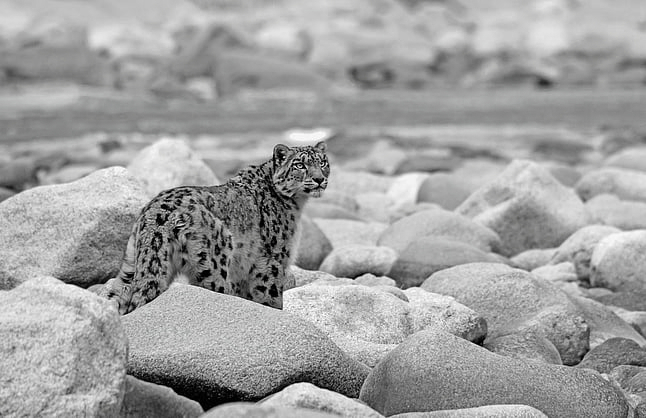
India’s first high-altitude wildlife safari has been launched in Ladakh, offering visitors a regulated opportunity to look for the elusive snow leopard while putting local communities at the heart of conservation efforts.
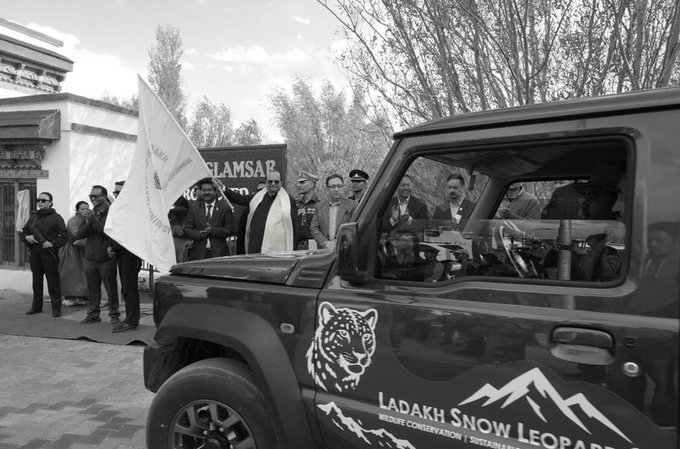
Lt Governor Vinai Kumar Saxena on Wednesday flagged off six specially designed vehicles during the Wildlife Week 2026 celebrations at Choglamsar Protected Forest in Leh. The initiative is being conducted by the Snow Leopard and High-Altitude Nature Conservation (SHAN) Society in collaboration with the Department of Forest, Ecology and Environment, UT Ladakh.
The safari will initially operate in Rumbak, Shang and Uley, areas known for frequent snow leopard sightings. Routes are also being identified across Hemis National Park, Changthang and Karakoram Wildlife Sanctuary, besides Nubra, Zanskar, Sham, Kargil and Drass.
The open-back vehicles will be operated by trained local drivers and accompanied by wildlife guides. The administration says the regulated system is intended to curb illegal off-roading and minimise disturbance to animals while giving visitors a safer and more responsible way to experience Ladakh’s unique wildlife.
The initiative also seeks to make conservation an economic opportunity for local residents. Saxena said regulated visitor numbers, approved routes and trained personnel could generate direct livelihood opportunities while protecting the region’s fragile ecosystem.
Ladakh is home to 477 snow leopards, the largest population in India, out of an estimated national population of around 718. The Union Territory also has more than 38 mammal species, over 340 bird species and nearly 1,800 vascular plant species.
As part of the wider conservation push, 20 local youths are being trained in bird identification and birdwatching and will be equipped with binoculars. Bird-watching hides are also planned at key hotspots.
A separate Wild Animal Felting Programme involving 50 women from five villages is aimed at linking traditional wool-based skills with conservation-linked enterprises.
Saxena stressed that Ladakh’s tourism model must focus on high-value, low-impact and knowledge-based tourism, with carrying capacity, waste, plastic pollution, visitor numbers and wildlife disturbance strictly regulated.
During the event, conservation education grants were handed to 50 schools through eco-clubs. An AI-based human-wildlife conflict mitigation device developed by the Wildlife Division, Kargil, in collaboration with the University of Ladakh, was also inaugurated.
The safari, officials said, is intended to create a model where protecting wildlife directly benefits the communities living alongside it.