
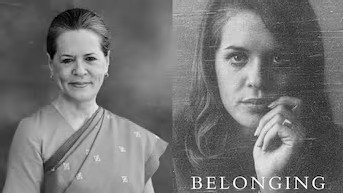
Sonia Gandhi’s ‘Belonging’: A Personal Story Behind Decades of Indian Politics
Sonia Gandhi’s forthcoming memoir, Belonging: A Journey of Love, could offer an unusually intimate window into the Nehru-Gandhi family, the Congress party and India’s political transformation over several decades.
The memoir is expected to revisit Gandhi’s childhood in post-war Italy and her marriage to Rajiv Gandhi, tracing her transition into one of India’s most politically consequential families. Her account could humanise figures such as Indira Gandhi and Rajiv Gandhi, while exploring the pressures, relationships and responsibilities that accompanied their public roles.
Personal tragedy is likely to form a central thread. The death of Rajiv’s younger brother Sanjay Gandhi in a 1980 plane crash, Indira Gandhi’s assassination in 1984 and Rajiv Gandhi’s assassination in 1991 profoundly altered the family’s trajectory. Sonia Gandhi’s experience of these events could provide fresh insight into the human cost of political power and violence.
The book may also illuminate Sonia Gandhi’s reluctant entry into politics. After Rajiv’s assassination, she initially stayed away from active political life before joining the Congress in 1997 and becoming party president in 1998. Her perspective could reveal why she eventually accepted a political role and how she viewed the Congress’s organisational and electoral challenges.
Her long leadership of Congress could provide an insider’s account of the party’s revival, coalition-building and transition into the United Progressive Alliance (UPA) era. The 2004 election victory, the relationship between Congress leadership and Prime Minister Manmohan Singh, and the functioning of coalition politics are likely to be particularly significant.
Perhaps the most closely examined episode will be her decision to decline the prime minister’s office in 2004, choosing instead to remain Congress president and exercise political influence from outside the government.
Finally, the memoir could chronicle India’s shift from Congress dominance to coalition politics and, later, BJP-led national dominance. Its value may ultimately lie in connecting private grief and family legacy with major political turning points, offering a first-person perspective on how personal choices intersected with India’s changing political history, and the choices of successive leaders.