
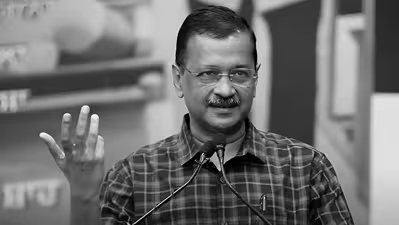
Special Court conducted mini-trial, misread facts: CBI on order discharging Kejriwal, others in excise case
The Central Bureau of Investigation (CBI) has challenged the special court’s decision to discharge former Delhi Chief Minister Arvind Kejriwal , former Deputy Chief Minister Manish Sisodia , and 21 others in the high-profile Delhi excise policy case , calling the ruling “patently illegal” and based on a selective reading of evidence. In a detailed 974-page petition filed in the Delhi High Court , the CBI alleged that the special judge effectively conducted a mini-trial at the charge-framing stage , misreading material and failing to assess the prosecution case cumulatively.
The trial court had on February 27 cleared all 23 accused, including Telangana Jagruthi president K Kavitha , stating there was no prima facie evidence of criminal conspiracy or corruption. The court also criticised the investigation, calling key allegations unsupported and questioning the CBI’s procedural lapses. Within hours, the agency moved the High Court, seeking to set aside the discharge order , with the matter listed for hearing on March 9, 2026 , before a bench led by Justice Swarna Kanta Sharma .
The CBI’s petition contended that the lower court overlooked the cumulative nature of the alleged conspiracy , including the generation and use of kickbacks during the Goa elections, and improperly evaluated evidence without witness examination. The agency described the order as perverse, self-contradictory, and legally unsustainable , emphasizing that singular facts cannot be assessed in isolation at the charge stage.
Amid this legal turmoil, Kejriwal is also preparing to appear before the Delhi Assembly Privileges Committee on March 6 in the “Phansi Ghar” row , which arose over the renovation and naming of a section of the Assembly building as a British-era hanging chamber. The former chief minister has requested that the proceedings be live-streamed , citing transparency and public accountability. The panel had earlier summoned him, along with senior AAP leaders, to clarify allegations raised by opposition members, making the hearing a politically sensitive event in the capital.
While the excise policy case has national legal and political implications , the Phansi Ghar controversy remains symbolically significant , highlighting legislative scrutiny and public perception challenges for Kejriwal and his party. As the March 6 committee appearance and the March 9 High Court hearing approach, the former Delhi chief minister continues to face multiple legal and political challenges, keeping the city’s governance and political discourse in focus.