
Sreejesh, Bhupathi Slam India’s Sporting System Ahead Of Asian Games 2026
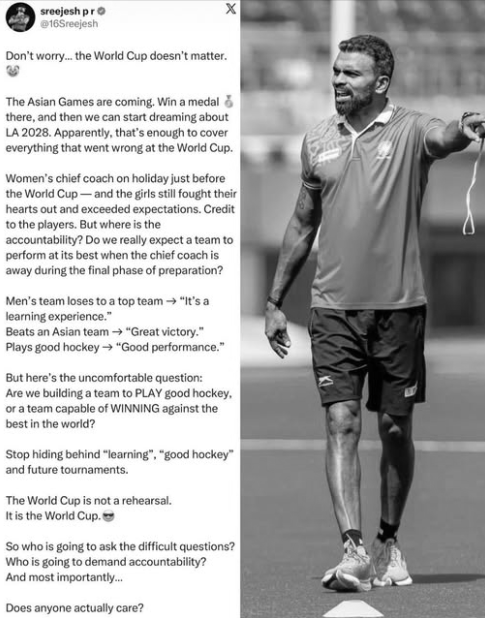
India’s sporting system is facing fresh scrutiny ahead of the Asian Games 2026 after disappointing hockey and badminton campaigns and a controversial tennis selection process. Indian sporting icons PR Sreejesh and Mahesh Bhupathi have questioned whether the system is doing enough to support athletes and build long term success.
India’s men’s and women’s hockey teams recently exited the World Cup without medals. The men lost 3-5 to Argentina, extending India’s World Cup medal drought to 50 years, while the women continued to wait for their first ever World Cup medal.
Former India goalkeeper and coach Sreejesh has been particularly critical of the system. Having experienced Indian hockey as both player and coach, he has questioned preparation, accountability and coaching decisions. He has also raised concerns over the women’s chief coach being away shortly before the World Cup and questioned why poor World Cup campaigns are repeatedly treated as learning experiences, while Asian Games success can make deeper problems appear less urgent.
Sreejesh’s criticism also comes after his own coaching experience. After helping lead India’s junior men’s team to a major World Cup triumph, he was reportedly asked to make way for a foreign coach, raising further questions about how India chooses and develops coaches.
The concerns extend beyond hockey. At the World Badminton Championships in Delhi, India managed just one podium finish, with Treesa Jolly and Gayatri Gopichand securing the medal.
Tennis has produced another controversy. The All India Tennis Association initially recommended 12 players for India’s Asian Games squad, but the final list was reduced to seven under the government’s medal potential criteria.
The decision could leave India without a women’s singles representative despite Sahaja Yamalapalli and Vaishnavi Adkar being among the country’s leading players. The policy focuses on recent rankings and results, with athletes expected to have realistic medal prospects in Asia.
Critics argue this creates a catch 22: athletes need opportunities to face stronger opponents, gain experience and improve, but exclusion can deny them exactly that opportunity. Two time Grand Slam champion Bhupathi has questioned the selection logic.
The controversies raise a bigger question: can India become a global sporting powerhouse while prioritising immediate medals over long term development?
With India also aspiring to host the 2036 Olympics, the country needs more than infrastructure. It needs stronger preparation, coaching, selection, athlete support and accountability.
The Asian Games will test whether India is ready to address those weaknesses or remains focused mainly on short term success.