
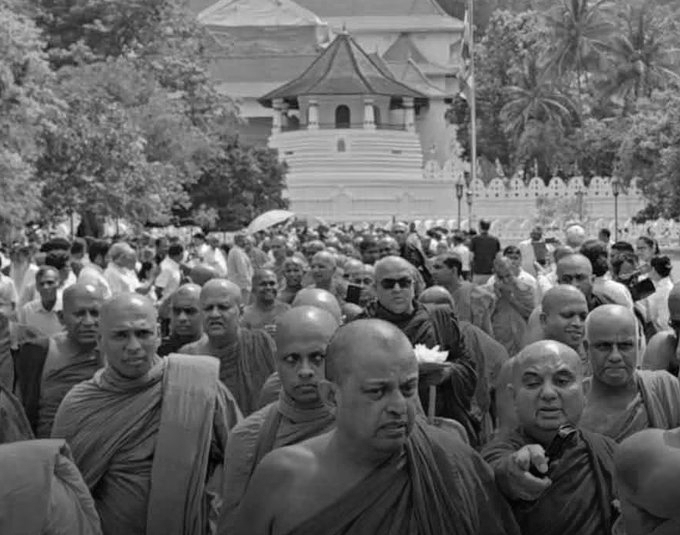
Sri Lankan Buddhist Monks March for Release of Hardline Leader Gnanasara
Hundreds of Sri Lankan Buddhist monks began a protest march from the sacred Temple of the Tooth in Kandy on 10 Oct 2026, demanding the release of firebrand religious leader Galagodaatte Gnanasara, who is serving a prison sentence for contempt of court. The march is expected to conclude opposite the main prison in Colombo, approximately 121 km from Kandy, where the 51-year-old monk is being held.
The protesting monks are demanding Gnanasara’s release and insisting that he be permitted to appear in court wearing his traditional Buddhist monk’s robes. Their demonstration follows protests last week after he was brought to court in civilian clothes. “We will keep on protesting until he is freed,” said Ven Walahahangunawawe Dhammarathana, a prominent monk participating in the campaign.
Gnanasara has led the Bodu Bala Sena (Buddhist Power Force) since 2012 and was a leading figure in a hardline Buddhist nationalist movement that attracted criticism for its rhetoric towards Sri Lanka’s Muslim minority.
He was returned to prison this week after the Supreme Court overturned a presidential pardon granted in 2019 by then-President Maithripala Sirisena. The court ordered him to serve the remainder of his six-year sentence for intimidating the wife of a journalist who disappeared in 2010.
In 2016, Gnanasara disrupted a court hearing concerning the journalist’s abduction, a case in which military intelligence officials were accused. He was sentenced in 2018 for contempt of court and intimidating the journalist’s wife. However, he served less than a year before receiving the presidential pardon.
Meanwhile, a special committee appointed by President Anura Kumara Dissanayake met in Colombo to review prison regulations governing Buddhist monks, including procedures for taking them outside prison for court appearances. The committee is expected to submit its report to the president within two weeks.
The committee was formed after monks met Dissanayake and argued that removing a monk’s robes should not be a routine administrative decision by prison authorities. They maintained that the authority to decide whether a monk should be disrobed rests with the relevant Buddhist clergy council.