
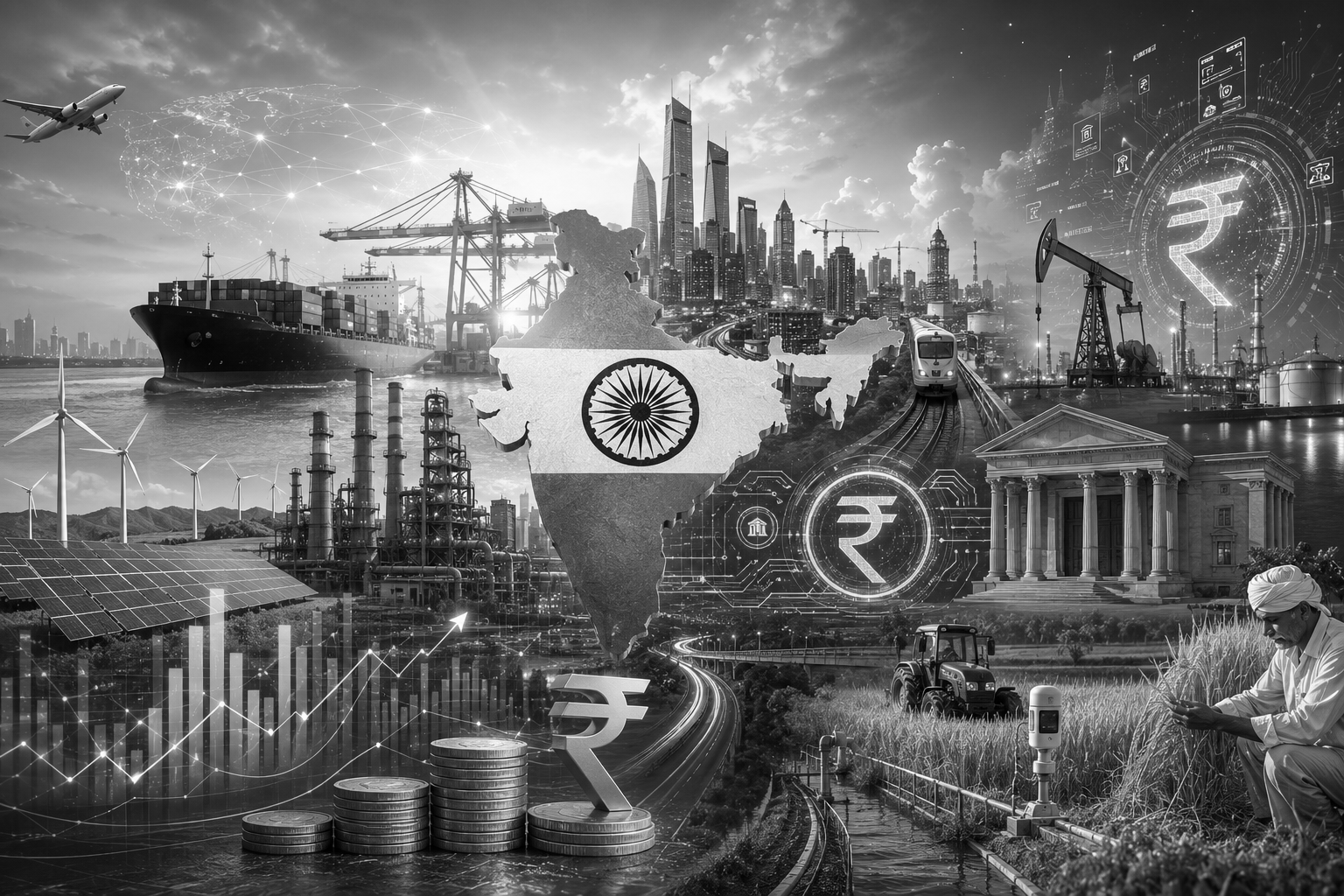
Strong Fundamentals to Drive India's Growth in 2026-27, Says RBI
India is expected to remain on a strong growth path in 2026-27 despite rising geopolitical tensions, volatile energy markets and climate-related uncertainties, according to the latest Annual Report of the Reserve Bank of India (RBI) . While warning of growing external risks, the central bank expressed confidence that the country's robust macroeconomic fundamentals, healthy financial sector and sustained government investment will help maintain economic momentum.
The report comes at a time when the global economy is facing renewed uncertainty due to the ongoing West Asia conflict , elevated commodity prices and weakening growth prospects across several major economies. The RBI noted that geopolitical risk has re-emerged as the dominant threat to global growth in 2026, with the conflict that erupted in the region earlier this year already influencing global inflation and growth forecasts.
Against this backdrop, the RBI said the outlook for the Indian economy remains positive. India's GDP expanded by 7.6 per cent in 2025-26 , up from 7.1 per cent in the previous year, making it the world's fastest-growing major economy. The growth was driven by strong domestic consumption, continued investment activity, proactive policy support and resilient macroeconomic conditions.
The central bank highlighted that healthy corporate balance sheets , a well-capitalised banking system and the government's continued focus on capital expenditure and infrastructure development will remain key growth drivers. Stress tests conducted by the RBI indicate that Indian banks are well-positioned to withstand severe economic shocks while maintaining regulatory capital requirements.
However, the report cautioned that a prolonged conflict in West Asia could create downside risks for India through higher crude oil prices, supply-chain disruptions and imported inflation. Given India's dependence on energy imports from the region, any escalation could increase pressure on household budgets, businesses and public finances.
The RBI also identified weather-related risks as a key concern for the agriculture sector. The outlook for farm output remains dependent on the progress of the South-West monsoon , while potential El Niño conditions could adversely affect rainfall and crop production. At the same time, the emergence of a positive Indian Ocean Dipole (IOD) later in the season may help offset some of these risks.
On inflation, the central bank expressed confidence that price pressures will remain broadly aligned with the 4 per cent target , supported by adequate foodgrain stocks, sufficient reservoir levels and government buffer management measures. The Centre and RBI have retained the inflation target of 4 per cent with a tolerance band of ±2 per cent until March 2031 .
The report also outlined plans to expand the Central Bank Digital Currency (CBDC) initiative by introducing new use cases under Direct Benefit Transfer (DBT) schemes and the domestic retail payments ecosystem. Additional pilot programmes involving tokenisation of financial assets and broader participant coverage are also being explored.
Overall, the RBI's assessment reflects a balance between optimism and caution. While global uncertainties continue to cloud the outlook, the central bank believes India's strong domestic demand, resilient banking system, infrastructure push and ongoing economic reforms provide a solid foundation for sustained growth in the years ahead.