
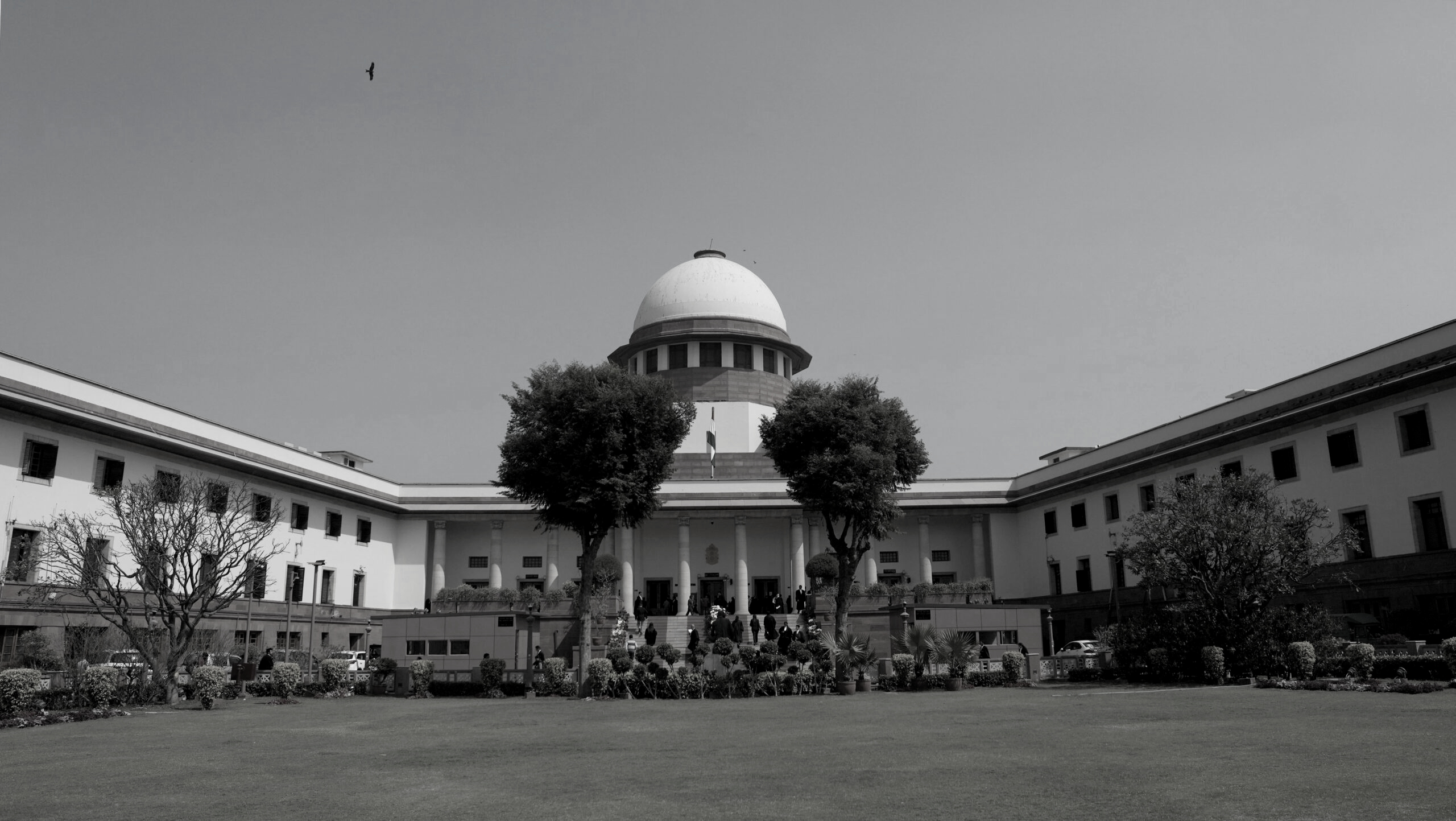
Supreme Court seeks CJI’s direction on SOP for freezing bank accounts in cybercrime cases
The Supreme Court has directed that a petition seeking uniform guidelines for freezing and de-freezing bank accounts during cybercrime investigations be placed before the Chief Justice of India (CJI) Surya Kant for appropriate orders.
A Bench of Justices Pankaj Mithal and S.V.N. Bhatti on January 16 asked the Supreme Court registry to obtain instructions from the CJI and list the matter before the appropriate Bench. The direction came after the Centre informed the court that a CJI-led Bench is already hearing a suo motu case concerning “digital arrests”, where similar issues are under consideration.
Recording the submission of Additional Solicitor General Anil Kaushik, the court noted that prayers seeking directions on procedural safeguards and a Standard Operating Procedure (SOP) for freezing bank accounts overlap with issues being examined in the suo motu proceedings. “In view of the above, the registry is directed to obtain appropriate orders from the Chief Justice of India and post the matter accordingly,” the Bench said.
The petition, filed by Vivek Varshney through advocate Tushar Manohar Khairnar, contends that his bank accounts were arbitrarily frozen by the Cyber Cell of the Tamil Nadu Police without prior notice, communication, or judicial approval, violating his fundamental rights under Articles 19(1)(g) and 21 of the Constitution. The freezing order allegedly led to “complete financial paralysis,” preventing him from meeting professional and personal obligations, including payment of taxes, essential expenses, and other liabilities.
The plea highlights the absence of a uniform nationwide procedure for freezing and unfreezing bank accounts during cybercrime or financial investigations. It seeks directions that no bank account be frozen without a written, reasoned order , intimation to the account holder within 24 hours, and mandatory reporting to the jurisdictional magistrate, as required under Section 106(3) of BNSS and Section 102(3) of the CrPC .
The issue of arbitrary bank account freezes has affected hundreds of thousands of users across India , with reports indicating that over 3.5 lakh accounts were flagged in cyber fraud probes in the past year alone, involving amounts running into hundreds of crores of rupees . Many affected individuals, including small businesses and ordinary citizens, have faced financial paralysis, unable to access funds for months despite having no role in the alleged crimes. Cases in states like Tamil Nadu, Jharkhand, Gujarat, and Uttar Pradesh underscore the urgent need for uniform procedures and safeguards to prevent undue hardship while allowing lawful investigations.
The Reserve Bank of India (RBI) and banks play a crucial role in implementing account freezes during cybercrime investigations, acting on notifications from investigating agencies. However, in practice, the statutory safeguards under BNSS and CrPC are inconsistently followed, leaving citizens vulnerable to financial disruption. The Supreme Court is also examining a suo motu case on “digital arrests” , which addresses broader issues of online or cyber-enabled enforcement actions, including freezing accounts, arrests, or property seizures in digital crime cases.
In the proposed Standard Operating Procedure (SOP) , authorities are expected to include mandatory written and reasoned orders for freezing, prompt intimation to account holders (within 24–48 hours), reporting to magistrates, proportionality limits (freezing only amounts linked to the alleged crime), clear de-freezing timelines, and uniform nationwide procedures to prevent arbitrary action and ensure procedural fairness.
Varshney’s petition also emphasizes that unless an account holder is proven complicit in a crime, authorities should not freeze the entire bank account or amounts exceeding the alleged transaction , highlighting the growing need to protect ordinary citizens from unnecessary harassment in cybercrime investigations.