
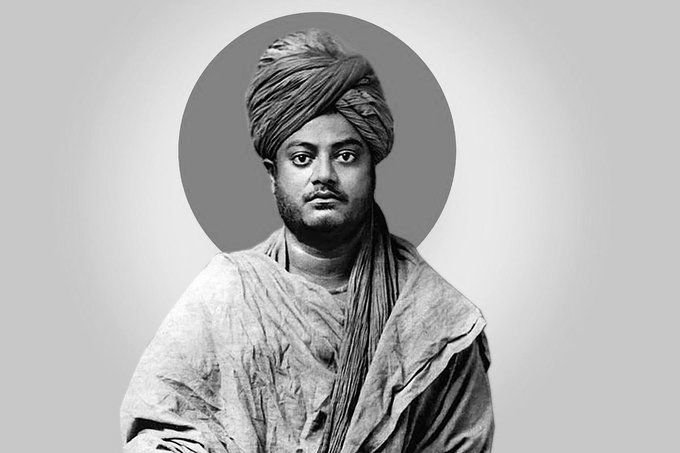
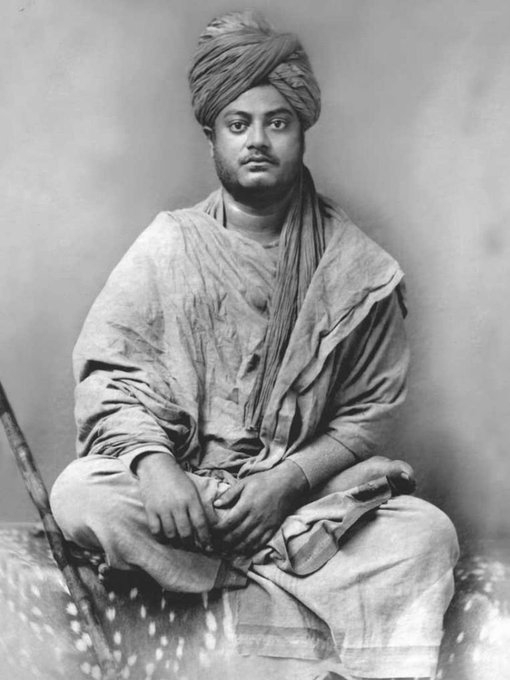
Swami Vivekananda: The Monk Who Awakened India's Soul and Inspired the World
July 4 marks the death anniversary of Swami Vivekananda , one of India's greatest spiritual leaders, philosophers and nation-builders. More than 124 years after his passing , his ideas on youth empowerment, education, national pride, religious harmony and selfless service continue to influence millions of people across the world. His life was brief, lasting only 39 years , but his impact on India and humanity remains timeless.
Born as Narendranath Datta on January 12, 1863 , in Calcutta (now Kolkata), Vivekananda was the son of Vishwanath Datta , a lawyer, and Bhuvaneshwari Devi , a deeply religious woman. From an early age, Narendranath displayed exceptional intelligence, curiosity and a questioning mind. He excelled in academics, music, philosophy and physical activities, while constantly seeking answers to profound questions about life, truth and God.
His spiritual journey took a decisive turn when he met Sri Ramakrishna Paramahamsa at Dakshineswar. Initially sceptical, Narendranath repeatedly questioned the saint about the existence of God. Ramakrishna's simple yet profound teachings eventually transformed the young seeker into his foremost disciple. After Ramakrishna's passing in 1886, Narendranath embraced monastic life and later adopted the name Vivekananda , reportedly at the suggestion of Maharaja Ajit Singh of Khetri , before embarking on his historic journey to represent India abroad.
Before gaining worldwide fame, Vivekananda travelled extensively across the Indian subcontinent as a wandering monk. From the Himalayas to Kanyakumari, he witnessed firsthand the poverty, illiteracy and social inequalities prevailing under colonial rule. These experiences deeply shaped his vision for India's future. He believed that the country's regeneration depended not merely on religious rituals but on education, character-building, social upliftment and self-confidence among ordinary people .
One of the defining moments in his life came in September 1893 , when he represented India at the Parliament of the World's Religions in Chicago. His opening words, "Sisters and Brothers of America," received a prolonged standing ovation and instantly captured the attention of the global audience. Rather than promoting one religion over another, Vivekananda spoke about universal acceptance, mutual respect and harmony among all faiths . He presented India's ancient wisdom through Vedanta and Yoga , making these philosophies accessible to the Western world. The speech remains one of the most celebrated addresses in modern history and transformed Vivekananda into an international figure.
Following his success in Chicago, Vivekananda spent several years delivering lectures across the United States and Europe , explaining Indian philosophy and spirituality. His message attracted scholars, intellectuals and ordinary citizens alike. Among those inspired by him was Margaret Noble , who later became Sister Nivedita and dedicated her life to women's education and social service in India. Through these interactions, Vivekananda successfully built an intellectual bridge between the East and the West.
Returning to India in 1897, Vivekananda received a hero's welcome. Instead of resting on his international acclaim, he devoted himself to building institutions that would combine spirituality with public service. On May 1, 1897 , he founded the Ramakrishna Mission , an organisation dedicated to education, healthcare, rural development, disaster relief, tribal welfare and humanitarian service. The Mission continues to serve society across India and in many countries around the world, reflecting Vivekananda's belief that service to humanity is service to God .
He also established Belur Math near Kolkata as the headquarters of the Ramakrishna Math and the Ramakrishna Mission . Belur Math became a unique centre where ancient monastic traditions were combined with modern social responsibility. Vivekananda envisioned monks who would pursue spiritual enlightenment while also actively serving society through education, healthcare and relief work, setting a new model of monastic life for modern India.
Education occupied a central place in Vivekananda's philosophy. He believed that true education should not merely produce literate individuals but should build confidence, discipline, courage and moral character. His concept of "man-making education" sought to develop the complete personality of an individual. According to him, education should empower people to discover their inner strength and become responsible citizens capable of transforming society.
Vivekananda placed enormous faith in the power of young people. He believed that India's future rested in the hands of disciplined, fearless and determined youth. His immortal message, "Arise, Awake and Stop Not Till the Goal Is Reached," continues to motivate students, entrepreneurs, scientists, sportspersons and professionals across generations. Recognising his immense contribution towards inspiring young minds, the Government of India declared January 12 , his birth anniversary, as National Youth Day in 1984, and it has been observed nationwide since 1985.
Beyond spirituality, Vivekananda emerged as one of the foremost advocates of modern Indian nationalism . During British colonial rule, he instilled confidence among Indians by reminding them of the country's rich cultural, philosophical and intellectual heritage. He urged people to overcome fear, reject feelings of inferiority and work collectively for national progress. Historians widely acknowledge that his writings and speeches inspired many leaders of India's freedom movement, earning him recognition as one of the architects of modern Indian nationalism.
Vivekananda also championed religious harmony at a time when sectarian divisions were common. He consistently argued that all religions ultimately seek the same truth and that humanity should focus on shared values rather than differences. His vision of peaceful coexistence and mutual respect continues to resonate in today's increasingly interconnected yet divided world.
He strongly believed that spirituality should never be isolated from everyday life. Instead, it should inspire compassion, service and responsibility. His famous principle of seeing God in every living being encouraged people to serve the poor, the sick and the disadvantaged without discrimination. This philosophy continues to shape the humanitarian work carried out by the Ramakrishna Mission across the globe.
At the core of Vivekananda's teachings was the belief that divinity exists within every human being . He taught that strength, confidence and purity of mind are essential for both individual growth and national progress. In today's world, where stress, self-doubt and mental health challenges are widespread, his message of inner strength and self-belief remains deeply relevant.
He emphasised education as a tool for transformation , not just employment. In an era driven by rapid technological change, his idea of holistic education—combining knowledge, values, discipline and service—offers a meaningful framework for building responsible citizens.
Vivekananda's vision of religious harmony and universal acceptance is especially significant today, when societies across the world face increasing polarisation. His message that all paths lead to the same truth encourages tolerance, dialogue and peaceful coexistence among diverse communities.
He also advocated the balance between science and spirituality , a concept that holds importance in a time of artificial intelligence, scientific breakthroughs and ethical dilemmas. His philosophy suggests that progress must be guided by moral values to ensure that development benefits humanity as a whole.
Most importantly, his call for selfless service to humanity continues to inspire social initiatives, volunteer movements and humanitarian efforts worldwide. From disaster relief to education and healthcare, his ideals remain the guiding force behind many service-oriented organisations.
Despite his remarkable achievements, Vivekananda's health began to deteriorate because of years of relentless travel, lectures and organisational work. Even during his final years, he remained deeply engaged in teaching, guiding disciples and planning educational institutions. On July 4, 1902 , he spent the day at Belur Math meditating, teaching Shukla Yajur Veda , discussing plans for a Vedic college and interacting with fellow monks. Later that evening, he retired to his room for meditation and passed away peacefully at the age of 39 . His disciples believed he attained Mahasamadhi , fulfilling his own earlier prediction that he would not live to see the age of forty.
One of Vivekananda's lesser-known contributions was his ability to harmonise science and spirituality . Rather than viewing scientific inquiry and religious thought as opposing forces, he believed they complemented each other in the search for truth.
His literary works, including Raja Yoga , Jnana Yoga , Karma Yoga and Bhakti Yoga , remain widely read across the world. His speeches, letters and essays continue to be studied for their insights into philosophy, education, leadership, nation-building and human development.
Today, Vivekananda's influence extends far beyond religious circles. His teachings are frequently quoted in educational institutions, leadership programmes, civil services preparation, motivational literature and public life. His emphasis on self-confidence, discipline, service, integrity and national pride continues to inspire individuals across different professions and age groups.
As India remembers Swami Vivekananda on his death anniversary, his life serves as a powerful reminder that true greatness lies not merely in intellectual brilliance or spiritual attainment, but in using knowledge for the welfare of humanity. More than a century after his passing, his vision of a strong, compassionate, educated and united India continues to inspire generations, ensuring that his legacy remains as relevant today as it was during his lifetime.