
Tamil Nadu Unveils 17 Power Reforms to Modernise Distribution and Services
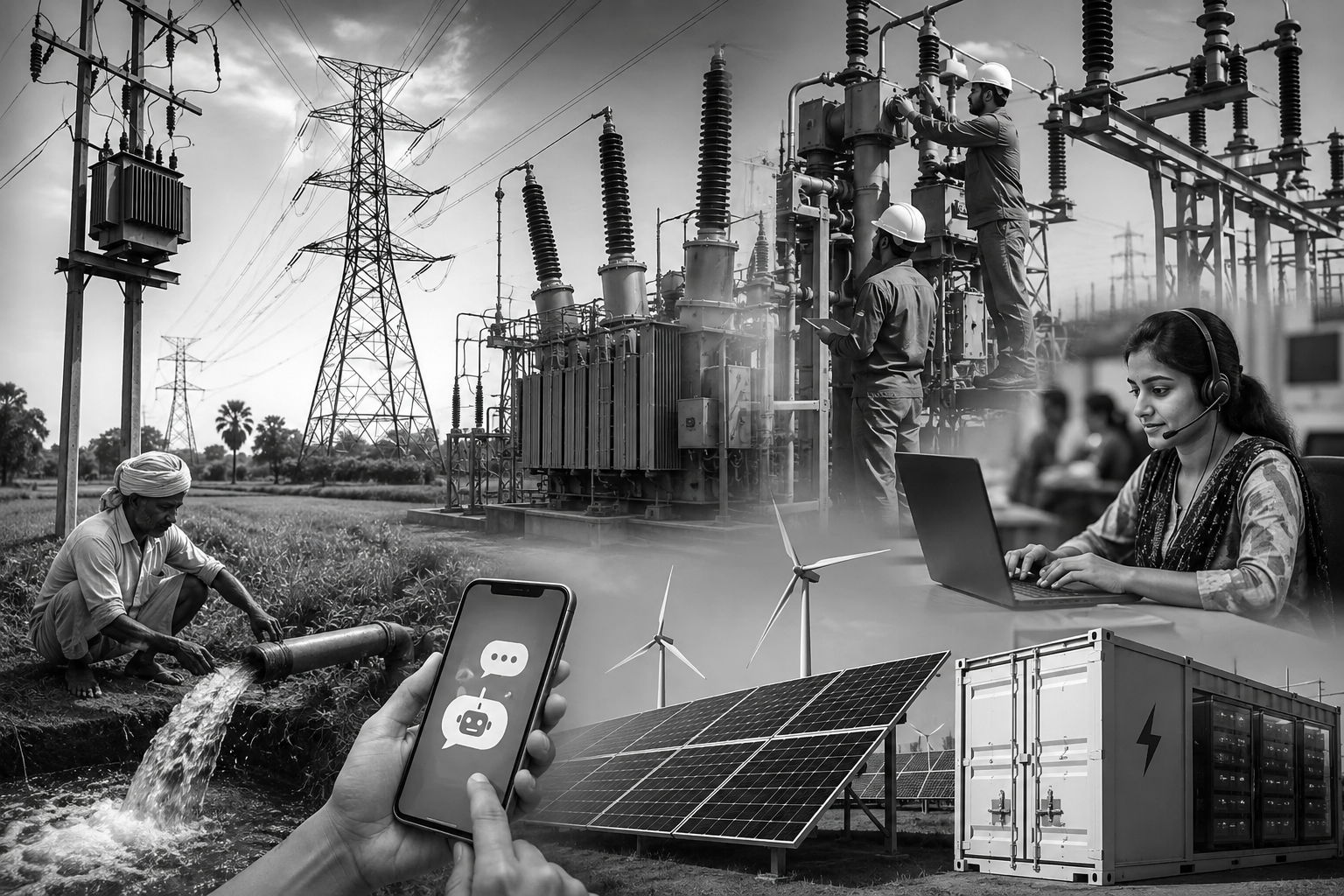
Tamil Nadu is moving to combine wider electricity access, stronger distribution infrastructure, digital governance and financial discipline as the state attempts to modernise its power sector while managing a large debt burden. Energy Resources and Law Minister C.T.R. Nirmal Kumar announced a broad package of initiatives in the Assembly, covering agricultural supply, manpower, grid resilience, consumer services, renewable-energy integration and internal administration.
At the centre of the package is a plan to provide 50,000 new agricultural electricity connections across Tamil Nadu during 2026–27. The state will also fill 2,558 vacant TNPDCL posts through TNPSC and engage 10,000 contract workers for five years to accelerate frontline works. For households, eligible single-phase connections that require no network extension or enhancement will be issued through self-declaration, eliminating field inspections and reducing processing time.
The infrastructure push includes additional 33 KV feeders across 20 Chennai substations at an estimated ₹104 crore, while transformers at 10 extra-high-voltage substations will be upgraded for about ₹110.76 crore. New EHV protection and communication equipment will be procured at ₹120.32 crore, and obsolete protection and communication systems will be replaced for another ₹92.30 crore. Around 1,250 distribution-transformer structures in Chennai will be converted into Ring Main Units at a cost of ₹250 crore, while 100 isolators at 110-KV substations will be replaced with breakers for about ₹130 crore. Equipment capable of locating faults in cables up to 400 KV will also be procured for around ₹17 crore.
The digital component is equally significant. An Integrated Data Lake, Enterprise Data Warehouse and advanced analytics framework will be established at about ₹25 crore to centralise and analyse power-sector information. A new online portal will streamline approvals for renewable-energy grid connectivity, open access and Battery Energy Storage System projects. Consumers will get an automated WhatsApp chatbot, integrated with the Customer Complaint Management System, at a cost of ₹14 lakh, while an eNACH facility will allow eligible low-tension consumers to automate electricity-bill payments.
The department will also introduce an online HR consultation system costing ₹8.26 lakh for transfers and promotions, while pension processing will be integrated with SAP ERP at an estimated ₹24.85 lakh. These measures are intended to improve transparency and reduce administrative delays.
The reforms come against a challenging financial backdrop. Tamil Nadu's four power corporations carried a combined debt of around ₹2.47 lakh crore as of March 2026, while TNPDCL alone accounted for more than ₹1 lakh crore. During 2025–26, TNPDCL's monthly expenditure was estimated at around ₹11,000 crore, against revenue of approximately ₹8,500 crore, leaving a recurring financing gap. For 2026–27, the government has committed around ₹17,307 crore in electricity subsidies, including ₹7,317 crore for free agricultural power, while deciding against passing on a potential 3.57% tariff increase to consumers.
The package therefore seeks to improve efficiency without abandoning Tamil Nadu's subsidised electricity model. Recent concerns over billing variations involving around 3.70 lakh services and an estimated ₹584 crore loss linked to delayed surcharge recovery further highlight the need for stronger data, compliance and revenue-management systems.
Beyond the 17-point package, the government has also announced a new biogas policy aimed at waste disposal, rural employment and energy security. Together, the measures point to a broader transformation of Tamil Nadu's electricity system—combining expanded agricultural access, resilient infrastructure, digital administration, renewable integration and financial management while preparing TNPDCL to handle rising demand and a more complex energy landscape.