
Tedros Arrives In Congo As Ebola Outbreak Spreads Beyond Known Contacts, Cases Near 4,000
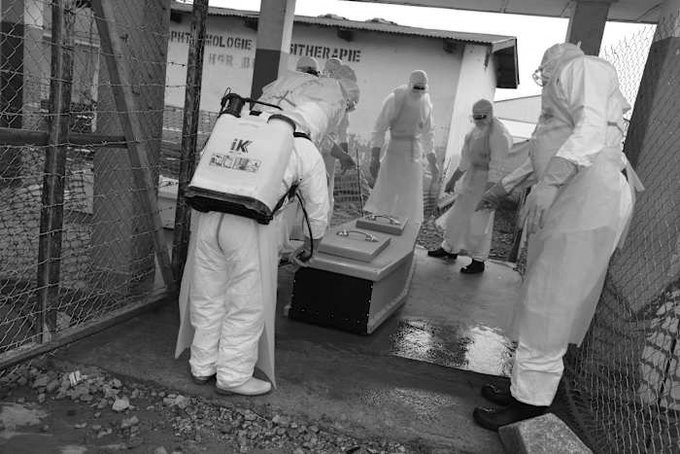
World Health Organisation (WHO) Director General Tedros Adhanom Ghebreyesus arrived in the Democratic Republic of Congo as health agencies intensified efforts to control the country’s rapidly expanding Ebola outbreak, which has spread beyond known contacts and exposed major gaps in disease tracking.
Tedros reached Kinshasa late Tuesday and is scheduled to meet Congo’s President Félix Tshisekedi, government officials and health partners to review the emergency response. This marks his second visit to the country since the outbreak was declared in mid May.
The outbreak has become the fastest growing Ebola crisis on record, with Congo’s Health Ministry reporting 3,874 cases and 1,751 deaths as of Monday. It is now the second largest Ebola outbreak in history, after the 2014 to 2016 West Africa epidemic that caused more than 28,000 infections and over 11,000 deaths.
Health officials said the virus is spreading faster than response teams can contain it. A major concern is that 60 to 70 per cent of new infections are being detected outside existing contact lists, showing that current tracing methods are missing many transmission chains.
The outbreak is concentrated in Ituri province, which accounts for nearly 90 per cent of cases. However, rebel violence and security concerns have restricted access to several affected areas, making testing, treatment and contact tracing more difficult. Health workers have also protested over delayed payments, adding further pressure on the response.
The WHO has called for stronger international support to help Congo improve surveillance, expand medical care and strengthen community engagement. The outbreak is caused by the Bundibugyo strain of Ebola, which currently has no approved vaccine or specific treatment.
A possible breakthrough is emerging in vaccine research. Canada has approved clinical trials for Moderna’s experimental mRNA 1469 Ebola vaccine, designed specifically for the Bundibugyo strain. The early stage trial will study the vaccine’s safety and immune response among healthy adults in Canada.
Researchers are also testing other potential treatments and vaccines, including WHO supported treatment studies and vaccine candidates developed by global partners.
Officials said delayed detection remains a major challenge, contributing to the outbreak’s estimated 45 per cent fatality rate. The latest update recorded 77 new cases in 24 hours, including 44 deaths. At least 717 patients are in isolation, while 749 people have recovered.