
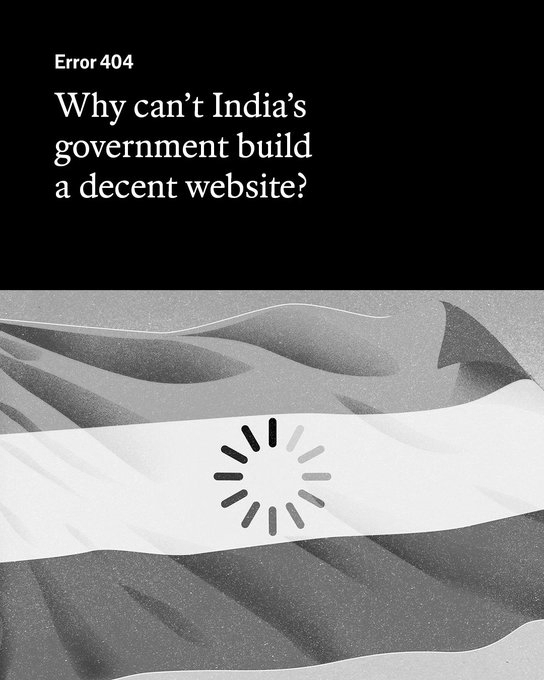
The Economist Asks Why India Can't Build a Better Visa Website, Netizens Have Plenty of Answers
A sharply worded column by The Economist criticising India's government websites, particularly its online visa portal , has triggered a spirited debate across social media, drawing reactions from politicians, journalists, entrepreneurs and technology commentators. The piece, published in the magazine's India focused column titled Ashoka, argued that India's official websites often deliver clunky digital experiences despite the country's global reputation as an IT powerhouse .
The column suggested that the visa website's problems stem from institutional and bureaucratic failures rather than a shortage of technical talent, citing outdated design, broken links and confusing navigation across multiple government platforms. It also referenced a teenage ethical hacker who exposed vulnerabilities in the CBSE's online marking portal, calling backend systems equally troubled.
Reactions on social media were sharply divided. NCP (SP) spokesperson Anish Gawande used the piece to criticise India's digital governance , suggesting that even a student using AI coding tools could build a better website. Hotmail co-founder Sabeer Bhatia called it evidence of a broken system, while columnist SL Kanthan questioned why Indian software engineers had not pushed for improvements themselves.
Other voices defended India's digital record. Commentator Deepessh Divaakaran argued the criticism was a pressure tactic rather than genuine journalism, pointing to successful platforms like Aadhaar , UPI and DigiLocker as counterexamples. Journalist Pranav Dixit compared the criticism to America's own troubled visa scheduling website, while startup founder Karthik Subramanian said his personal experience applying for e visas had been smooth and efficient.
Engineer Siddharth argued the generalisation was unfair, noting that platforms like Aadhaar and the passport portal function well, though he acknowledged that certain aspects, such as photo upload restrictions, remain a genuine pain point for users.
Travel entrepreneur Ankit Sawant said concerns about the visa website were not new, noting that industry representatives and former ministry officials had raised similar issues at tourism trade events. He cautioned against judging India's broader digital capabilities through a single website, while agreeing that user experience improvements were overdue.
The debate has widened beyond the original column, prompting fresh conversation about how India's public digital services are perceived both domestically and internationally, and whether meaningful reform will follow renewed scrutiny.