
The Migration Behind the Morning: Why Rural Workers Are Leaving Their Villages
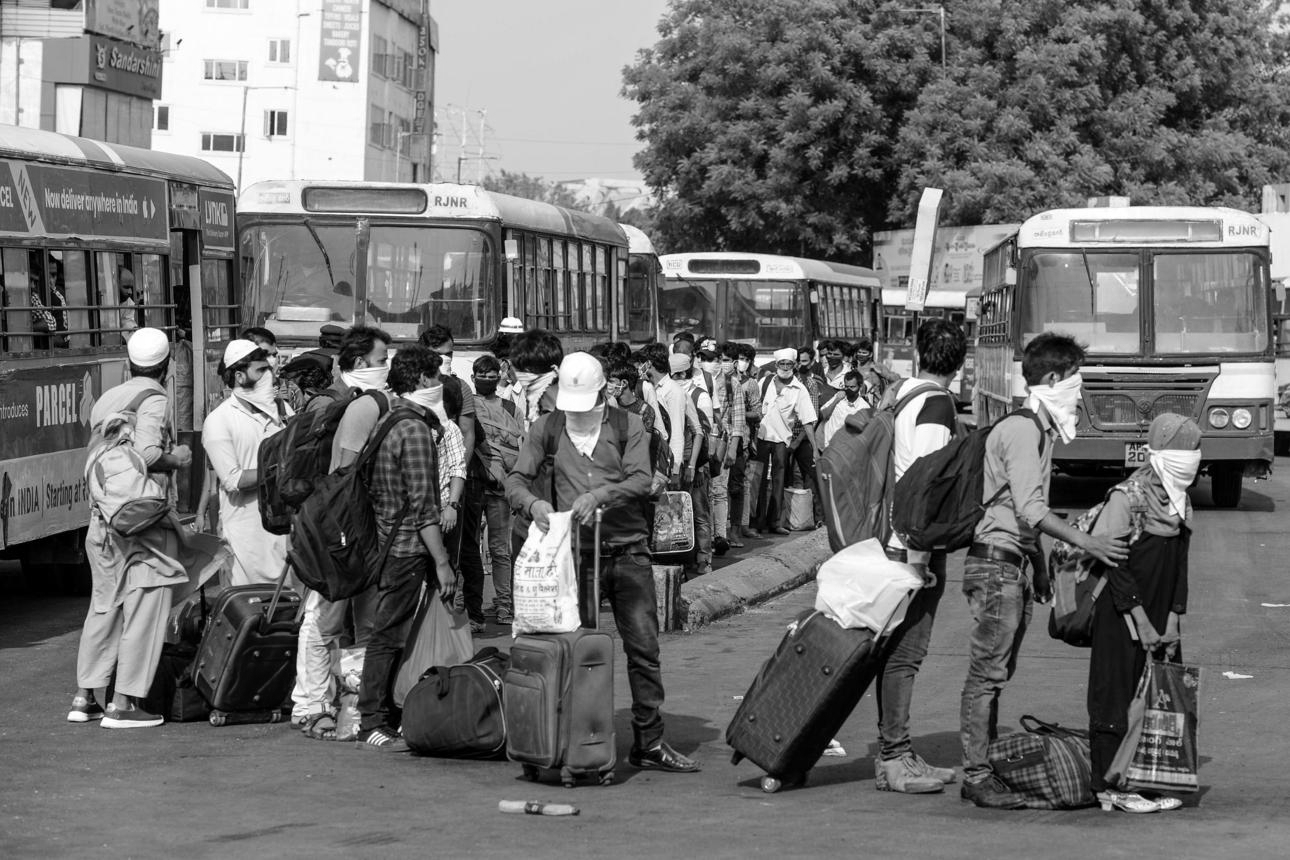
Long before the sun rises over the villages of Rayalaseema, several rural households are already preparing for another day of uncertainty. For some, the morning begins with the routine of agricultural work. For others, it marks the beginning of a journey to distant towns and cities in search of employment. Bags are packed, children are prepared for unfamiliar surroundings and families make arrangements for those staying behind. Their departure is not always driven by the desire for a better life, but increasingly by the need to secure a basic livelihood.
Across drought-prone parts of Andhra Pradesh, particularly Rayalaseema, seasonal migration has become an important survival strategy for agricultural labourers, small farmers and daily-wage workers. Districts such as Kurnool, Nandyal and YSR Kadapa, along with Sri Sathya Sai and Annamayya, have areas where people struggle to find sufficient employment within their villages. When agricultural activity declines and local work becomes scarce, many are compelled to travel to other districts and neighbouring states to earn an income.
The reasons behind this movement are closely connected to the region's dependence on rainfall. Agriculture remains a primary source of livelihood for many rural households, but irregular monsoons, prolonged dry spells and inadequate irrigation facilities make farming increasingly uncertain. When rainfall fails, crops suffer, borewells become unreliable and farmers struggle to recover their investments. The consequences extend beyond landowners, affecting agricultural labourers who depend on farms for daily wages.
Small and marginal farmers often find themselves caught between rising cultivation costs and uncertain returns. Money spent on seeds, fertilisers, pesticides and labour can turn into debt when crops fail. Some farmers reduce cultivation, while others leave their land uncultivated because water is unavailable. Agricultural workers consequently lose employment, forcing them to look for opportunities elsewhere. For families already struggling with loans, education expenses and healthcare costs, migration becomes one of the few available ways to maintain their income.
The absence of regular employment outside the agricultural season further aggravates the situation. In several villages, work is concentrated around sowing, harvesting and other farming activities. During the remaining months, daily-wage workers find it difficult to secure consistent employment. Limited opportunities in rural industries and other occupations leave them dependent on seasonal work. As a result, migration is no longer restricted to a particular group of agricultural labourers but increasingly involves households seeking alternative sources of income.
For many workers, the journey begins through information shared by relatives, friends or labour contractors who have already migrated. Some travel individually, while others move in groups or with their families. Agricultural workers from Rayalaseema often travel to Guntur, Palnadu, Krishna and Nellore for farm-related employment. Others head towards Hyderabad, Bengaluru, Vijayawada, Chennai and industrial centres in Karnataka and Tamil Nadu, where construction, manufacturing and other informal-sector jobs are available.
The nature of employment has also changed over the years. Workers who once depended almost entirely on agriculture are increasingly taking up construction work, factory jobs, warehouse operations and other physically demanding occupations. At construction sites, migrants work as helpers, masons, painters and general labourers. In industrial establishments, they are employed in packaging, sorting, assembling, loading and unloading. Some find temporary work in hotels, restaurants and housekeeping services, while women also take up domestic work and agricultural jobs.
Brick kilns remain another source of seasonal employment, particularly for families willing to relocate for several months. The work involves making, carrying and stacking bricks, often under difficult conditions. In some cases, contractors provide advances to workers before they migrate. Although this offers immediate financial support, it can also create dependence on employers, particularly when workers are unable to repay advances or leave before completing the agreed period of work.
However, finding employment in another location does not necessarily guarantee financial security. Migrant workers frequently have to manage food, accommodation and transportation expenses from their earnings. The wages they receive may vary according to the nature of work, location, experience and contractor arrangements. Some are paid daily, while others receive weekly or monthly payments. Delayed wages, unexplained deductions and the absence of written employment agreements can make it difficult for workers to establish their earnings or seek assistance when disputes arise.
Whether migrants receive the minimum wages prescribed by the government is another important concern. Workers are entitled to the applicable minimum wages based on their occupation, skill category and state. However, actual payments need to be compared with the relevant wage notifications to determine whether violations are taking place. Women workers also face the possibility of receiving lower wages than men for similar work, despite carrying out equally demanding tasks. Such disparities can further reduce the financial benefits of migration.
Workplace safety is another concern that deserves attention. Construction workers may be exposed to accidents when protective equipment such as helmets, gloves, safety belts and footwear is not provided. Brick kiln workers face prolonged exposure to heat, smoke and dust, while agricultural labourers may work under extreme temperatures and come into contact with pesticides. Long working hours, inadequate rest and physically exhausting tasks can also affect their health. For workers living far from their native villages, accessing medical assistance following an injury or illness can become particularly difficult.
Accommodation at migration destinations is often temporary and basic. Some families live in makeshift shelters near construction sites, brick kilns or agricultural fields, where access to clean drinking water, toilets and proper sanitation may be limited. Workers may also depend on contractors for transportation and housing, making it difficult to raise complaints about poor facilities. These conditions highlight the difference between finding employment and securing a safe and dignified working environment.
The impact of migration is not limited to those who leave. Families remaining in villages face their own difficulties, particularly when the main earning member moves away for several months. Women often take responsibility for managing household expenses, looking after children and elderly relatives, and handling whatever agricultural work remains. In many households, their responsibilities increase significantly in the absence of other adult family members.
Children are among those most affected when families migrate together. Frequent changes in location can interrupt schooling, affect attendance and make it difficult to continue education without disruption. Some children miss classes for weeks or months, while others struggle to secure admissions in schools near their temporary workplaces. When families settle near construction sites or brick kilns, access to educational facilities may be limited. The possibility of children falling behind academically or dropping out makes seasonal migration a concern extending beyond immediate household income.
Elderly family members who remain in villages may also experience difficulties. With their children working in distant locations, they often depend on neighbours or relatives for assistance with healthcare and everyday activities. Emergencies can become particularly challenging when family members are unable to return immediately. The physical separation also reduces the time families spend together, placing an emotional burden on both those who migrate and those who stay behind.
Government employment programmes and welfare measures are intended to provide rural households with alternative livelihood opportunities. However, the availability of sufficient local work, timely wage payments and effective implementation remains important. The rural employment guarantee programme can offer a safety net to households during periods when agricultural work is unavailable, but the actual availability of work and payment delays need to be examined at the village level. Access to subsidised food grains through the One Nation One Ration Card system can also help eligible migrant families obtain food supplies away from their registered villages, although it cannot resolve the larger problems of unemployment and inadequate wages.
Addressing seasonal migration requires more than temporary financial assistance. Improving irrigation facilities, strengthening groundwater management, supporting small farmers and developing non-agricultural employment opportunities can help reduce the pressure on rural households. Equally important is ensuring that workers who migrate receive applicable minimum wages, timely payments, workplace safety equipment, proper accommodation and access to healthcare. Children accompanying migrant families must also be able to continue their education without repeated interruptions.
For many workers in Rayalaseema, migration remains a temporary response to an uncertain agricultural future. They leave when local employment disappears and return when farming activities resume or work becomes available in their villages. However, repeated crop losses, rising household expenses and limited livelihood opportunities can turn seasonal migration into a long-term pattern. Some families may continue moving between destinations, never finding a stable source of income in either their native villages or the places where they work.
Behind every journey is a household making difficult decisions about food, education, healthcare and debt repayment. The movement of rural workers reflects not just a search for employment but also the growing pressure on traditional livelihoods. As agricultural uncertainty increases, the question is no longer simply why people are leaving their villages, but whether they can afford to return and build a sustainable future there.
Until rural households have access to dependable employment, reliable water resources and adequate social protection, the early-morning journeys from Rayalaseema's villages are likely to continue. For thousands of workers, leaving home is not the end of their struggle; it is simply the beginning of another working day elsewhere.