
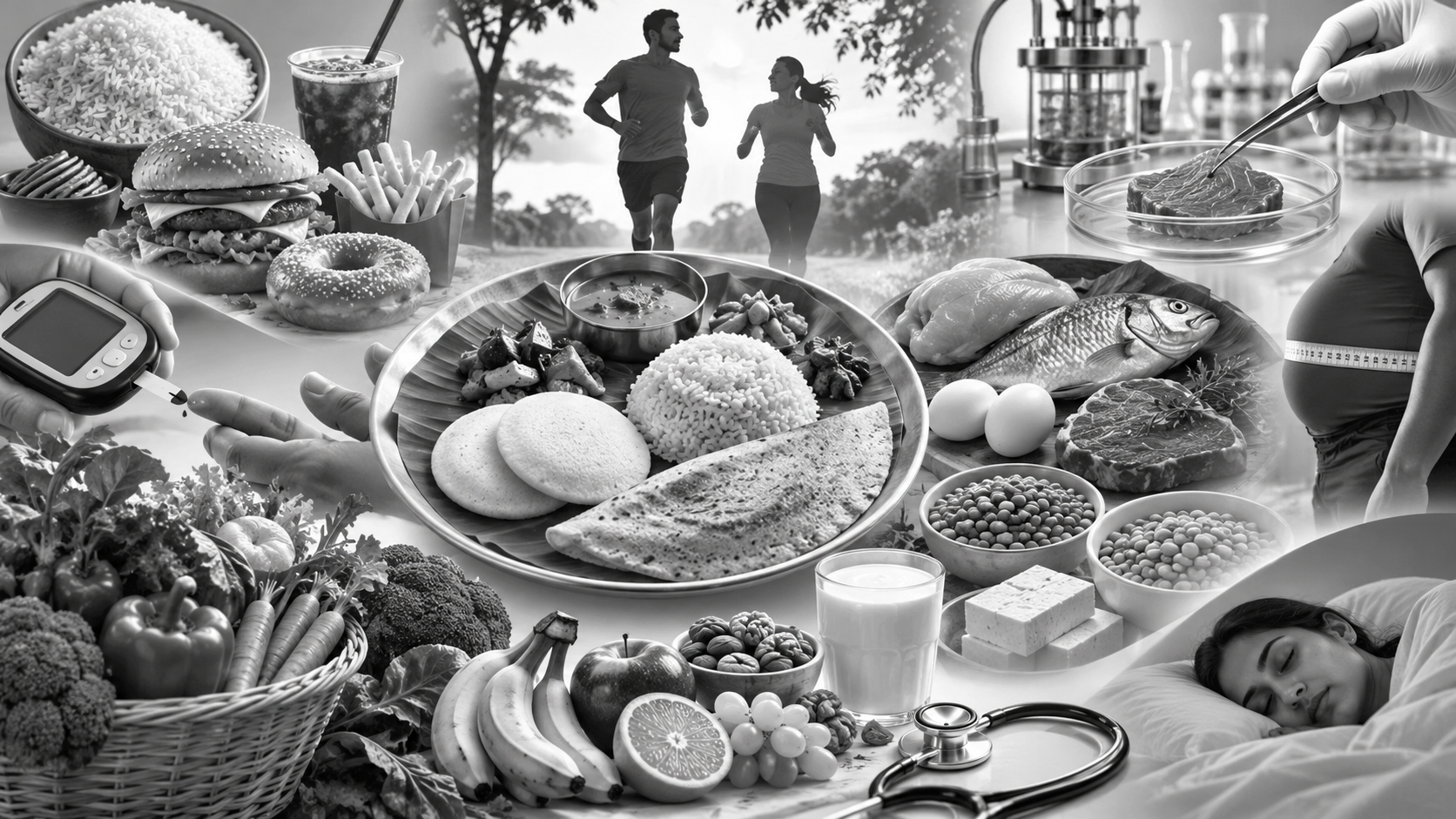
The Science Of Eating Right: What Our Bodies Really Need
Food is central to human health, but changing lifestyles and eating habits are raising concerns about whether people are getting the nutrition their bodies need. Across India, traditional meals are increasingly being replaced or supplemented by refined cereals, packaged foods, sugary drinks and meals high in salt and saturated fats. Although these foods provide energy, they may not supply adequate protein, fibre, vitamins and minerals.
Research increasingly shows that the quality of carbohydrates, fats and proteins matters as much as the quantity of food consumed. A diet dominated by polished rice, refined flour and added sugar can contribute to metabolic problems, particularly when combined with physical inactivity and excess calorie intake.
South India's Hidden Nutritional Deficiencies
Dietary studies in South India highlight the imbalance between calorie consumption and nutritional adequacy. A study involving 6,907 adults in rural Kancheepuram, Tamil Nadu, found that carbohydrates contributed 78.1% of total calorie intake, largely through polished rice and other refined cereals. Around 45% of participants did not meet the recommended protein intake, while 57.1% consumed more salt than advised. Nearly 99% failed to meet the study's recommended fruit and vegetable intake.
A separate study in urban Chennai found that carbohydrates accounted for 64% of daily energy intake, while protein contributed just 12%. Refined cereals alone supplied 45.8% of calories, indicating the extent to which staple grains dominate everyday meals.
Micronutrient deficiencies are another concern. A study of 270 apparently healthy adults in Hyderabad reported deficiencies in vitamin B2 (50%), vitamin B6 (46%), active vitamin B12 (46%), folate (32%) and vitamin D (29%). More than half also had elevated homocysteine levels. Although this relatively small study cannot represent the entire population, it highlights how people can appear healthy while having inadequate levels of essential nutrients.
Diabetes And The Role Of Diet
India's growing diabetes burden has brought greater attention to the relationship between food habits and metabolic health. A major study published in Nature Medicine in 2025, involving 18,090 participants, found that Indian diets derived an average of 62.3% of their energy from lower-quality carbohydrates, including white rice, refined grains and added sugars.
Participants with the highest carbohydrate intake had 30% higher odds of newly diagnosed Type 2 diabetes than those with the lowest intake. Higher consumption was also associated with greater odds of prediabetes and obesity. The findings underline the importance of controlling portions and improving overall dietary quality rather than simply replacing one grain with another.
Lifestyle changes can make a substantial difference. The landmark Diabetes Prevention Program trial found that participants who achieved at least 7% weight loss and undertook 150 minutes of weekly physical activity reduced their risk of developing diabetes by 58% compared with the placebo group. This demonstrates the importance of sustainable eating habits, regular exercise and weight management.
Vegetarian And Non-Vegetarian Diets: Which Is Better?
The debate over vegetarian and non-vegetarian diets often overlooks a more important question: whether the overall diet is nutritionally balanced. A well-planned vegetarian diet can provide adequate protein through pulses, beans, lentils, soy, dairy, nuts and seeds. Eggs, fish and lean meats can also contribute protein and other nutrients to non-vegetarian diets.
Research published in 2024 found that vegetarian dietary patterns could improve blood sugar control and reduce body mass index among people with Type 2 diabetes. However, vegetarian and vegan diets require careful planning, particularly to ensure adequate vitamin B12, iron, calcium, zinc and omega-3 fatty acids. People following vegan diets need a reliable source of vitamin B12, usually through fortified foods or supplements.
Meat is not essential for building muscle or maintaining good health. Protein requirements can be met through appropriately planned plant-based diets. However, the nutritional value of meat varies according to the type, quantity, processing and cooking method.
Meat Consumption And Health Risks
A large international analysis published in The Lancet Diabetes & Endocrinology in 2024 examined nearly two million adults across 20 countries. It found that higher consumption of unprocessed red meat and processed meat was associated with increased Type 2 diabetes risk. Every additional 50 grams of processed meat consumed daily was associated with a 15% higher incidence, while an additional 100 grams of unprocessed red meat was associated with a 10% increase.
These findings represent observational associations rather than proof of direct causation. They nevertheless support limiting processed meat and avoiding excessive consumption of red meat. Fish, poultry, eggs and plant-based protein sources can provide alternatives as part of a balanced diet.
Popular Diet Plans And Their Limitations
Several eating patterns have gained popularity, including the Mediterranean diet, DASH diet, low-carbohydrate diets, ketogenic diets, intermittent fasting and high-protein diets. The Mediterranean and DASH approaches emphasise vegetables, fruits, whole grains, pulses, nuts and healthier fats. They are widely recognised for supporting cardiovascular and metabolic health.
Low-carbohydrate and ketogenic diets may help some people lose weight and improve blood glucose levels, but they are not suitable for everyone. Intermittent fasting can help reduce calorie intake, although its benefits depend largely on food quality and overall energy consumption. People taking diabetes medication should consult healthcare professionals before fasting or making major dietary changes.
Cultivated Meat: The Future Of Protein?
Advances in food technology have introduced cultivated meat, produced by growing animal cells in controlled laboratory conditions rather than raising and slaughtering animals. Researchers are exploring ways to improve its nutritional composition, including reducing saturated fat and enriching products with selected nutrients.
However, cultivated meat is still developing as a food technology. Recent research has examined ways to improve the nutritional profile of cultivated cells, but the composition of laboratory-grown biomass can differ considerably from conventional meat. Questions about large-scale production, cost, food safety, nutritional quality and consumer acceptance remain. It is therefore too early to assume that cultivated meat is automatically healthier than conventional meat.
Building A Balanced Diet For Everyday Life
India's ICMR–National Institute of Nutrition Dietary Guidelines 2024 recommend a varied diet containing cereals, pulses, milk or curd, vegetables, fruits, nuts and seeds. The guidelines encourage whole grains and a greater share of vegetables and fruits in everyday meals.
For South Indian households, practical changes need not involve abandoning familiar foods. Idli with sambar, pesarattu, rice accompanied by dal and vegetables, curd, seasonal fruits, eggs, fish and pulses can all form part of balanced meals. The key is to maintain appropriate portions, include diverse food groups and limit excess sugar, salt and highly processed foods.
Individual nutritional needs also differ according to age, body weight, height, activity levels, metabolism and medical conditions. A diet suitable for one person may not work for another. People with diabetes, kidney disease or other chronic conditions may require professional dietary guidance.
Nutrition Beyond The Plate
Healthy eating cannot be separated from physical activity, sleep and daily routines. Regular exercise, adequate sleep and reduced consumption of ultra-processed foods support better metabolic health. Supplements may be necessary when deficiencies are identified, but taking them without proper assessment is not a substitute for a balanced diet.
Ultimately, there is no single diet that suits everyone. The strongest evidence points towards a common principle: eat a variety of minimally processed foods, maintain balanced portions and make sustainable lifestyle choices. Rather than following short-lived diet trends or eliminating entire food groups unnecessarily, people should focus on meeting their nutritional needs consistently. The goal is not merely to eat less or lose weight, but to nourish the body and protect long-term health.