
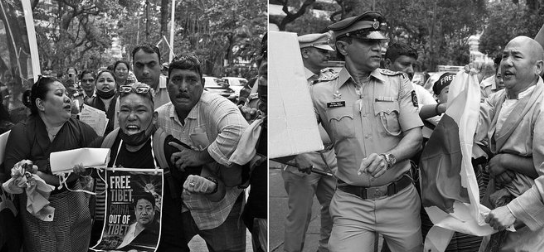
Tibetan Community Protests in Mumbai Against China's Ethnic Unity Law
Members of the Tibetan community staged a protest at Mumbai's Azad Maidan on Monday against China's Ethnic Unity and Progress Law, calling it a threat to Tibetan identity, language and culture. The demonstration was part of a wider global campaign by Tibetans after the law came into force on July 1, 2026, following its adoption by China's Parliament in March.
The protest was organised by Friends of Tibet and drew participants from Tibetan refugee settlements in Mundgod in Karnataka and Bhandara in Maharashtra. A prayer ceremony was also held at a memorial dedicated to Tibetan martyrs, where participants paid tribute to Lobga Rangzen, also known as Lobsang Palden, the 52 year old Tibetan activist who died after setting himself on fire outside the United Nations headquarters in New York on July 2. Protesters said his act was aimed at drawing global attention to China's new law.
Friends of Tibet coordinator Tenzin Tsundue said the legislation was part of Beijing's effort to erase the identity of Tibetans by replacing native languages with Mandarin in schools and public institutions. He reiterated the group's demand for an independent Tibet and called on China to end what he described as the colonisation of the region.
A similar protest had been held at Mumbai's Chaityabhoomi on August 2 as part of the ongoing campaign.
Human rights groups, including Amnesty International, have also raised concerns over the law, saying it could strengthen policies of forced assimilation affecting Tibetans, Uyghurs, Mongolians and other ethnic minorities. Amnesty has further warned that the legislation may provide a legal basis for action against activists living outside China.
China, however, has defended the law, saying it is intended to promote a shared national identity, strengthen ethnic unity and support national integration. Beijing also says the law provides legal backing for promoting Mandarin, ideological education and the Sinicisation of religion, while rejecting criticism that it suppresses minority cultures.
The protest in Mumbai reflected growing concern among Tibetans in exile, who say preserving their language, religion and cultural identity remains central to their struggle.