
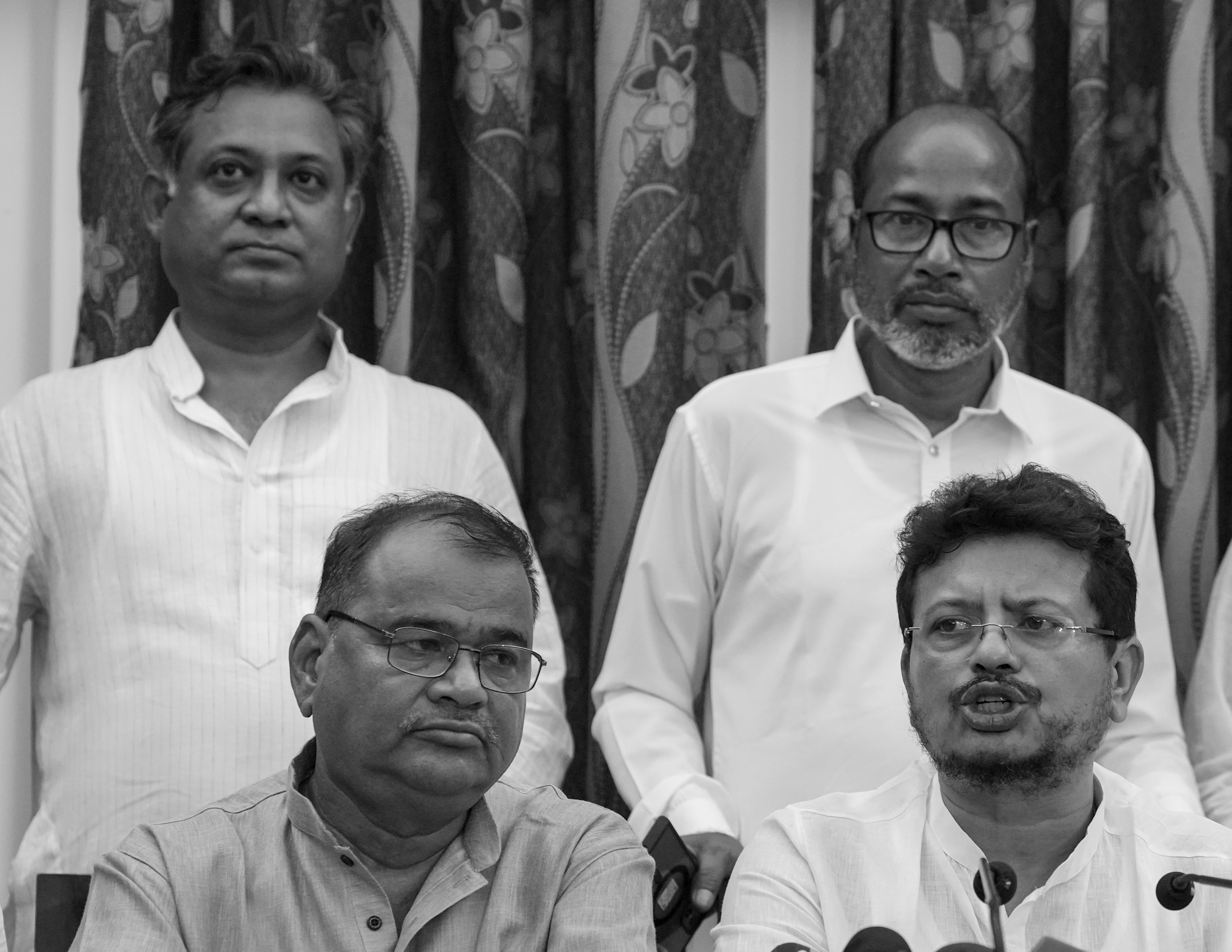

TMC Suffers First Split As 58 Rebel MLAs Back Ritabrata Banerjee As LoP, Speaker Recognises Claim
The Trinamool Congress (TMC) on Wednesday faced a major internal rupture as 58 dissident MLAs backed expelled leader Ritabrata Banerjee as Leader of Opposition (LoP) in the West Bengal Assembly, with the Speaker recognising their claim, marking the party’s most serious organisational crisis in its 28-year history.
The development comes amid escalating tensions within the party following its electoral setback, exposing deep divisions in the legislature wing and raising questions over leadership and organisational control.
According to the dissident camp, the group submitted letters of support from 58 MLAs to Speaker Rathindra Bose , meeting the requirement under the anti-defection law, which requires two-thirds support of a legislature party for recognition of a separate bloc. The TMC has 80 MLAs in the Assembly, placing the threshold at 54.
Ritabrata Banerjee told reporters after meeting the Speaker that their claim had been accepted. He asserted that the dissident bloc now represented the effective TMC legislature party in the House. “We are the real Trinamool Congress in the Assembly,” he said, claiming legitimacy through numerical strength.
The rebel faction, led by Banerjee and expelled MLA Sandipan Saha, also announced a new leadership structure. Akhruzzaman was named chief whip , while senior legislators including Javed Ahmed Khan, Sandipan Saha, Sabina Yasmin and Shiuli Saha were appointed deputy leaders.
Several senior and veteran MLAs, including Arup Roy, Rathin Ghosh, Javed Khan, Prasun Banerjee and Samar Mukhopadhyay , were among those backing the breakaway group, giving the faction significant political weight within the Assembly.
However, the dissidents stopped short of directly challenging Mamata Banerjee’s leadership , continuing to recognise her as the party’s chairperson. At the same time, they made it clear that they did not accept the authority of national general secretary Abhishek Banerjee in legislature party affairs.
“We accept Mamata Banerjee as our leader, but not Abhishek Banerjee,” a leader from the dissident camp said, highlighting the split in organisational authority.
In an attempt to moderate the political impact of the revolt, Ritabrata Banerjee also appealed to Mamata Banerjee to guide the legislature party, suggesting she could act as its “chief adviser”.
The TMC leadership, however, questioned the validity of the rebel claim, alleging procedural lapses and stating that only authorised party office-bearers can communicate such decisions to the Assembly. It also argued that the documents submitted to the Speaker were not on official party letterhead.
Amid the political crisis, the TMC leadership announced a sweeping organisational overhaul, dissolving all party committees and frontal organisations in West Bengal. The party said it would undertake a comprehensive review of its structure before reconstituting units at all levels.
The rebellion originated from disputes over the selection process for the Leader of Opposition and allegations regarding forged signatures in documents submitted to the Assembly secretariat, which triggered an FIR and a CID probe. The issue soon escalated into a wider power struggle within the legislature party.
Political observers said the developments have effectively created two competing centres of authority within the TMC—one controlling the organisational structure and the other asserting legislative strength.
Opposition parties, including the BJP, CPI(M) and Congress, reacted sharply, with the BJP claiming Mamata Banerjee had “lost control” over her legislature party, while others described the crisis as reflective of the same defection politics the TMC once benefited from.
The crisis now places the party in an uncertain phase, with its internal power struggle threatening to reshape West Bengal’s political landscape.